Students For Liberty write about Berlin’s Rent Cap Act its failings and implications for New York and elsewhere.
” Berlin passed a rent freeze to fix its housing shortage. Twelve months later, the number of apartments available to rent in the city had literally halved”
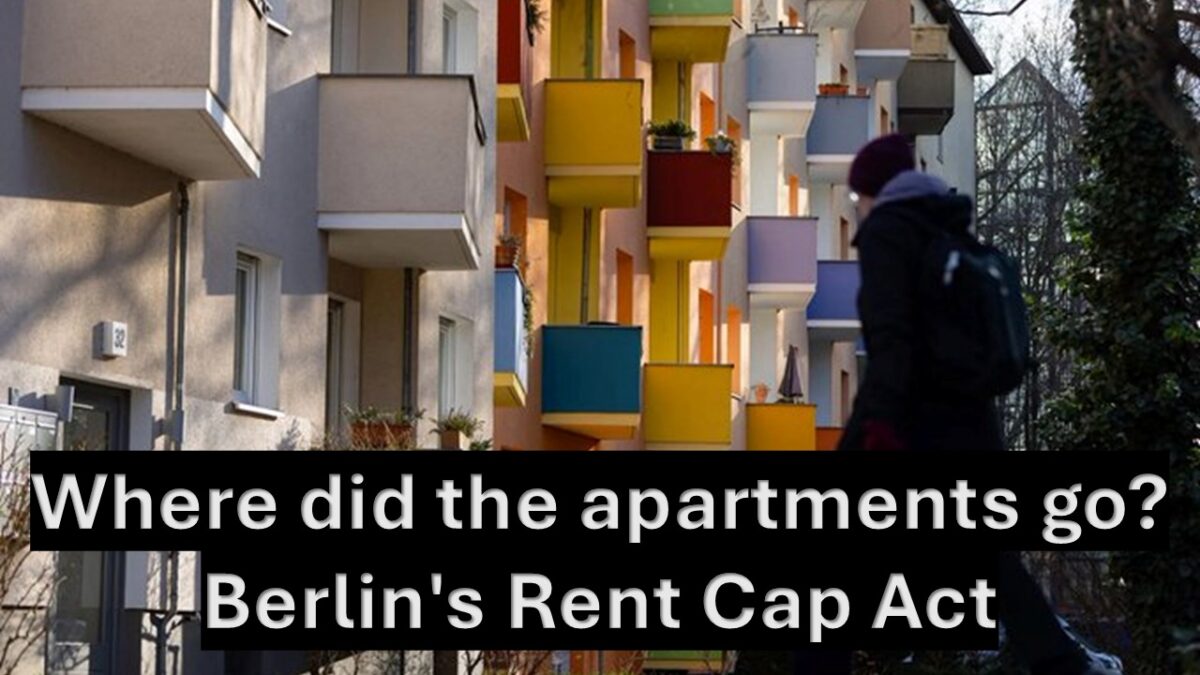
In February 2020, Berlin passed a rent freeze to fix its housing shortage. Twelve months later, the number of apartments available to rent in the city had literally halved. Rent control is one of the most-studied policies in economics. Berlin just gave us the cleanest test we have.
The law was called the Mietendeckel, Berlin’s Rent Cap Act. It froze the rent on roughly 1.5 million apartments built before 2014, rolled prices back to their June 18, 2019 level, and forced landlords to cut existing contracts starting in November 2020. Tenant unions cheered. Landlords went to court.
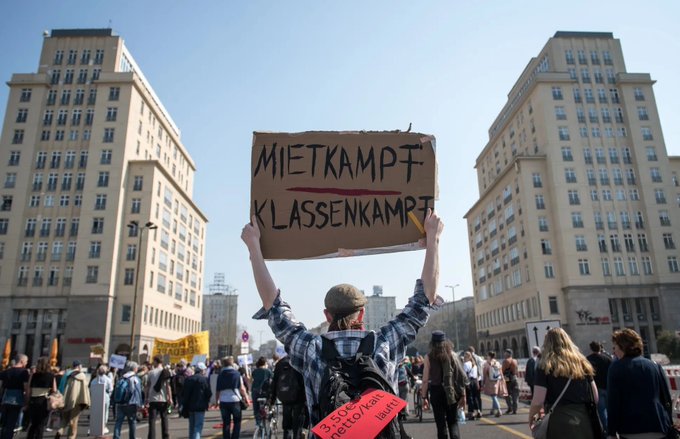

The market response was immediate. New rental listings in Berlin fell from more than 600 per week before the announcement to fewer than 300 after the law took effect. That is a 56% collapse in the flow of apartments reaching renters, inside twelve months, documented week by week by economists at DIW Berlin and Aix-Marseille.
“New rental listings in Berlin fell from more than 600 per week before the announcement to fewer than 300 after the law took effect”
Where did the apartments go? Owners pulled them off the rental market. Rental-to-owner conversions in Berlin jumped from 12,700 units in 2019 to 19,200 units in 2020, a 51% increase and the highest annual figure since Germany began tracking that number in 2005. Every one of those units is a rental that no longer exists.
Builders read the same signal. New dwelling completions in Berlin fell 14% in 2020, in the same year that the rest of Germany’s completions rose about 5%. Building rental housing in a city that had just told owners what price they were allowed to charge stopped making financial sense.
“Builders read the same signal. New dwelling completions in Berlin fell 14% in 2020, in the same year that the rest of Germany’s completions rose about 5%”
The shortage spilled across the border. Potsdam, the neighbouring city in the state of Brandenburg, was not covered by the freeze. Rents there rose roughly 5% by the first quarter of 2020, 9% by the second, and 12% by the third. Renters priced out of frozen Berlin bid up rents wherever the law did not reach.
Landlords who kept advertising began posting two prices on the same unit. One at the legal cap. One at the market rate that would kick back in the moment the freeze was struck down or expired. 11% of listings carried this double price in February 2020. One month later, in March, it was 34%. By March 2021, close to half. The average gap between the two prices was 51%.
“Renters priced out of frozen Berlin bid up rents wherever the law did not reach”
On April 15, 2021, Germany’s Federal Constitutional Court struck the law down in its entirety. Rent regulation on private housing is a federal power in Germany, and Berlin’s state parliament had no authority to set the rules.
The ruling was retroactive. Tenants who had paid the lower capped rent for months were now billed for the difference. A Sparkasse Berlin survey found that 47% of Berlin renters had saved nothing for the bill. Monthly repayments ran from €100 to €500 per person. Some households owed several thousand euros in a single letter from the landlord.
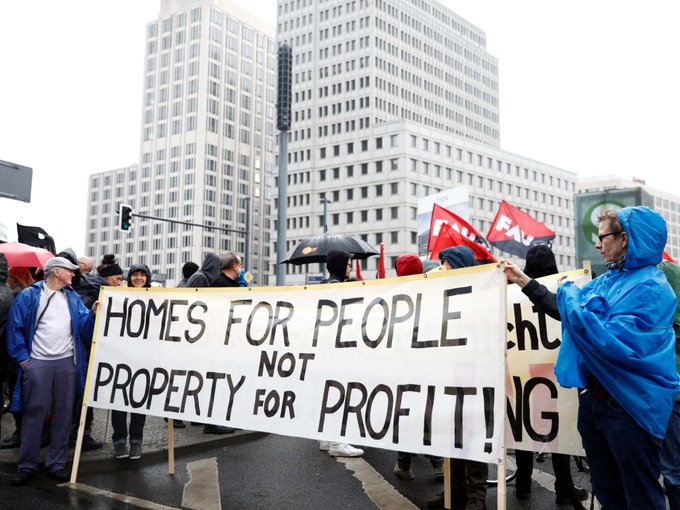
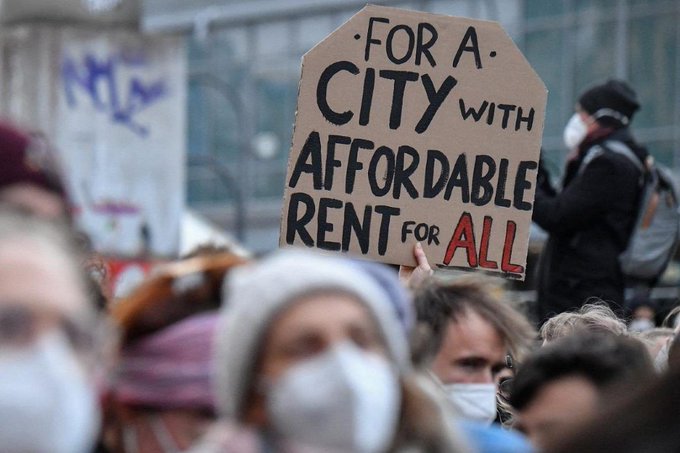
Berlin is now one of the cleanest natural experiments in the economics of rent control. A single city, a single law, a defined start date, and Potsdam sitting across the border as an unregulated comparison. Assar Lindbeck, the Swedish social-democratic economist, once wrote that rent control is the most efficient technique known to destroy a city, next to bombing. Berlin’s data put numbers on the claim.
“In twelve months, Berlin delivered fewer listings, fewer new buildings, higher rents in the neighbouring city”
Rent control does not create apartments. It gives a discount to the people already holding a lease. It removes apartments from the market for everyone else. The people trying to move in, the students, the recent graduates, the workers arriving for a new job, never see the door open in the first place.
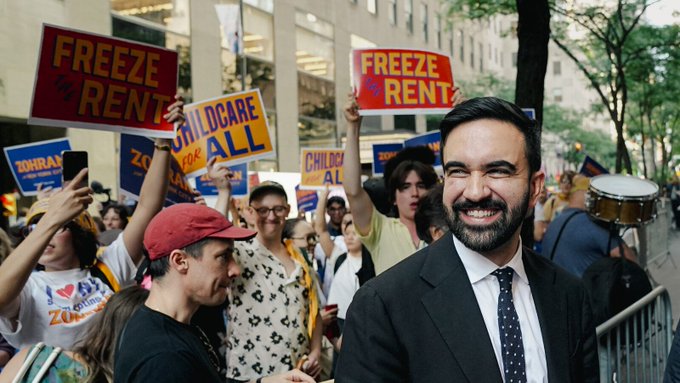
In twelve months, Berlin delivered fewer listings, fewer new buildings, higher rents in the neighbouring city, and a legal bill sent to the very tenants the law was written to protect. On June 26, 2026, New York City’s Rent Guidelines Board voted 7 to 1 to freeze the rent on roughly one million stabilized apartments, delivering Mayor Zohran Mamdani’s central campaign promise.
Every number above is drawn from a peer-reviewed study in Management Science measuring Berlin’s twelve months under the freeze. New Yorkers weighing the same policy have the result already in hand.
Reproduced with kind permission of Students for Liberty. You can find the original X thread at https://x.com/sfliberty/status/2094924529625657396, find them on X at https://x.com/sfliberty you can also find them online at https://studentsforliberty.org/.
“Rent control does not create apartments. It gives a discount to the people already holding a lease. It removes apartments from the market for everyone else”