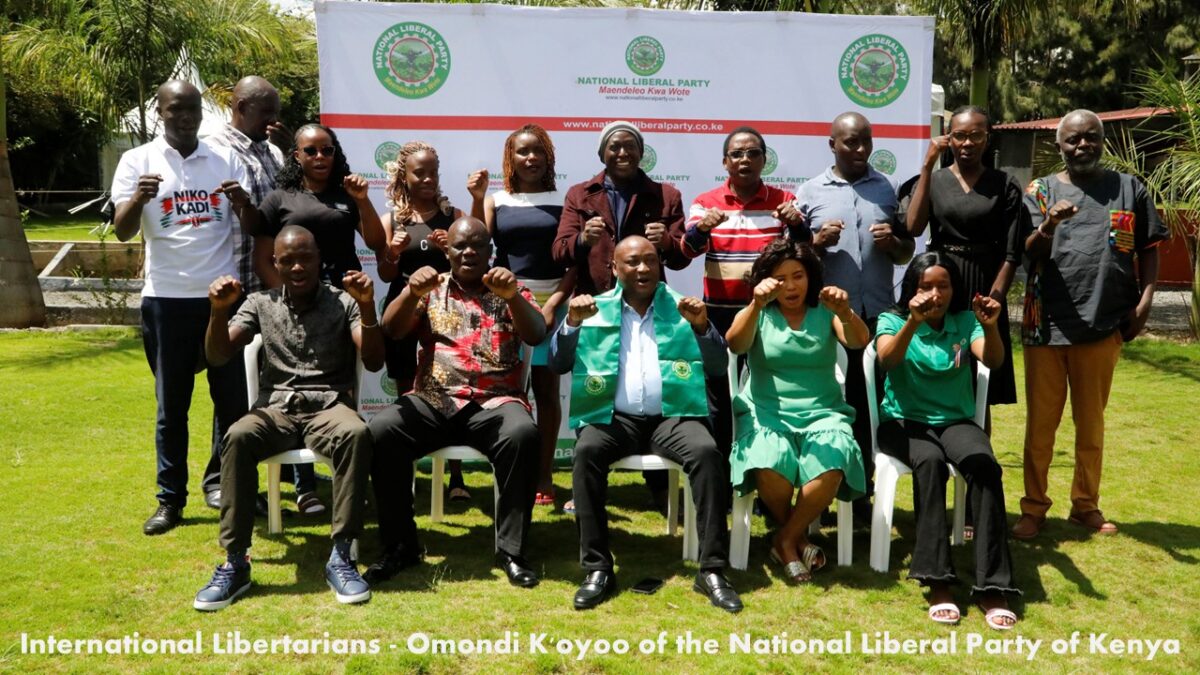
International Libertarians – Omondi K’oyoo of the National Liberal Party of Kenya

The National Liberal Party (NLP) of Kenya advocates for the equal treatment of individuals under the law regardless of social status, race, ethnicity, sex, or gender. They state that there are many aspects of an individual’s life over which governments have no power to regulate.  The party is a member of International Alliance of Libertarian Parties and we spoke with their Secretary General Omondi K’oyoo.

“We must use every single opportunity to resist encroachment on our rights and spread that spirit of resistance”

Can you introduce yourself to our readers, and tell us a bit about your party?

The NLP is the only real, active liberal movement in Kenya and indeed in the broader East African region. We believe in the fundamentals of liberalism in their entirety, specifically freedom of speech, freedom of movement, and economic development that is not delivered “at the other end of the stick.” Our rally cry and core philosophy is “Maendeleo kwa wote” (Progress/Development for All).

“the NLP is championing policies that fiercely protect civil liberties, roll back state surveillance, and guarantee constitutional protections for political expression”

What do you see as the major challenges facing Kenya and what policies is the party championing?

Kenya, like many longstanding and upcoming democracies, is currently facing an uphill challenge marked by a dwindling democratic space and a troubling rise in autocracy. Civil liberties are actively being stripped away. We are witnessing increased state monitoring and surveillance of social media, alongside the trailing of individuals who express dissenting opinions.

This became tragically evident during and after the June 25 “GenZ” resistance against the Finance Bill. The state’s response resulted in kidnappings, illegal detentions, and the deaths of young people, some of whom have never been found, alive or dead. In the face of this oppressive environment, the NLP is championing policies that fiercely protect civil liberties, roll back state surveillance, and guarantee constitutional protections for political expression.

“Citizens must be able to check, correct, and remind their leaders of their duties through public demonstration”

If you could introduce policies to change just 3 things in Kenya, what would they be?

To increase our liberties and strengthen our democracy, we would implement the following three key structural reforms:

  • Reform the Political Parties Act: The current Act is restrictive, either by design or systemic failure. The mandatory legal requirement to maintain 24 physical offices across the country is financially prohibitive for upcoming parties, particularly blocking young people who wish to start or belong to new political movements. To maintain the intended goal of ensuring a “national outlook and multi-ethnicity,” we propose reducing this requirement to eight regional offices aligned with the former provinces. From there, the free-market forces of supply and demand should take over: a party should become attractive based on its philosophy, manifesto, and how effectively it serves the community, not by arbitrary bureaucratic hurdles.
  • Enforce Strict Separation of Powers: We would legally and strictly enforce the separation of duties and powers between the branches and levels of government. This ensures that development projects and vital public services are distributed fairly by law, rather than being weaponized by the ruling elite as political tokens to reward loyalty or punish opposition.
  • Guarantee Free and Protected Picketing: We would make the right to picket and peacefully protest as free and unhindered as possible. Citizens must be able to check, correct, and remind their leaders of their duties through public demonstration without fear of state violence, abduction, or retaliation.

“no matter how few we may seem, those of us who believe in pro-liberal democracy must not keep quiet”

Is there anything else you want to say to our readers?

Autocrats and dictators globally are getting bolder. They are ganging up and actively crushing the foundational freedoms that our forefathers fought and shed blood for. My message to your readers, and to liberals everywhere, is this: no matter how few we may seem, those of us who believe in pro-liberal democracy must not keep quiet. We must use every single opportunity to resist encroachment on our rights and spread that spirit of resistance.

How can people find out more about what the party is up to?

See our website at https://nationalliberalparty.co.ke, or contact us at +254729381378

“Our rally cry and core philosophy is “Maendeleo kwa wote” (Progress/Development for All)”
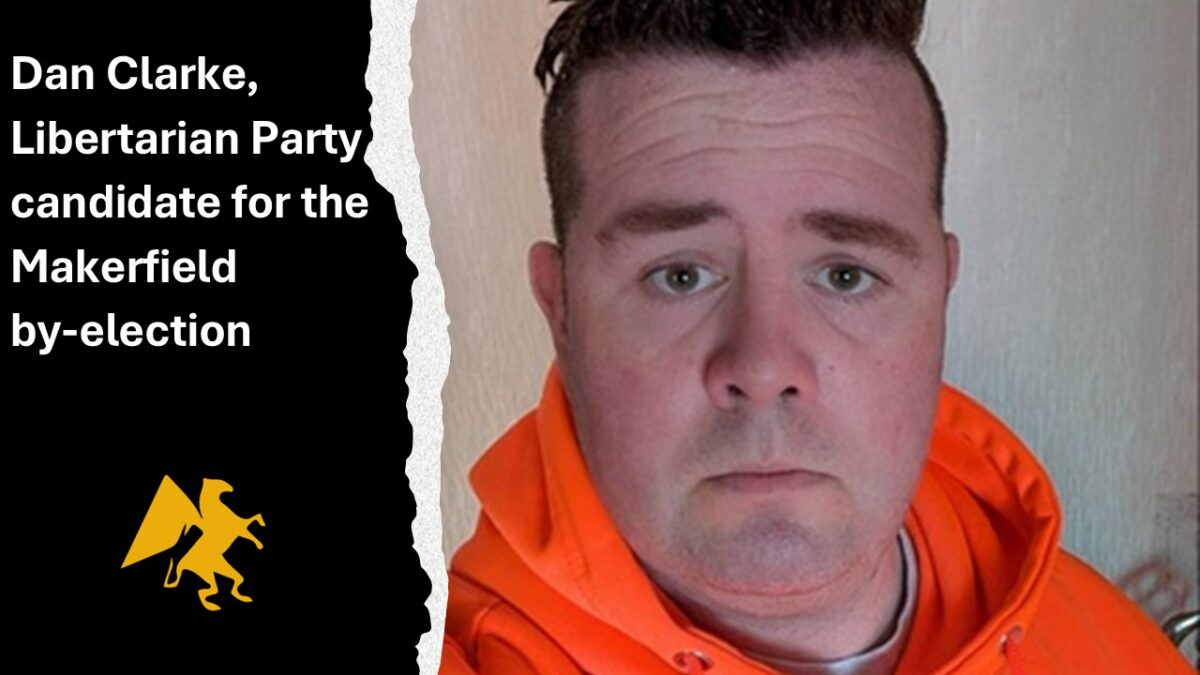
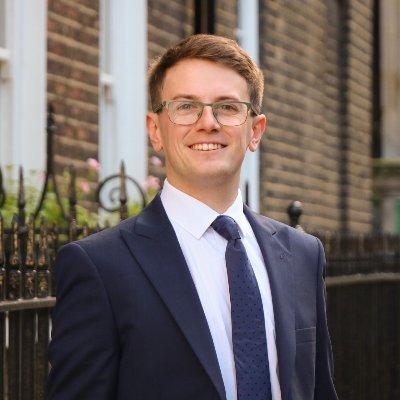
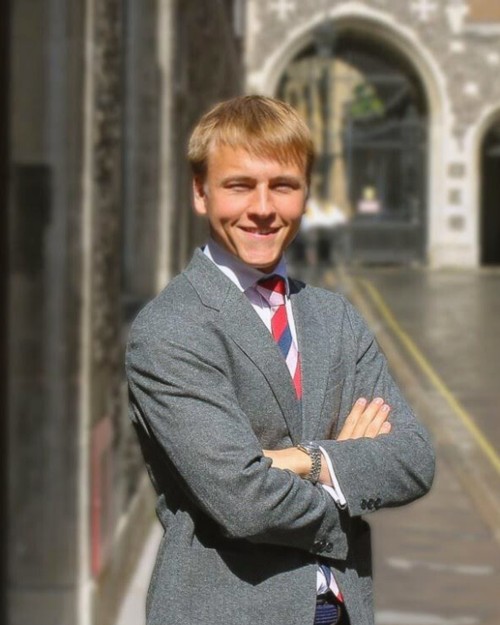
Dan Clarke, Libertarian Party candidate for the Makerfield by-election.

With the Makerfield by-election hitting the headlines we speak with Dan Clarke, the Libertarian Party candidate.

Can you briefly introduce yourself to our readers?

I’m Dan Clarke, I’m the Libertarian Party Parliamentary candidate for the Makerfield by-election. Which is taking place on 18th June. I am also standing in a local council by election for Farnworth ward (Widnes) which is taking place on 25th June.

“We are completely against the “Digital ID” that this authoritarian government is obsessed in pushing through”

Can you outline the main policies and principles of the Libertarian Party?

Our main principles are lower taxes, maximum personal freedom and implementation of a Constitution for the United Kingdom. We want to Enshrine the right to digital freedoms into constitutional law. We are completely against the “Digital ID” that this authoritarian government is obsessed in pushing through.

“This is definitely a by-election to get rid of Starmer, regardless of who wins”

What do you see as the big issues for Makerfield and what if elected what would you hope to champion?

The big issues I see in Makerfield are huge dislike of Kier Starmer. This is definitely a by-election to get rid of Starmer, regardless of who wins. If I win, I will champion constituents right to privacy. I will work tirelessly to stoop ‘Digital ID’ From happening. People have a right to privacy.

“the time for classical liberalism/Libertarianism is now. The movement is growing, we are fighting more elections”

Any other thoughts you would like to share with our readers?

My thoughts for your readers are- the time for classical liberalism/Libertarianism is now. The movement is growing, we are fighting more elections. We are showing the UK that we are here, we are serious and we will eventually succeed.

For those eager to help, how can they get involved in the campaign?

For anyone wishing to help out campaigning in Makerfield can either contact the party via our website or contact me directly via email: Dan.clarke@libertarianpartyuk.com.

Please also help my campaign by donating at https://www.gofundme.com/f/makerfield-by-election-funds.  

You can also follow the Libertarian Party UK on InstagramTikTokFacebook and X/Twitter.

“Our main principles are lower taxes, maximum personal freedom and implementation of a Constitution for the United Kingdom”

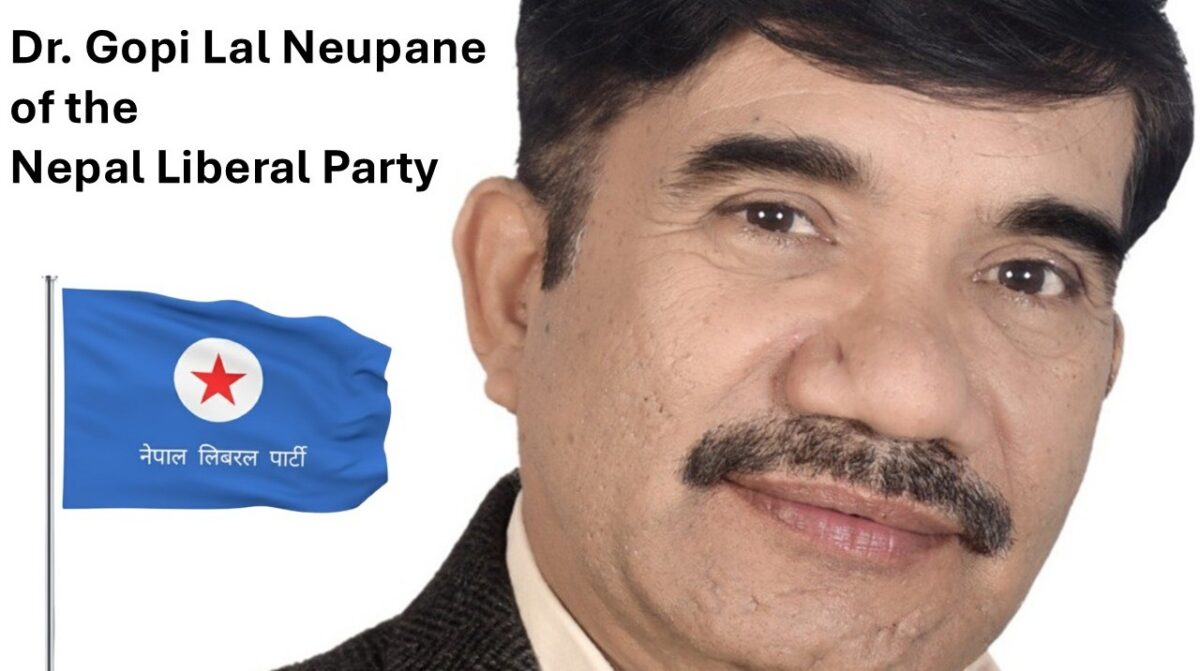
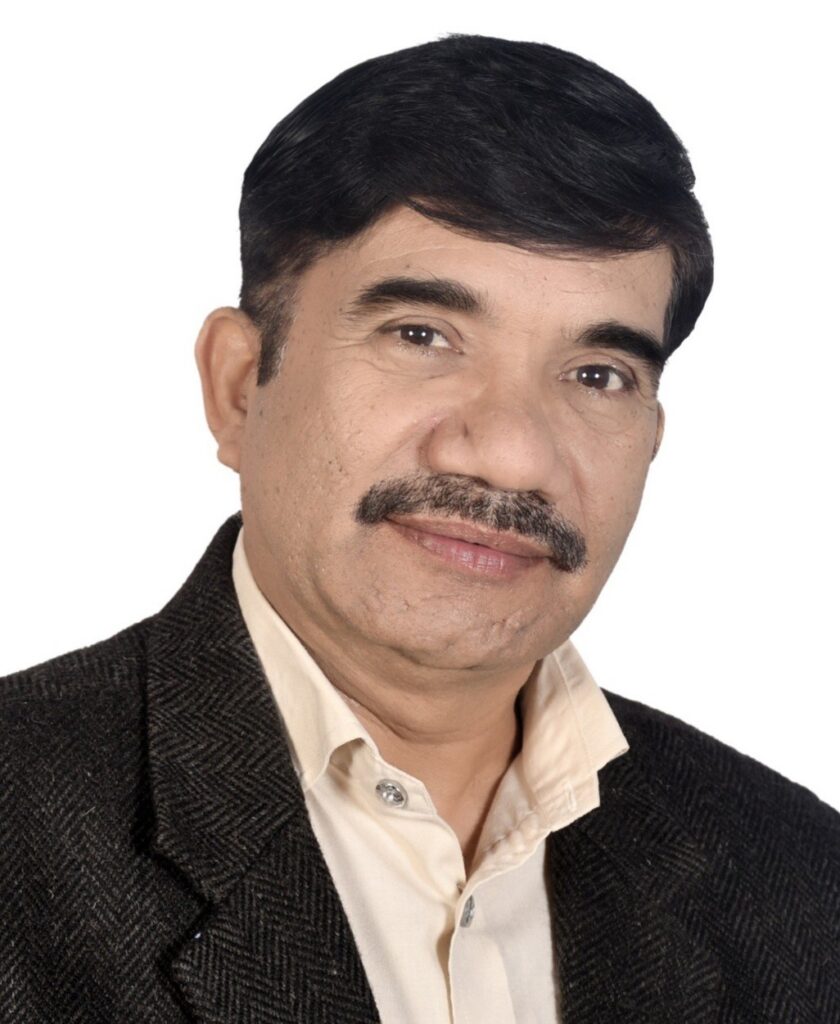
Dr. Gopi Lal Neupane of the Nepal Liberal Party

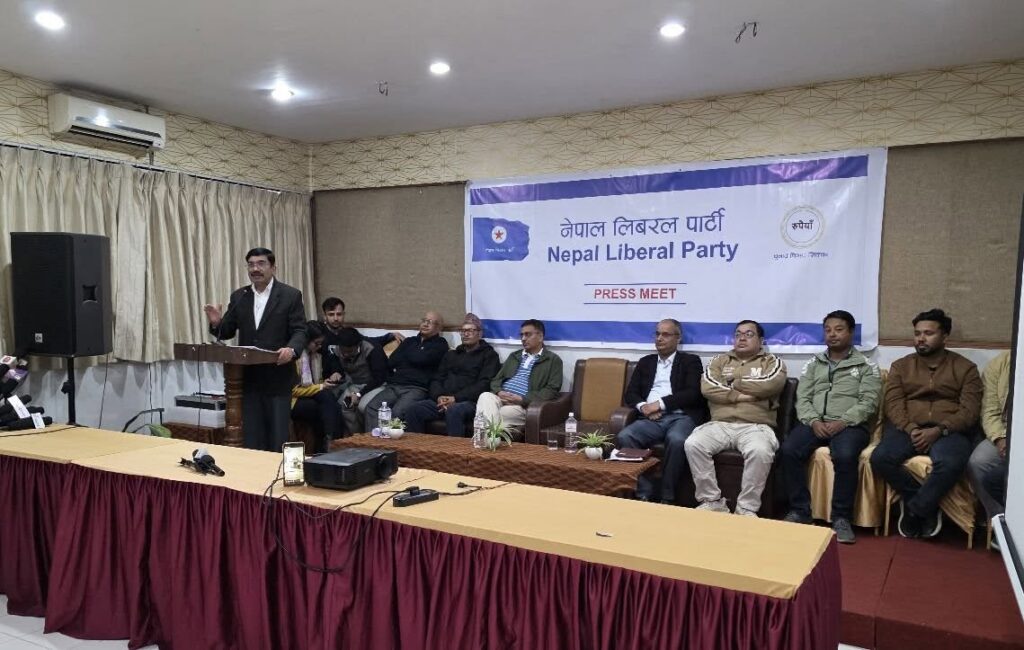
The Nepal Liberal Party supports liberal economic and democratic ideology, and aims to build a modern and just society in Nepal.  They are an Associated member of International Alliance of Libertarian Parties.  We interview Chairperson Dr. Gopi Lal Neupane.

“We believe prosperity and social progress are best achieved when individuals are empowered with freedom, responsibility, and equal opportunity”

Can you introduce yourself to our readers, and tell us a bit about your party?

My name is Dr. Gopi Lal Neupane, PhD in Industrial Management Psychology and I am the Chairperson of Nepal Liberal Party. I have 30+ years University teaching and management experience. I have written several books on financial literacy and building libertarian values among which Nepal at the Verge of Capitalism and Nepalese Psychology are among the most appreciated by readers.

Our party, the Nepal Liberal Party, advocates for individual freedom, classical liberalism, and liberty-centred governance. We believe prosperity and social progress are best achieved when individuals are empowered with freedom, responsibility, and equal opportunity under a fair legal framework.

“Our party champions policies that strengthen economic freedom, rule of law”

What do you see as the major challenges facing Nepal and what policies is the party championing?

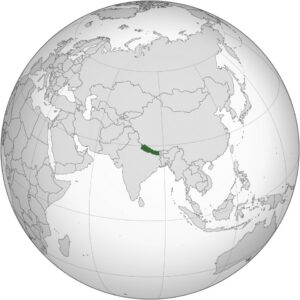
Map highlighting Nepal, from Parvez gsm

Nepal faces several major challenges:

  • Inflation and rising cost of living
  • Poverty and unemployment
  • Weak rule of law
  • Corruption
  • Collective ideology limiting individual initiative
  • Limited infrastructure development
  • Moral and governance challenges
  • Difficulty in doing business and entrepreneurship barriers

Our party champions policies that strengthen economic freedom, rule of law, entrepreneurship, private enterprise, property rights, individual liberty, and transparent governance.

“We believe freedom is a universal value. Let us unite liberals across the globe in support of liberty, human dignity, free enterprise”

If you could introduce policies to change just 3 things in Nepal, what would they be?

If we could prioritize three major changes, they would be:

  • Strengthening individual freedom
  • Advancing classical liberal economic and political principles
  • Establishing and promoting liberal democratic values throughout society

We believe these reforms would create a stronger foundation for prosperity, innovation, and social development.

Is there anything else you want to say to our readers?

We believe freedom is a universal value. Let us unite liberals across the globe in support of liberty, human dignity, free enterprise, and peaceful cooperation among nations.

How can people find out more about what the party is up to?

You can find our website at https://liberal.org.np/ and find us on Facebook at https://www.facebook.com/groups/25031568233171054.

Digital ID: Panacea or Dystopia?

Digital ID is back on the agenda.  It was announced as a bill in the King Speech, and many believe it is coming in via the back door with social media and internet age restrictions. 

Join our panel for a discussion on if Digital ID will prove a panacea or a dystopia, and what if anything we can do about it.  Panel members to be announced shortly. 

Politics in Pubs, London

The Warwick. 25 Warwick Way, London SW1V 1QT

15th June 2026, 7pm

Expect strong views, straight talk, and practical ideas. The evening kicks off with a lively panel discussion, followed by your chance to fire questions at the experts.

Grab a pint, sharpen your arguments, and stay informed on this key issue of government oversight in the digital world.

Free entry – arrive early for a good spot!
See you at the pub—because real change starts over a drink and a debate.

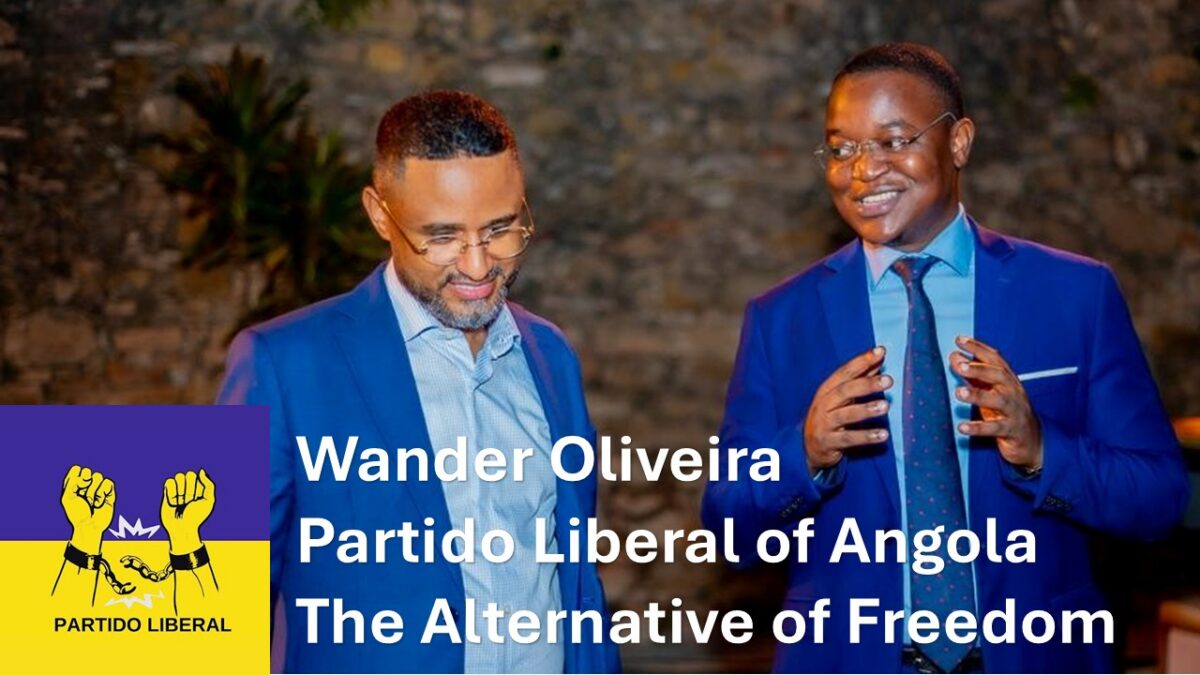
Wander Oliveira of Partido Liberal of Angola – The Alternative of Freedom

The Partido Liberal of Angola (Liberal Party) is a member of International Alliance of Libertarian Parties.  We interview spokesperson Wander Oliveira.

“The Liberal Party was born out of the urgent need to offer Angolans, especially the youth, a genuine political alternative”

The Liberal Party emerged as a political project in 2024 and was officially legalized by the Constitutional Court in February 2025. We are the first and only right-wing political force in Angola, founded on the principles of Economic Liberalism and Conservatism.

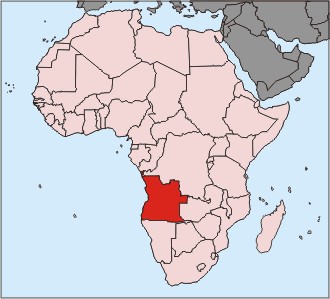
Map of Africa, highlighting Angola from SonicR~commonswiki

The Liberal Party was born out of the urgent need to offer Angolans, especially the youth, a genuine political alternative. We are a predominantly young movement, led by our President, Luís de Castro, a 40-year-old who represents a new generation committed to change, economic freedom, and national development.

Angola has an extremely young population: around 80% of its citizens are between 18 and 30 years old. This youth seeks financial independence, real opportunities, the ability to undertake business ventures, and the freedom to build their own future. Unfortunately, we live in a country rich in natural resources, yet its wealth remains concentrated in the hands of an elite connected to the socialist system that has governed Angola since independence on November 11, 1975.

The time has come to say enough is enough.

“we live in a country rich in natural resources, yet its wealth remains concentrated in the hands of an elite connected to the socialist system”

Angolan youth demand a new political landscape, and the Liberal Party is the alternative in which thousands of young people already see themselves represented.

Currently, Angola’s main challenge is economic. The country operates under an extremely centralized model, where many citizens feel that access to opportunities depends on ties to the ruling party. Unemployment stands at around 30%, despite Angola being one of Africa’s largest oil producers.

Despite its enormous natural wealth, Angola lacks policies capable of creating opportunities for its people. Excessive bureaucracy, corruption, and economic concentration hinder private sector growth and make life difficult for entrepreneurs.

“We will open the economy and promote free competition. All Angolans must have access to the economic market without political discrimination”

The Liberal Party presents concrete solutions through its governance program: DPL (Debureaucratize, Privatize, and Liberalize).

Debureaucratize

We will eliminate the bureaucratic obstacles that hinder economic growth. In Angola, opening or registering a company can take months or even years. We want to simplify procedures, digitalize services, and create a favourable environment for entrepreneurs and investors.

Privatize

We support the privatization of sectors where the Angolan state has proven inefficient. Sectors such as oil, diamonds, and others cannot continue to serve merely as instruments of corruption and political enrichment. Through transparency and efficient private management, these sectors can generate greater wealth and opportunities for all Angolans.

Liberalize

We will open the economy and promote free competition. All Angolans must have access to the economic market without political discrimination or party privilege. The state must stop excessively controlling the economy and instead create conditions that allow citizens to prosper through merit, hard work, and private initiative.

“The Liberal Party believes in a free, prosperous, modern Angola based on individual responsibility, meritocracy, and equal opportunities for all”

If we had to prioritize three areas for change in Angola, we would begin by:

  1. Privatizing the oil sector and establishing strategic partnerships with the United States of America and other international partners;
  2. Developing the country’s mineral resources in collaboration with the private sector, ensuring transparency and economic development;
  3. Investing massively in Education and Healthcare until we achieve high development standards, while later guaranteeing sustainable and efficient models that ensure quality services for citizens.

The Liberal Party believes in a free, prosperous, modern Angola based on individual responsibility, meritocracy, and equal opportunities for all.

To our readers, we leave this appeal: follow our actions, support the cause of Angolan liberals, and join the fight for freedom.

We are fighting for freedom, and we will prevail.

“We are the first and only right-wing political force in Angola, founded on the principles of Economic Liberalism and Conservatism”

You can find Partido Liberal on:
Facebook: https://www.facebook.com/partidoliberalangolano
Twitter: https://x.com/partidopl_ao
Instagram: https://www.instagram.com/partidoliberal_ao
YouTube: https://www.youtube.com/@PartidoLiberal-PL-ao

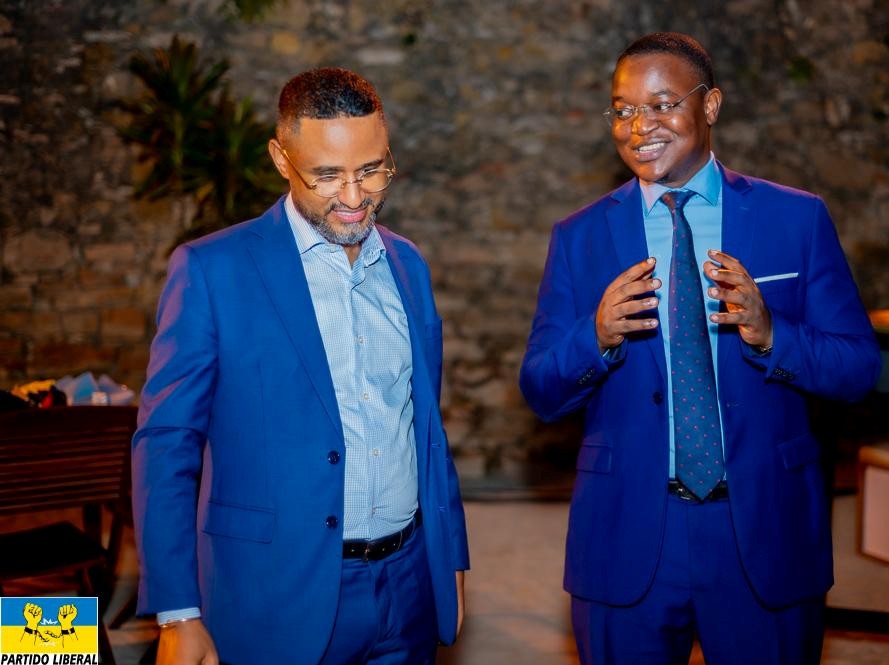
Photo: Luís de Castro and Wander Oliveira

Áron Ecsenyi of LA75 (Cut Taxes by 75% Party) of Hungary

With a name surely we can all get behind, we speak with Áron Ecsenyi of LA75 (Cut Taxes by 75% Party) to share their vision for a freer, more prosperous Hungary.  The party is a member of International Alliance of Libertarian Parties.

“We are not professional politicians; we are citizens tired of the “rent-seeking” state”

Can you introduce yourself to our readers, and tell us a bit about your party?

We are the “LE AZ ADÓK 75%-ÁVAL PÁRT” (Cut Taxes by 75% Party), a grassroots movement representing the growing demand for libertarianism in Hungary. We are not professional politicians; we are citizens tired of the “rent-seeking” state that consumes over half of our nation’s GDP. Our mission is to dismantle the oppressive bureaucracy, eliminate the state’s monopoly on services, and return the power and property to the individual.

What do you see as the major challenges facing Hungary and what policies is the party championing?

The major challenge is a deeply entrenched “dependency culture.” The current system is a leviathan where 84% of state spending goes toward maintaining a rent-seeking network (including corporate subsidies, state-run monopolies, and massive debt interest) while only 16% covers law and order and national defence, legal, administrative, disaster management, first aid, and inpatient care costs.

We champion a radical “chainsaw” approach, inspired by the successful model of Javier Milei in Argentina. Our core policies include:

  • The 75% Tax Cut: Drastically reducing the tax burden to stimulate capital accumulation and private investment.
  • Privatization of State Monopolies: Abolishing the state’s control over education, healthcare, and media to restore competition and quality.
  • Ending Fiscal Dominance: Stopping the state-funded propaganda machine and dismantling the web of subsidies that keep citizens dependent on the political class.
  • Bonus: veto the EU budget

“Abolishing the state’s control over education, healthcare, and media to restore competition and quality”

If you could introduce policies to change just 3 things in Hungary, what would they be?

The “Láncfűrész” (Chainsaw) Reform: Immediately cut 75% of state spending by eliminating all non-essential state subsidies, investment projects, and government-controlled media, thereby balancing the budget and ending inflation caused by monetary expansion.

Educational Freedom: Abolish the state education monopoly. Shift to a system of full school choice and private funding, allowing parents to reclaim the massive amounts of money currently extracted from them via taxes for a broken, creativity-killing system.

Deregulation of the Labor Market: Eliminate the massive social security and payroll taxes that make work unaffordable for both employees and employers, transforming Hungary into a competitive, high-growth, pro-market hub similar to the success of Singapore.

“Eliminate the massive social security and payroll taxes that make work unaffordable for both employees and employers”

Is there anything else you want to say to our readers?

The “Socialism” or “Fascism” is a false dichotomy. They are the same. The lack of this recognition causes passivity among intellectuals: “Why should I abandon socialism if it brings me closer to fascism?”

Across the world, we are seeing the same pattern: massive states, eroding freedoms, and stagnating real wages. We want to send a message to our international allies in London and beyond: the battle for liberty is global. Real change doesn’t come from electing “better” politicians to manage the same broken machine; it comes from destroying the machine itself. We hope our struggle inspires those in the UK fighting for the same principles of classical liberalism.

“The “Socialism” or “Fascism” is a false dichotomy. They are the same”

How can people find out more about what the party is up to?

People can support our fight for a free Hungary and EU and learn more about our ongoing initiatives, including our independent public opinion research efforts, through the following channels:

We are also currently collecting donations so that our organization can explode into public life.

Website: https://la75.hu/

Donations/Support: Libertárius Magyarországért Alapítvány, Account: HU11162001061168731100000000

Croydon Elects 2026

Thursday 7th May was local election day up and down the country and for us in Croydon this meant the election of an Executive Mayor, and 70 councillors.  It is worth noting under the system used in Croydon most of the powers of the local authority are held by the Executive Mayor and the winner / winning party of that role effectively ‘runs the council’.  Councillors still fulfil important functions but unless a party has a large majority, most decisions are made by the mayor.  In the case of Croydon due to the financial problems, the Commissionaires appointed by government make many of what few decisions can be made.  I should declare the author of this article was a candidate in the council elections.

Mayoral Vote

Existing Conservative Mayor Jason Perry won re-election in a tight race against Rowenna Davis of Labour.  The electoral system has changed since 2022, to first past the post from a second preference system.  This makes comparisons difficult; however, it does appear that a large percentage of the votes that went to independents in 2022, moved to Greens and Reform in 2026. 

Mayor Votes 20262022 (1st Choice Votes)Change in 26
Conservatives35,871334132,458
Labour34,758313523,406
Green Party19,404619313,211
Reform UK14,467n/a14,467
Liberal Democrats7,8159967-2,152
Taking the Initiative Party of Britain2,5975768-3,171
Jose JOSEPH – Independent1,568n/a1,568
Trade Unionist and Socialist Coalition461n/a461
MCKENZIE, Winston Truman – Independentn/a1324-1,324
PALMER, Gavin Francis Luffa – Independentn/a1114-1,114
PELLING, Andrew John – Independentn/a6807-6,807
% turnout4135 
Mayor % of Valid Votes 20262022 (1st Choice Votes)Change in 26
Conservatives30.67%34.83%-4.15%
Labour29.72%32.68%-2.96%
Green Party16.59%6.46%10.14%
Reform UK12.37%n/a12.37%
Liberal Democrats6.68%10.39%-3.71%
Taking the Initiative Party of Britain2.22%6.01%-3.79%
Jose JOSEPH – Independent1.34%n/a1.34%
Trade Unionist and Socialist Coalition0.39%n/a0.39%
MCKENZIE, Winston Truman – Independentn/a1.38%-1.38%
PALMER, Gavin Francis Luffa – Independentn/a1.16%-1.16%
PELLING, Andrew John – Independentn/a7.10%-7.10%

Votes for Mayor outside of the 5 main parties collapsed from 15.65% in 2022, to 3.96% in 2026.  Roughly half of this change can be attributed to Andrew Pelling (Former Councillor, GLA member and MP) running as an independent in 2022, but much of the rest is perhaps reflected in an increase in votes for the Greens and Reform.

One other point of note is how parties did in the mayoral election compared to the councillor elections.  Again, comparisons are impacted not all parties running a full slate.  However, it does suggest some consolidation of voting around the two poll leaders for the mayoral vote.

2026 Mayoral v CouncillorMayorCouncillorsDifference
Conservatives30.67%26.55%-4.12%
Labour29.72%26.30%-3.43%
Green Party16.59%23.00%6.41%
Reform UK12.37%13.92%1.55%
Liberal Democrats6.68%9.00%2.32%

Councillors Votes

The councillor votes threw up a greater mix of winners.  We now have a council chamber made up of 30 Labour councillors, 28 Conservative, 8 Green, 2 LibDem, and 2 Reform.

Whilst much is made of the fact in multi-party (effectively 5 way) elections a small percentage of the vote can secure a victory all except 1 winning party achieved over 30% of the vote in their ward, and this was in a split ward.  I have based this on total votes for the party in a ward.

WardParty with most votes% of valid votesGap over 2nd
SandersteadConservatives55.35%42.26%
KenleyConservatives47.11%31.09%
Purley and WoodcoteConservatives46.54%28.20%
Coulsdon TownConservatives38.75%21.71%
Broad GreenLabour44.09%20.33%
Park Hill and WhitgiftConservatives40.74%19.26%
West ThorntonLabour38.92%18.50%
Purley Oaks and RiddlesdownConservatives38.63%17.35%
Selsdon and Addington VillageConservatives37.84%16.97%
FairfieldGreen Party43.90%15.55%
Selsdon Vale and ForestdaleConservatives37.58%14.64%
SelhurstLabour43.07%14.17%
Shirley SouthConservatives34.00%12.68%
WaddonLabour35.06%10.63%
Bensham ManorLabour36.99%10.40%
Addiscombe WestLabour36.86%10.23%
Thornton HeathLabour38.24%9.30%
Shirley NorthConservatives32.43%9.15%
New Addington NorthLabour36.26%9.04%
South CroydonConservatives31.17%7.52%
Norbury ParkLabour35.40%7.31%
Norbury and Pollards HillLabour37.61%7.02%
WoodsideLabour36.76%5.93%
Old CoulsdonConservatives37.13%5.80%
New Addington SouthReform UK32.97%3.95%
Crystal Palace and Upper NorwoodGreen Party31.89%2.56%
South NorwoodGreen Party36.29%2.49%
Addiscombe EastLabour28.85%1.14%

Of course, winning the most votes doesn’t mean you will get all the councillors.  5 wards had split votes in this election.  In some cases that split indicated a significant personal vote for well-known local councillors, and in the case of Addiscombe East saw the same Labour / Conservative split and councillors returned as in 2022.  Whatever you think of the politics of any individual, achieving a personal vote in local elections few pay attention to, and that receive little local media coverage is a significant achievement. 

  • South Norwood (2 Green, 1 Labour)
  • Woodside (2 Labour, 1 Green)
  • Old Coulsdon (1 Conservative, 1 LibDem) – what looks like significant personal votes for Margaret Bird and Gill Hickson, both very well known locally.
  • Crystal Palace and Upper Norwood (1 LibDem, 2 Greens) – with what looks like a very large personal vote for Cllr Claire Bonham who was first elected in 2022. 
  • Addiscombe East (1 Conservative, 1 Labour) – with both Jeet Bains and Maddie Henson, both well-known locals, returned again.

The future

Shortly after the elections finish everyone starts thinking about the next elections for the GLA, and Parliament, but also 4 years from now for Council.  One thing party’s will look at is where they finished second, and if they can build in those areas. For Croydon this is how things stand. 

  • Green Party – 11 wards: Conservative held Purley and Woodcote, Purley Oaks and Riddlesdown, and Labour held Addiscombe West, Bensham Manor, Broad Green, Norbury and Pollards Hill, Norbury Park, Selhurst, Thornton Heath, West Thornton, Woodside.
  • Reform UK – 8 wards: Conservative held Coulsdon Town, Kenley, Sanderstead, Selsdon and Addington Village, Selsdon Vale and Forestdale, Shirley North, Shirley South and Labour              held New Addington North.
  • Labour – 4 wards: Conservative held Park Hill and Whitgift, South Croydon, Green held Fairfield and split South Norwood.
  • Conservatives – 3 wards: Split Addiscombe East, Reform held New Addington South and Labour held Waddon.
  • Liberal Democrats – 2 wards: Split Crystal Palace and Upper Norwood and Old Coulsdon.                                                                                                       

Please get in touch at contact@croydonconstitutionalists.uk is there if something interesting you have found in the results.  Full election results can be found on Croydon Councils website at https://www.croydon.gov.uk/council-and-elections/voting-and-elections/mayor-croydon-and-croydon-council-elections-thursday-7-may-2026/count-and-results.

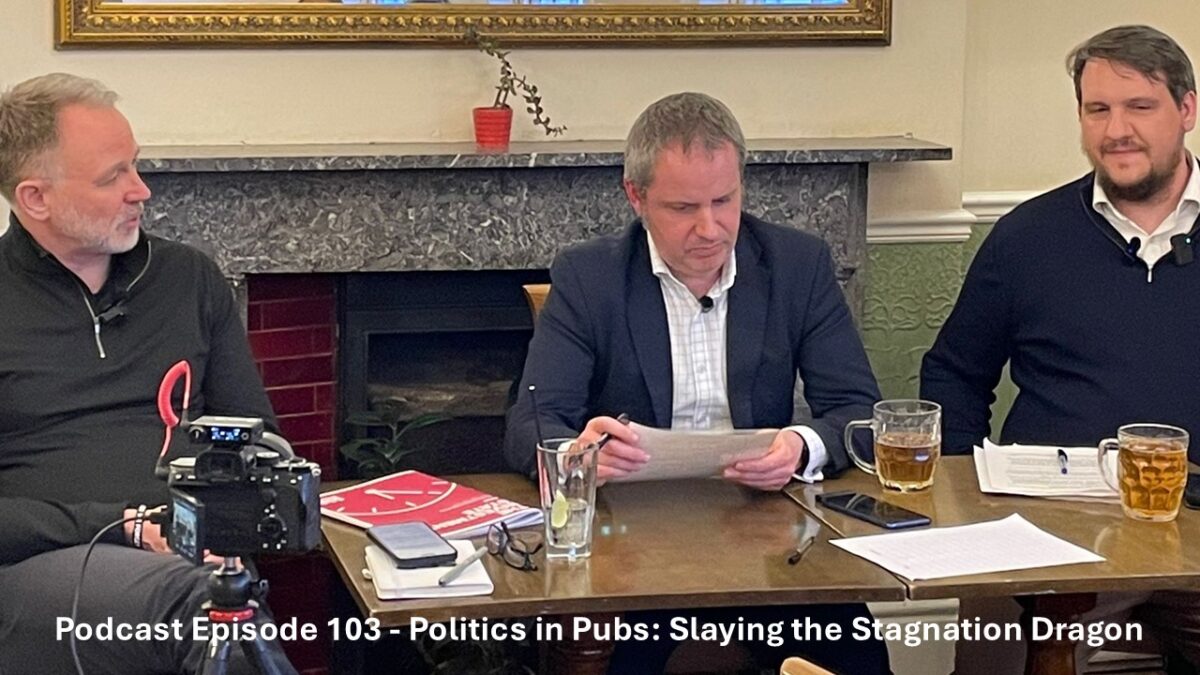
Podcast Episode 103 – Politics in Pubs: Slaying the Stagnation Dragon

At the inaugural Politics in Pubs Central London event we were joined by Benjamin Elks of the Taxpayers’ Alliance and Alastair Mellon of the SDP for a discussion on how we achieve genuine, sustainable economic growth.

Spreaker

iTunes


Podchaser

Podcast Addict
Deezer

Spotify


Castbox

Amazon

Visit Politics in Pubs at https://politicsinpubs.org.uk/ for more on their events in London and beyond. We also have a brief write up of this event below.

Dragon Slayed – Politics in Pubs in London

On the 30th April Politics in Pubs made its central London debut at The Warwick in Pimlico.  We were joined by Alistair Mellon of the SDP, a civil engineer, property developer, and former SDP candidate, and Benjamin Elks the Grassroots Development Manager for the Taxpayers’ Alliance.

The event featured a panel discussion with our two guests on the theme ” Slay the Stagnation Dragon: Ignite Real Economic Growth!”, followed by audience Q&A. 

The panel discussion started with a diagnosis of the problems we face.  Alistair discussed how productivity is everything and we have major drags on the economy like sky-high energy prices and chronically low public/private investment in R&D and infrastructure. Ben talked about high taxes and spending being the core problem. Average household lifetime tax burden is now greater than £1.2 million. Taxing work/investment reduces both. He also said Welfare spending projected at £407 billion by 2030-31 is unsustainable.

The thorny topic of housing led to some disagreement. Alistair argues the private sector alone won’t deliver enough homes (historical averages ~195k/year). He favours competent state-led new towns using compulsory purchase near transport nodes.  Ben stressed the need for planning reform over more state intervention, pointing to failures like Homes England which with more budget and staff, had achieved fewer homes built.

The panel discussed AI and the Future of Work.  Both were relatively optimistic and mentioned new jobs will emerge through creative destruction. Focus will be needed on retraining, soft/people skills, and sectors like construction and defence. 

The discussion was pragmatic, and positively policy heavy.  Both were also critical of the political establishment (both main parties). Alistair is more focused on targeted state action and industrial strategy, while Ben focuses on tax cuts and spending restraint. There was however common ground on productivity, energy, defence, and the need for competence/accountability.

The Q&A was a lively discussion across the room picking up on many of these themes.

Thanks to both our guest, if you are keen to know more and watch out for future dates in London.

The TaxPayers’ Alliance Town Hall Rich List 2026

The TaxPayers’ Alliance has recently published their 20th Town Hall Rich List.  This list compiles data on all local authority employee’s receiving over £100,000 in total remuneration.

The research is extensive with a summary available at https://taxpayersalliance.com/town-hall-rich-list-2026/, and full details at https://taxpayersalliance.com/content/files/2026/04/Town-Hall-Rich-List-2026-1.pdf.  The full dataset is also available from https://taxpayersalliance.com/content/files/2026/04/Town-Hall-Rich-List-2026.xlsx.

“The prime minister had a salary entitlement of £172,153 in 2024. There were 320 council employees who received a higher salary than this in 2024-25”

Some of the Key findings include:

  • There were at least 4,733 local authority employees receiving £100,000 or more in total remuneration in 2024-25.
  • 1,255 local authority employees had total remuneration of at least £150,000 in 2024-25.
  • The prime minister had a salary entitlement of £172,153 in 2024. There were 320 council employees who received a higher salary than this in 2024-25, a third more than in 2023-24.
  • The highest remunerated individual in 2024-25 was an individual from Staffordshire council who received £457,500. The name and job title of this individual were not provided.

Over 20 years £100,000 no longer has the same worth as it once did, and the median annual gross earnings for full-time employees in the UK is now over £39,000 per year.  However, it is also worth noting that earning over £100,000 puts you in the top 4% of UK earners.

“Continuing a theme of not disclosing data, details of 14 of the 21 roles have not been disclosed.  Croydon Council has still not fully disclosed data on spending over £500 from 2025”

Remuneration in Croydon

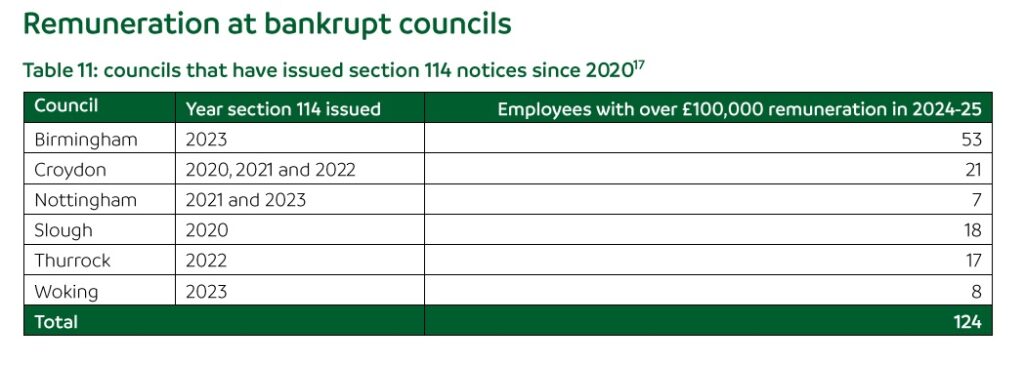
After 3 years of failing to publish data on earnings over £100,000, Croydon Council has now made the data available, although I can’t find this available on their website.  Continuing a theme of not disclosing data, details of 14 of the 21 roles have not been disclosed.  Croydon Council has still not fully disclosed data on spending over £500 from 2025 and has published no data since January this year.  You might think going bankrupt 3 times, having the commissionaires in, and increasing council tax by a third over 4 years might be a reason to be more transparent with residents, but it’s clear Croydon Council doesn’t.

The 21 roles paying over £100,000 are as follows:

NameJob titleSalaryPensionTotal
Katherine KerswellChief executive£219,890£3,948£223,838
Susmita SenCorporate director of housing£169,604£39,348£208,952
Annette McPartlandCorporate director adult social care and health£164,151£38,083£202,234
Elaine JacksonInterim assistant chief executive£153,002£36,514£189,516
Jane WestCorporate director of resources and s151 officer£174,813 £174,813
Debbie JonesInterim executive director of children’s, young people and education£164,151 £164,151
UndisclosedUndisclosed£162,500 £162,500
Nicholas HibberdCorporate director of sustainable communities, regeneration and economic recovery£125,320£29,074£154,394
UndisclosedUndisclosed£142,500 £142,500
UndisclosedUndisclosed£132,500 £132,500
UndisclosedUndisclosed£117,500 £117,500
UndisclosedUndisclosed£107,500 £107,500

This compares to recent years as below:

YearNumber over 100KNumber earning more than PMTotal remuneration of those over £100K
2018203 £2,502,504
2019192 £2,514,415
2020233 £3,123,268
2021192 £2,754,821
2022292 £4,286,372
2023No dataNo dataNo data
2024No dataNo dataNo data
2025262 £3,462,399Extrapolated data from partial publishing by Croydon Council
2026215 £2,935,931

No doubt this is a reduction over most years we have data for and total remuneration is down.  We haven’t however seen any of the radical changes one might expect from a council 3 time bankrupt, and we still see a distain for transparency from a council adding increasing burdens on the people it exists to serve. 

“You might think… increasing council tax by a third over 4 years might be a reason to be more transparent with residents, but it’s clear Croydon Council doesn’t”