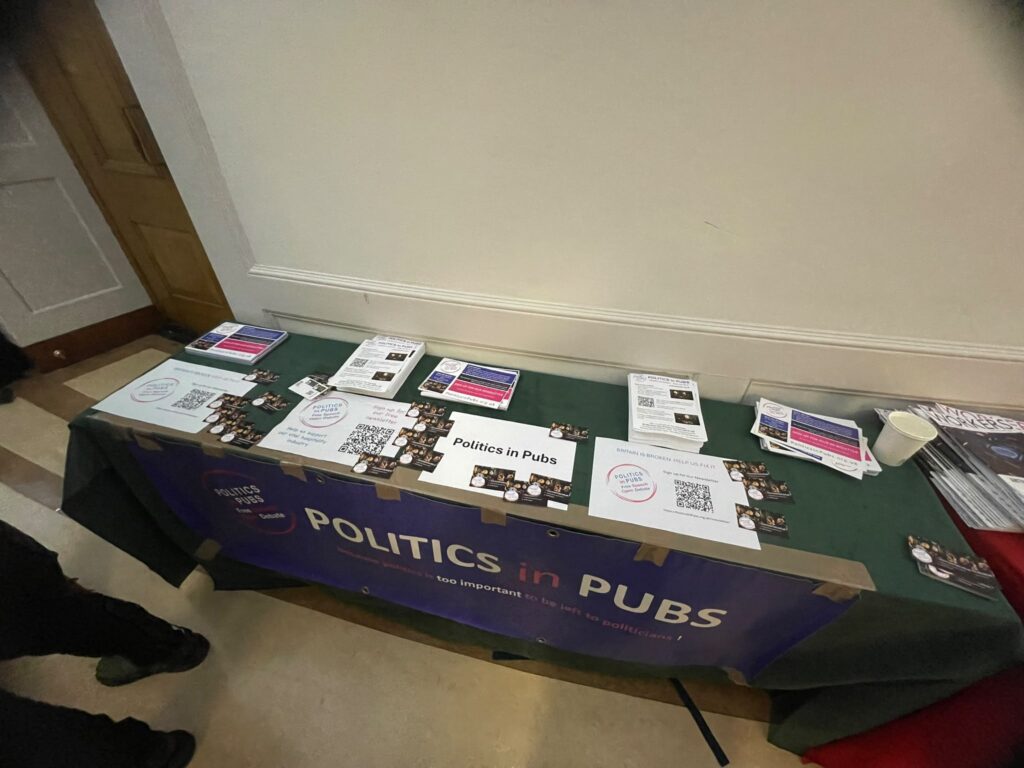
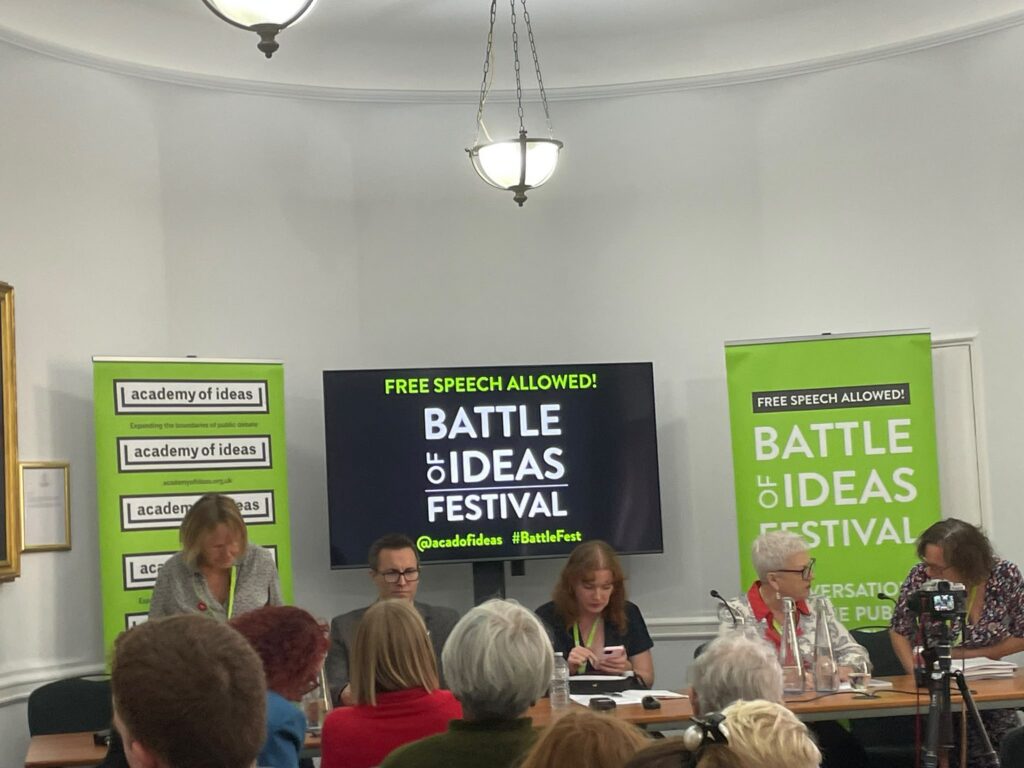
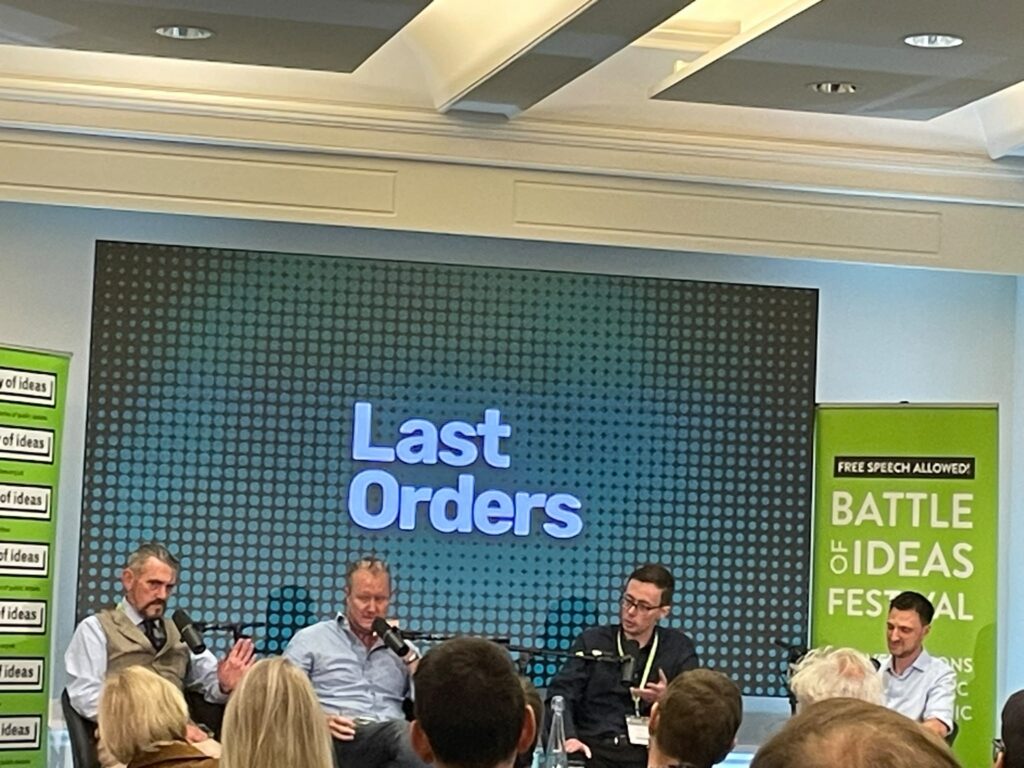
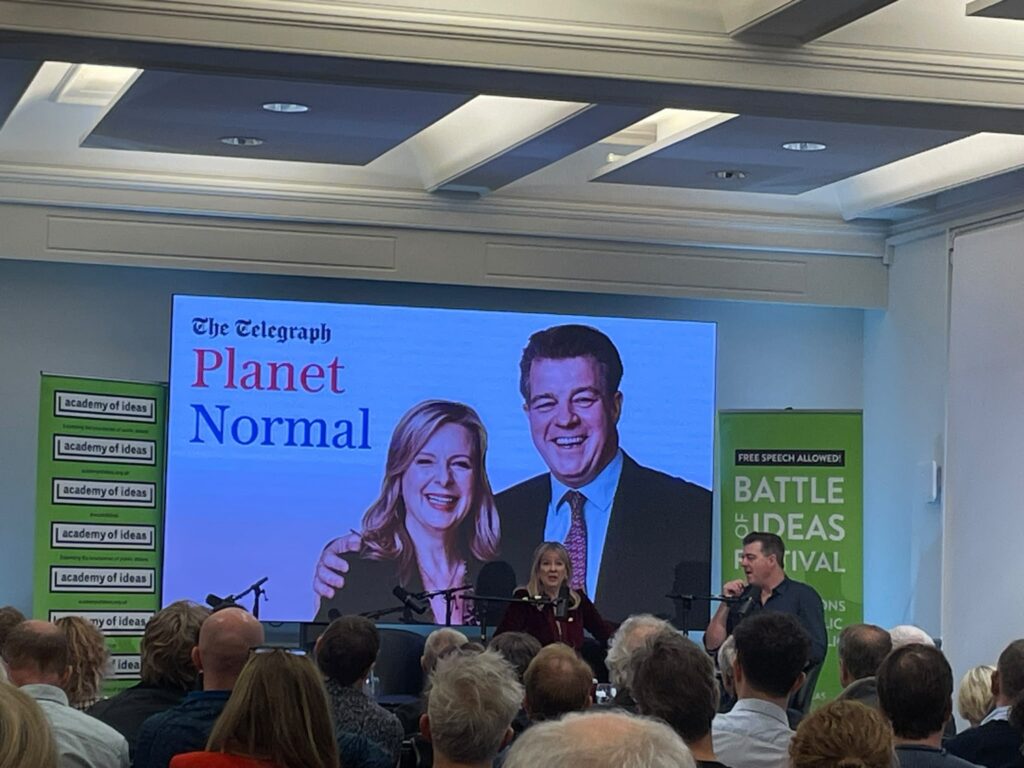
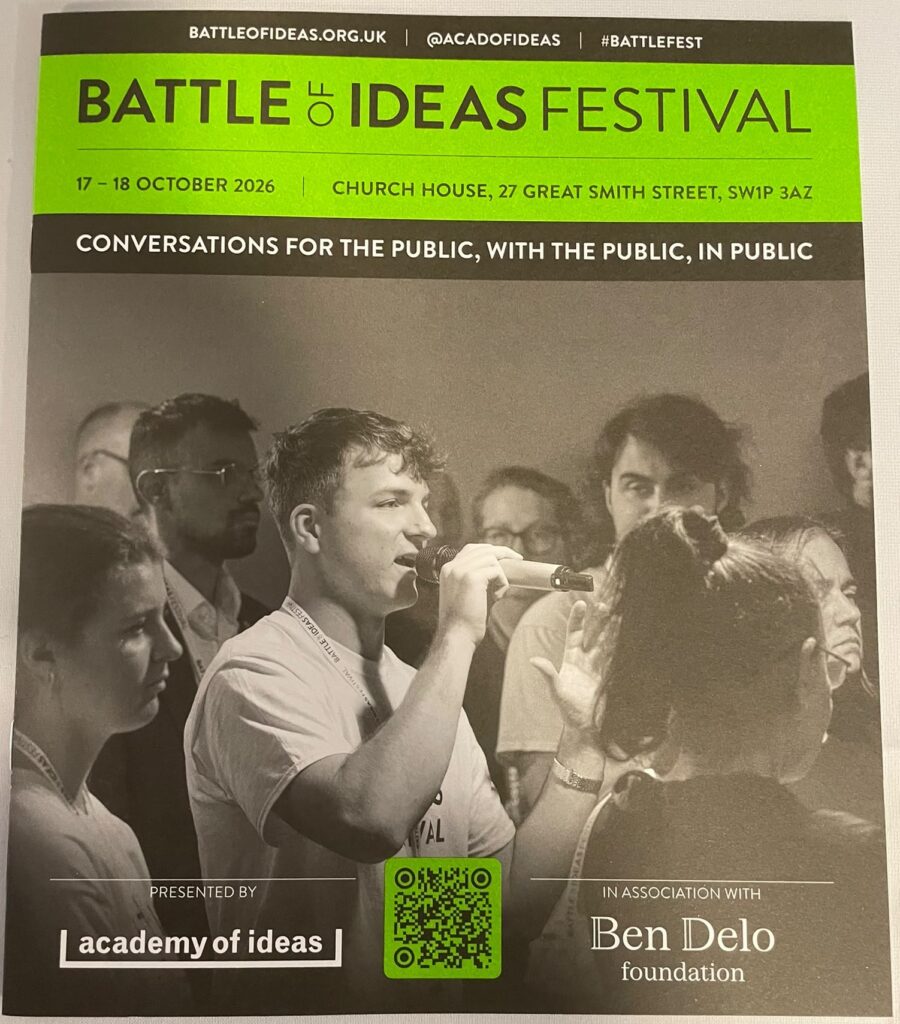
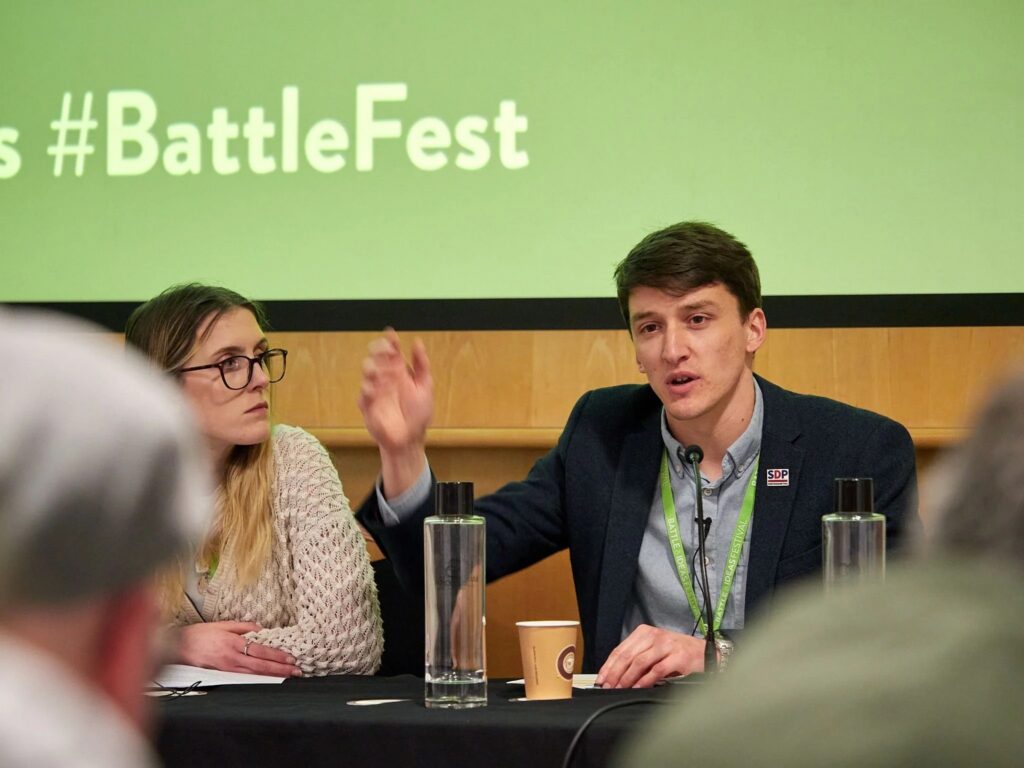
The weekend of the 17/18 October saw the Battle of Ideas take place in Church House in Westminster. Dozens of debates, conversations and interviews took place where the challenges of today were discussed and the audience had the opportunity to take part.
The Battle of Ideas YouTube channel is posting videos of some of the debates. The debate below on Don’t look back! Escaping the EU’s economic doom loop may interest readers.
Podcasts make up a large part of the event with the following podcasts recorded over the weekend.
Planet Normal – live at the Battle of Ideas
Allison Pearson and Liam Halligan are joined by Lucy Connolly and historian Robert Tombs.
The spiked podcast: politics and the culture wars
Francis Foster, Andrew Gold and Poppy Coburn join Tom Slater and Fraser Myers.
The Free Speech Union – six years on
Connie Shaw joins Jan Macvarish, David Rose and Ben Jones.
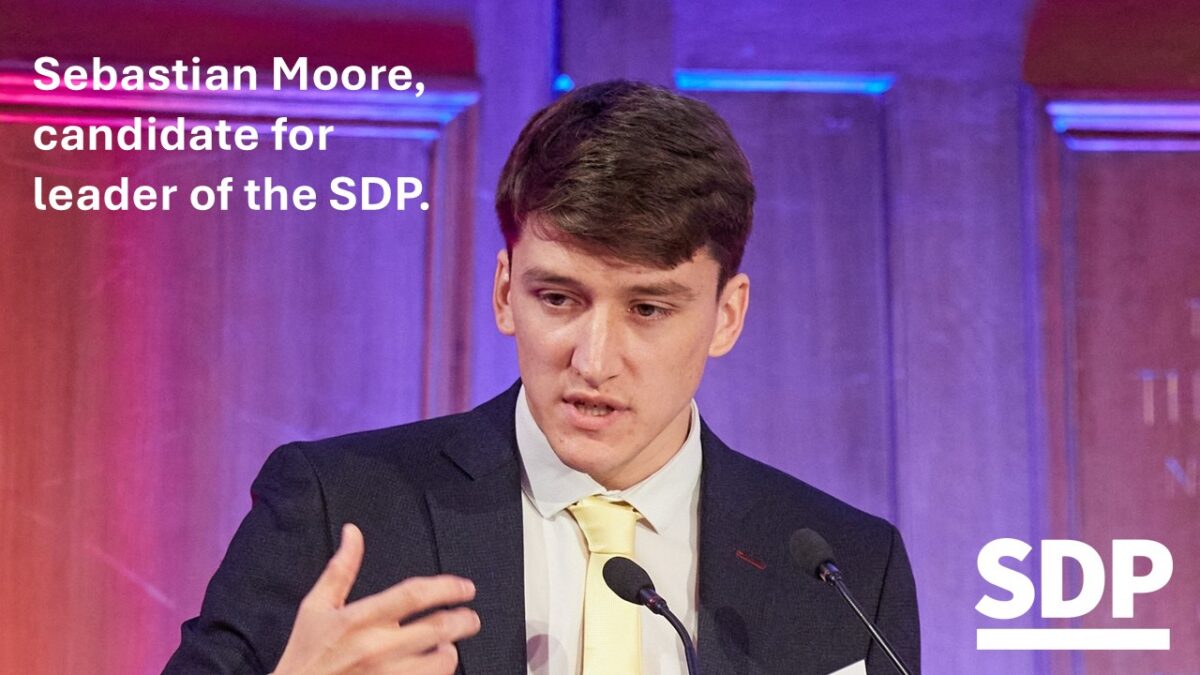
Following the resignation of William Clouston as leader of the Social Democratic Party, Sebastian Moore has announced his intention to run for the role. We speak with Sebastian about his plans.
“I want to lead our party to create a culture where all members are valued and all views debated”
Can you introduce yourself and tell us why you are running for leader of the SDP?
I’m Sebastian Moore, a 30 year old adopted Mancunian with a passion for travel, languages, reading, and of course politics.
Despite my interest in politics, I never thought I’d join a party until I found the SDP. I read the party’s founding document (the New Declaration which was published in 2018) and realised I’d found my political home in the SDP’s project of rebuilding a nation based on our shared interests.
I’m contesting the leadership election because I think the party needs to change, not its policies, but the way it works if we are to make a real difference. There’s sometimes a feeling that it’s wrong to criticise the party in the public arena but being able to criticise yourselves is important for any organisation that wants to improve.
Tackling the things that aren’t working takes not just courage but a clear idea of how to put them right. I want to lead our party to create a culture where all members are valued and all views debated, to grow and develop its members, to have a clear strategy for growth, and to find and talk engagingly to a wide audience.
If we want to change the direction of our country, people like me cannot simply sit on the sidelines. We have to take responsibility for making things better and the SDP has to be a party that seeks to do just that.
That conviction has shaped the past few years of my life, and it’s why I’m standing to lead the SDP.
“To really build the vote, we need to grow the party membership – not just increase the number of members but to help members to grow their contribution”
The party has received a lot of publicity but has had limited electoral success. How would you hope to build the vote?
It’s not quite right to say we’ve received a lot of publicity. We’ve been effectively ignored by most of the media but we have built up a good presence on X. A Labour-supporting X commentator noted after Clacton that the SDP is “just a Twitter microparty with a couple thousand very online hobbyists. That’s the reality. People on Twitter know about it.” That kind of criticism is hard to take because it is too close to the truth. And we all know that elections aren’t won on Twitter.
To really build the vote, we need to grow the party membership – not just increase the number of members but to help members to grow their contribution by asking them to do more than just make a monthly payment. We need to find out what their skills are and what they would like to do for the party, and then help them to make the most of their skills and experience and to be able to contribute to the party’s development in new ways. Crucially, by working with each other, we develop a collective responsibility so we hold each other to account – that means we can set realistic regional and national targets for different activities. Doing this means we know if we are failing or succeeding.
Having a more active membership also means we develop groups of people in every region who are willing to go out to their workplaces, communities and the wider world to put forward the SDP case. This activity means we hone our arguments and learn what works and what doesn’t work with the public. And it helps us build the political muscle in our party – because it isn’t enough just to win elections – we also need to be able to make a difference in power.
“it is important that as a party, we have a democratic structure for policy-making so while the leader can steer the ship a little, policy making is largely in the hands of the members”
What changes to policy, or shifts in policy emphasis, would you introduce?
I’m an ardent believer in the New Declaration so I’m not in a “rip it up and start again” mindset. But the political times we find ourselves in now are ones where our absolute guiding principle has to be nation-building. So I’d like to work with our policy team to recast our existing policies in order to frame them around this North Star: how our policies strengthen and integrate the British nation.
In any case, it is important that as a party, we have a democratic structure for policy-making so while the leader can steer the ship a little, policy making is largely in the hands of the members. Recently within the party, there has been a shift away from that member control with a move to set policies from the top. I want to make sure members are at the heart of policy making – first, because it means we make the most of our members’ deep knowledge in many areas but second, because a robust internal policy debate means arguments have been thoroughly tested before being presented externally.
Perhaps because of our online presence, we have tended to focus our content on cultural issues which generate online engagement. But this is a crowded area where it is more difficult to draw out the distinctiveness of the SDP’s position. We need to make more of our social market policies where our combination of a public sector that helps the private sector to thrive can be a big differentiator. These are policies which appeal particularly to a younger audience where we need to build our membership.
“There’s no point in aiming our message at our bubble or our quadrant – we need a message for the whole country”
Beyond the party itself, what’s your pitch to the public to support the SDP?
I’ve borrowed a phrase from another party member of “no one is coming to save us”. By that I mean we all have to take some individual responsibility to rebuild Britain.
The project of nation building is our pitch to the public and is one that can reunite what has become a very tribal and divided country. Nation building can mean an actual physical project – let’s say we agree as a country that everyone should have an affordable home. That becomes something we can all work on. I love the (possibly apocryphal) story of President Kennedy asking a NASA janitor what his job was and the janitor replied “I’m helping put a man on the moon”. Builders, baristas, barbers, bankers, bus drivers, and ballet dancers can all help in a national project to provide everyone with an affordable home.
But nation building also means talking across the aisle – to supporters of the Conservatives, Reform, Labour, and the Green party, to trade unions and employer organisations, building a lasting settlement that can command both minority consent and majority restraint. There’s no point in aiming our message at our bubble or our quadrant – we need a message for the whole country. Of course, that means lots of political debate and discussion and disagreement before we come to a compromise. Leading this discussion is the statecraft we need to relearn because our existing political class has contracted it out to unelected judges and quangos and supra-national organisations.
I’m a great believer in face to face meetings. I often visit different regions and attend events across the country, so if you’d like to meet, send me an email: sebastian.moore@sdp.org.uk.
When occasional discussions arise about what mix of British or world history we should teach in schools, given our multiethnic nation, I often wonder whether we should simply teach more about the Empire. The Empire and our global reach as a trading superpower extended across much of the globe; adding more of it into the curriculum would satisfy both a British and a global element in what is taught.
“asking a tour guide why it was a separate country from Argentina… only for me to discover that the reason was Britain”
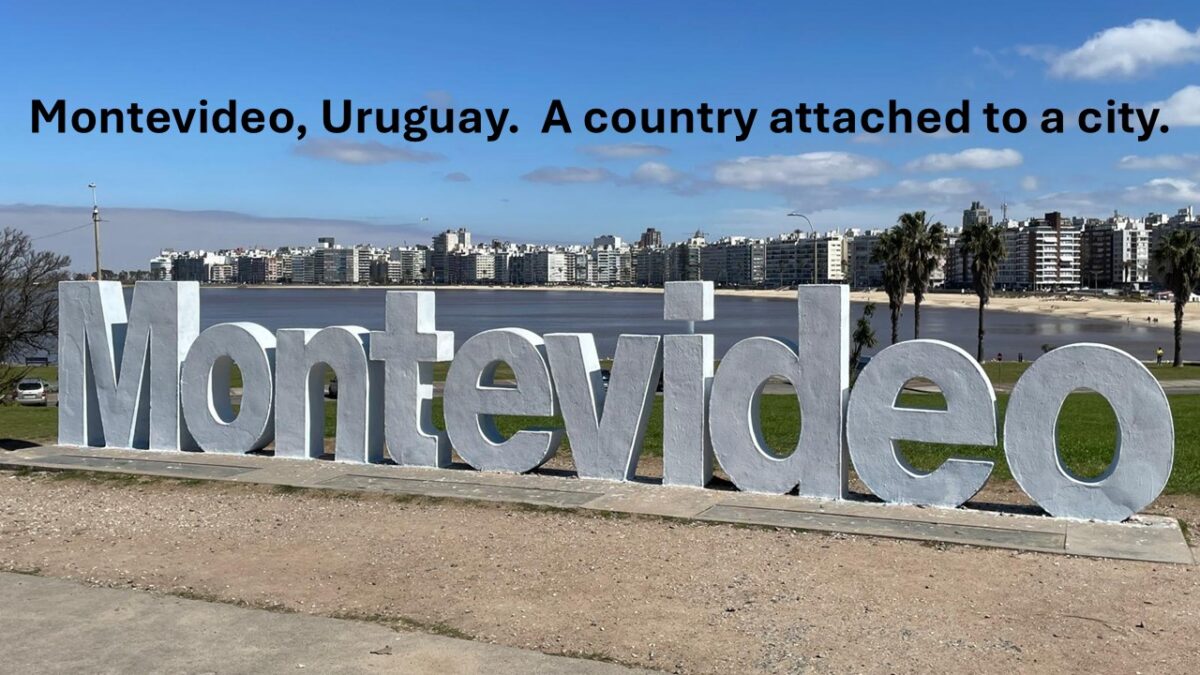
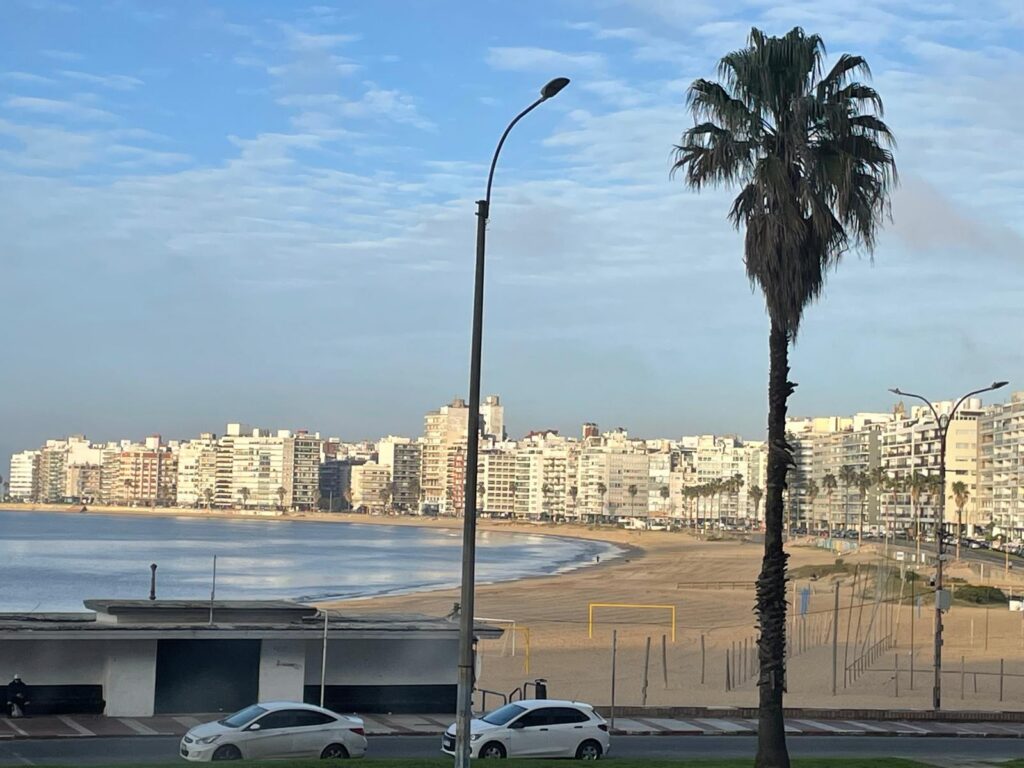
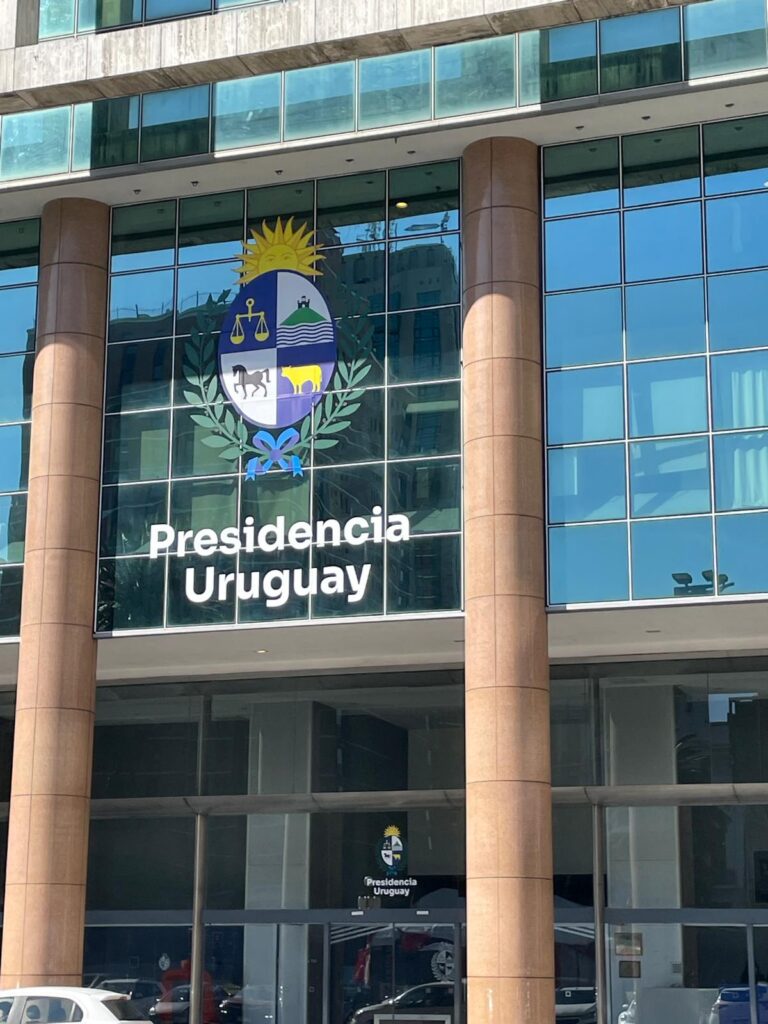
Following on from Buenos Aires, I found myself in Montevideo, the capital of Uruguay, asking a tour guide why it was a separate country from Argentina. They had once been neighbouring Spanish provinces, only for me to discover that the reason was Britain.
The Spanish-speaking city had been annexed by Portuguese-speaking Brazil. It fought for independence, and following British mediation, in 1828 Uruguay became an independent state, deliberately created to act as a buffer between Argentina and Brazil, a de facto Netherlands or Belgium of South America.
“It is the most expensive but also the safest city in South America. Both of these were noticeable, yet the expense was still low enough that I mostly felt I was getting a bargain”
Uruguay is a country attached to a port on the River Plate, that port being Montevideo. The port accounts for more than 60% of the country’s total export value. The city accounts for 1.3 million people (almost 2 million in the wider metro area) of the country’s 3.5 million. It is the most expensive but also the safest city in South America. Both of these were noticeable, yet the expense was still low enough that I mostly felt I was getting a bargain.
Noticeably, Uruguay’s GDP per capita is higher, at roughly $25k versus $15k for Argentina in recent years. Until the late 1980s the reverse was true, but Uruguay has kept single-digit inflation and avoided the defaults of its neighbour. The city still has shanty towns, but you also notice that there are more houses and not just small towns or flats.
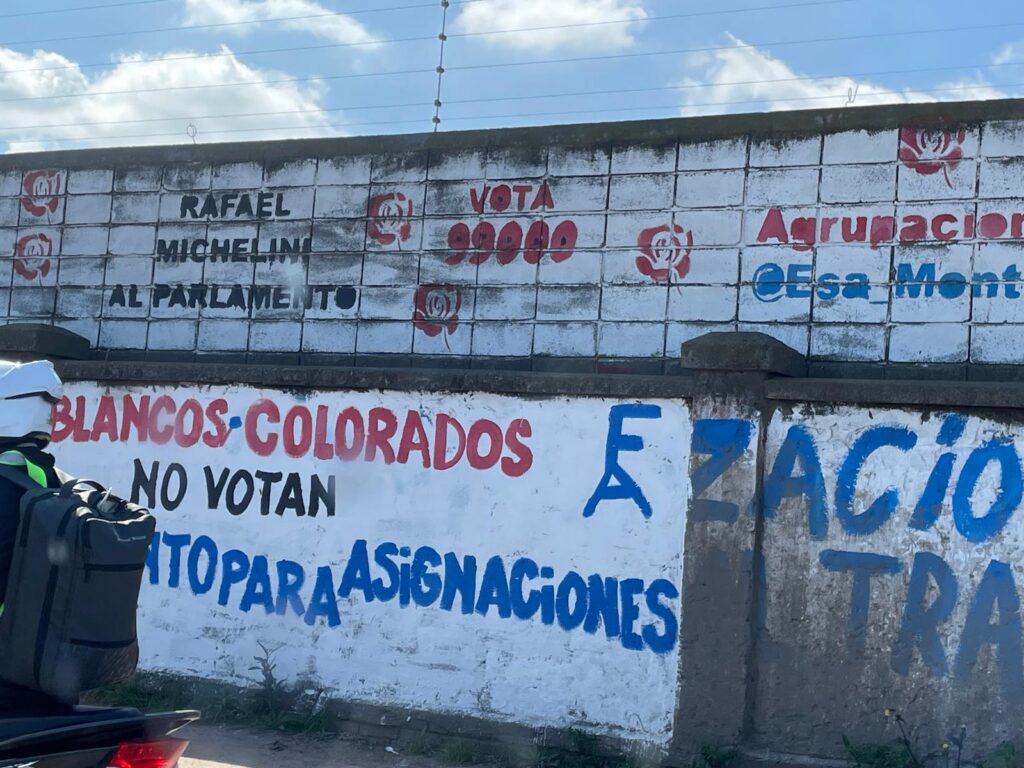
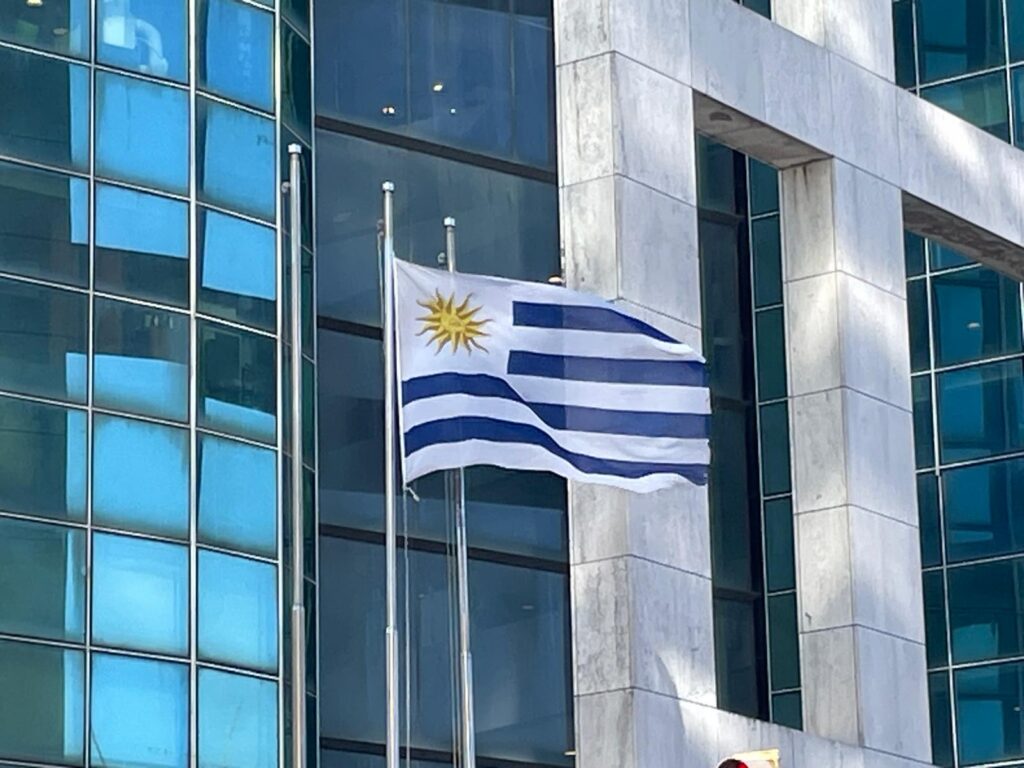
The city can be a mixed bag: a great vibe by the beach at Playa Malvín, but a city centre filled with great architecture yet surrounded by graffiti and poorly kept public space. The city’s main thoroughfares, however, didn’t have the overbearing police presence of Buenos Aires and felt safer for it. They were clearly a proud nation and were not shy about displaying their national flag.
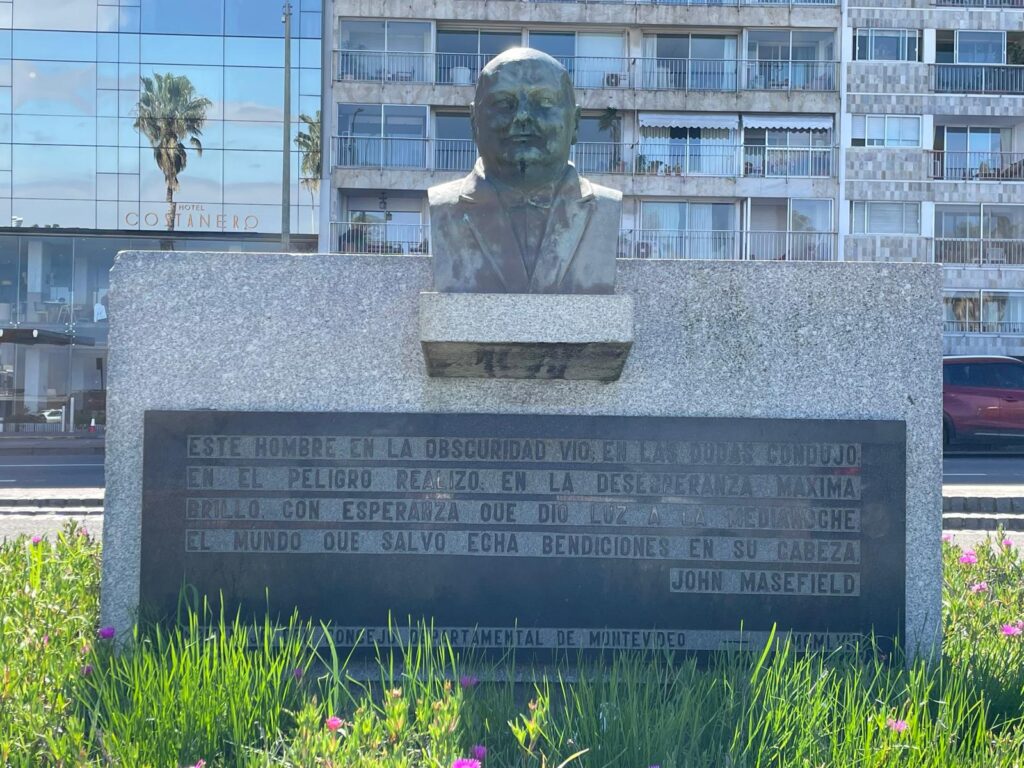
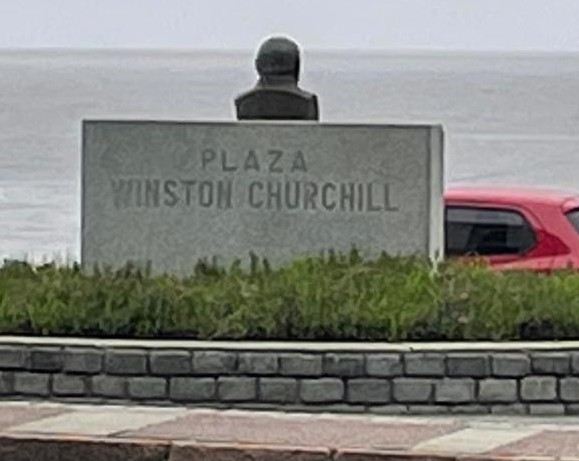
Plaza Winston Churchill Named as a tribute for his World War II leadership and defence of freedom.
“with roughly one dog for every two people, man’s best friend may have a best friend in Uruguay”
My first trip was outside the city to a vineyard and winery. The driver, a proud Uruguayan, was keen to talk up the country at every point. When some stray dogs wandered across the road (and there were a lot of dogs), he informed us that “Uruguay had more dogs than people.” A quick search suggests this might not be true, but with roughly one dog for every two people, man’s best friend may have a best friend in Uruguay.
Numbers aren’t the only measure of friendship, and the ~12 million cows in the country support a beef export business and the local market. This compares with ~9 million cows in the UK. In Montevideo a reasonably priced decent steak was never difficult to find. The winery visit also proved that a reasonably priced decent wine was easy to find; everything I tasted — red, white and rosé — was of what I felt was a high standard.
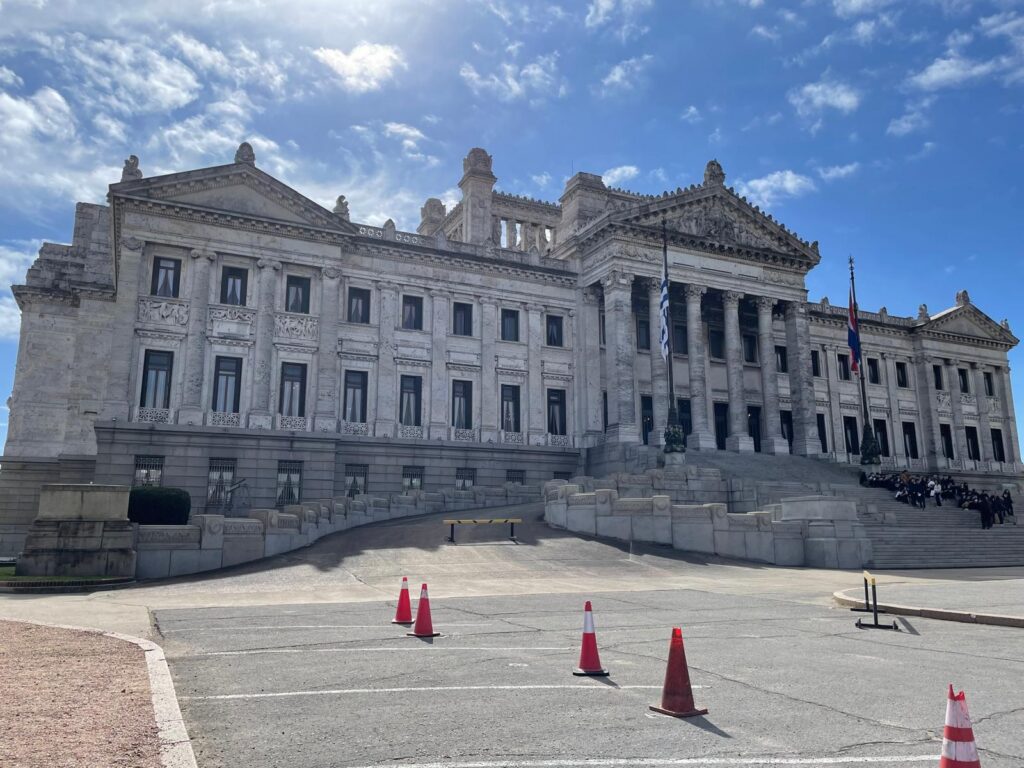
Of course, no trip to a capital is complete without a visit to its parliament. The Legislative Palace of Uruguay houses the Chamber of Senators and the Chamber of Representatives. While the main power is held by the President, the chambers run the legislative processes in a very similar way.
“In Montevideo a reasonably priced decent steak was never difficult to find. The winery visit also proved that a reasonably priced decent wine was easy to find”
The Chamber of Representatives comprises 99 members, who represent the 19 departments (regions) of the country. Each department has at least two seats, with the remainder apportioned by population. The Montevideo department has roughly half of them. The Chamber of Senators has 30 members elected on a proportional basis. Elections are held every five years, with voting mandatory. The parliament is an impressive building but is let down by its surroundings.
My short trip to Uruguay found a country much more at ease with itself and economically much healthier than its southern neighbour.
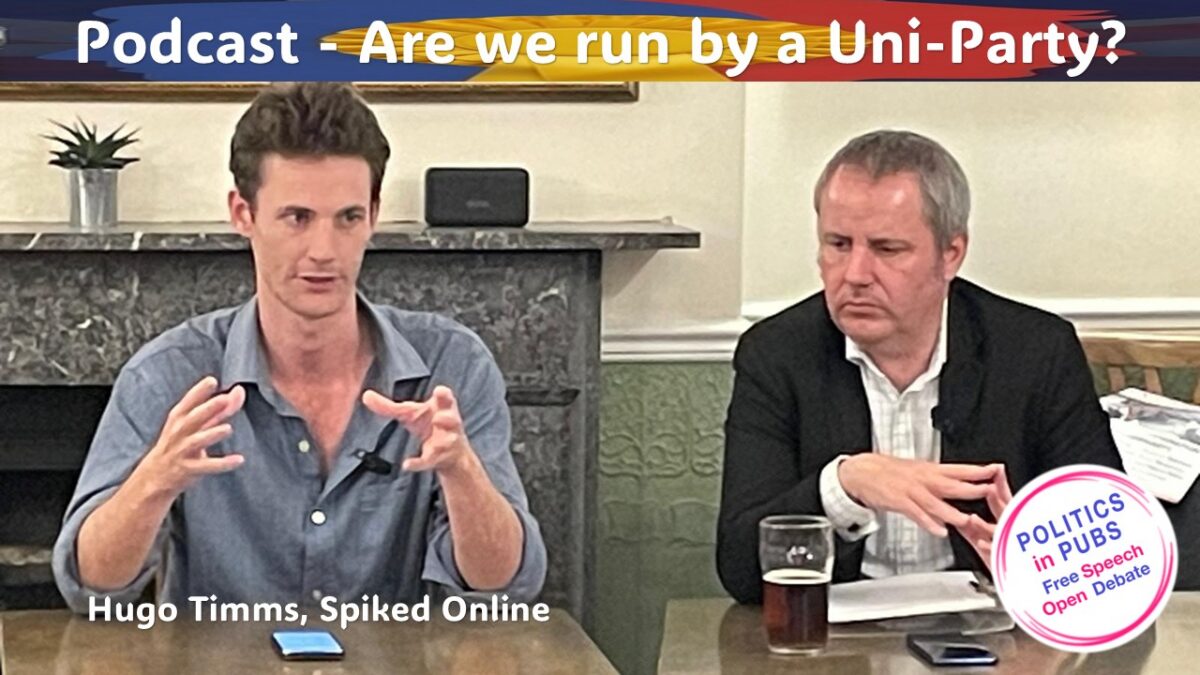
At the Politics in Pubs Central London event we were joined by Hugo Timms, Staff Writer at Spiked Online to answer the question: Are we run by a Uni-Party?
Visit Politics in Pubs at https://politicsinpubs.org.uk/ for more on their events in London and beyond. We also have a brief write up of this event below.
Hugo Timms of Spiked answers: is Britain run by a “uni-party”?
His answer is yes, at least for the past decade. He treats the uni-party as a shared progressive consensus rather than a formal merger of parties. Hugo traces the phrase to a 1944 US newspaper claim (later shown to rest on a forged letter) that Franklin Roosevelt’s circle had helped pick a Republican opponent so as to create one-party rule.
Hugo goes on to argue Labour and the Conservatives barely differed on the three biggest recent issues:
Net zero. Theresa May locked it in in 2019 via an amendment to the Climate Change Act, with no Commons vote. He says Labour has accelerated it, including ending new North Sea oil and gas licences, and that a Burnham-led government would likely go further.
Immigration. The 2016 Brexit vote and 2019 election were partly about border control, yet in the “Boris wave” which followed: about 3.8 million long-term visas from 2021–24, with net migration peaking near a million. Hugo states illegal arrivals are somewhat lower under Labour, but that the dip looks Europe-wide rather than a Labour achievement, and that voters still feel borders are not controlled.
Covid lockdowns. Closing schools and businesses and restricting civil liberties had cross-party support. Starmer’s criticism of Johnson, he says, was that restrictions were not tough enough; when Johnson lifted them in summer 2021, Starmer called it reckless.
Who holds the consensus in place. Asked whether this is politicians or a permanent bureaucracy, Timms says both, plus the courts and outside groups. He cites the PCS union (about 200,000 civil servants) voting to spend £3 million from its war chest against Reform, treating a populist government as a threat to democracy. He points to a 2024 Supreme Court ruling that future carbon emissions must be weighed in oil and gas licensing (overturning a Surrey council decision), and to the ECHR making deportation of illegal immigrants effectively impossible. He also says think tanks and NGOs sit outside lobbying rules.
Who is inside or outside. On his definition, the Greens are firmly in the uni-party (net zero, open borders, lockdown enthusiasm). Reform is not, because it wants to break the consensus. The Conservatives are trying to leave it—he notes Kemi Badenoch saying she would drop net zero and extract “every last molecule” from the North Sea—but he is sceptical, given how many current figures were in government while those policies were set. Labour remains embedded in it.
Consensus itself. He accepts that agreement can help, talking about English education reform from Kenneth Baker through New Labour and Michael Gove as an example, though Hugo says Labour is now undoing parts of it (including pressure on private schools). The older democratic consensus he wants—strong and free country, sustainable debt, work over welfare, citizens first—is, he argues, being replaced by national self-loathing.
Local government. Councils are financially squeezed: statutory duties (including SEND) far exceed what council tax can fund, most money comes from central grants, and about half of English and Welsh councils have faced bankruptcy risk. Examples include Birmingham’s failed IT system and equal-pay settlement. Reform-run councils have had limited impact because local powers are constrained.
How the uni-party could be disproved. Timms says the parties recruit the same people: an Oxbridge, staffer, think-tank, NGO cadre with little private-sector experience. He calls Andy Burnham’s cabinet “exhibit A.” Politics, he argues, is increasingly a CV line and a route to later consulting wealth (Rishi Sunak at Microsoft and Anthropic; David Cameron and Greensill). About 140 MPs stood down in 2024; non-recontesting Conservative MPs averaged age 56. Breaking the pattern would mean recruiting people with real-world experience, as Reform and Badenoch have said they want, and actually reversing the immigration and net-zero consensus. Covid, he says, has already been memory-holed by its strongest supporters. Net zero may be easier to unwind than immigration. Until that happens, the uni-party claim stands.
The evening then paused for a break followed by audience questions.
We’ve interviewed Nigel Jacklin as a candidate in Bexhill, running a group to help independent candidates nationally and for his general political commentary. We speak with Nigel about the group Our Bexhill.
“It’s an apolitical Council and most Councillors just want to do something positive”
Can you introduce yourself you our readers and tells us how you got involved?
I was elected as a Bexhill-on-Sea Town Councillor in May 2023. I represent the St Marks ward on the western edge of Bexhill which includes the Northeye estate. I was nominated by Northeye residents to oppose Home Office plans to house 1,200 male asylum seekers there. These plans were dropped by the new Labour government at the end of 2024. There are 18 Town Councillors. I’ve enjoyed working with most of them. It’s an apolitical Council and most Councillors just want to do something positive.
“The group exists to help independent Councillors get elected to Bexhill-on-Sea Town Council”
Can you tell us about ‘Our Bexhill’, and how the group works?
The group exists to help independent Councillors get elected to Bexhill-on-Sea Town Council. So far we have people interested in standing for 12 seats and we will be looking for more candidates as we move towards next May’s elections. The current members all have previous experience as Town or District Councillors. We expect others to join who will be looking to get elected for the first time; people who want to make a positive difference.
“There are more projects in the pipeline. We are a group of people who get things done”
What do you see as the major issues more widely in Bexhill’ that you hope to champion?
Each candidate has their own focus and experience. Projects individuals have championed include a new play park, improved disabled access across town, removing graffiti, redecorating a cricket pavilion, an initiative to improve veterans access to NHS care, providing feedback on planning issues and work with local groups such as Bexhill Heritage, Bexhill Men’s Shed and Bexhill Maritime (a proposal for a new tourist attraction on the seafront). There are more projects in the pipeline. We are a group of people who get things done.
How can people find out more or get involved?
We have a facebook group (Our Bexhill) and will be organising an open meeting in due course. People can contact me direct on Facebook or locally; I am the nominating officer.