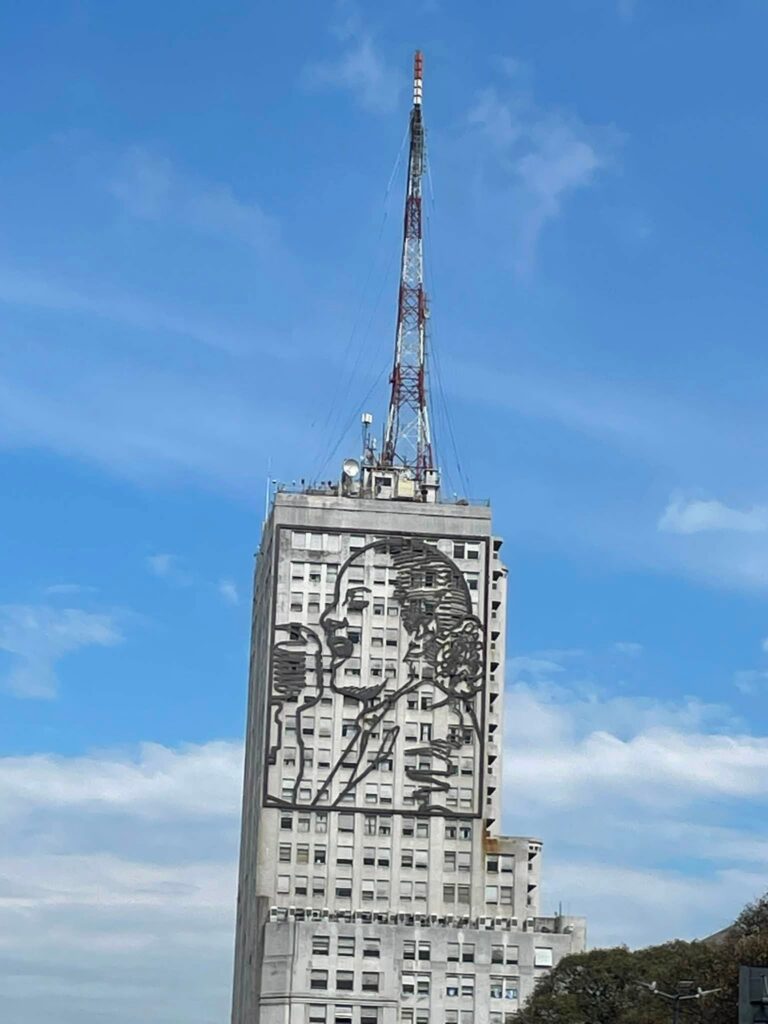
I often think a good indicator that a sci-fi series has run out of ideas is when it finds a parallel universe: somewhere with the same characters and many of the same events, but things that are subtly just a little different. The same might be said of someone writing about a holiday and reaching for this hackneyed cliché. Even so, I couldn’t help feeling that Buenos Aires was a sort of parallel universe or mirror world to Europe, similar, but not quite the same. A mix of many European countries with some New World thrown in for good measure.
“It has been said that you can tell a lot about a city by the number of cranes in the sky. For Buenos Aires this suggests a city whose best days are in the past”
It has been said that you can tell a lot about a city by the number of cranes in the sky. For Buenos Aires this suggests a city whose best days are in the past. It lacks the optimism or sense of purpose of even some of the old European capitals many of its people originally came from. One advantage is that it retains a great collection of early- to mid-20th-century architecture. Whole streets look like the sets of classic movies.
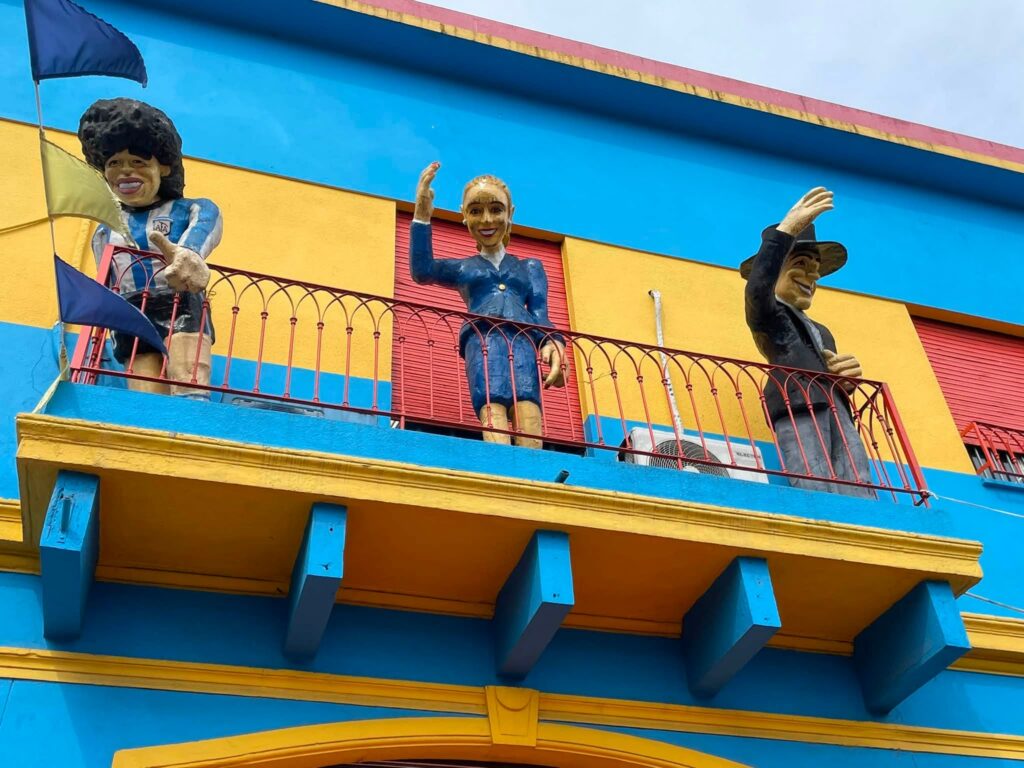
Alongside this old-fashioned look are some welcome vintage values. Politeness and decency abound, as do people dressed in classic chic. For me to notice this it must stand out; partly it is the juxtaposition of new clothes and very old, tired buildings. I noticed a lack of youngsters, not entirely unusual in a city centre, but a quick search later suggested a deeper problem. Argentina’s fertility rate has fallen by roughly 47% over the past decade, to an average of 1.23 children per woman. By comparison, the UK fertility rate is at a historic low of 1.39.
“Argentina’s GDP per capita is about $14,900 (sources vary). That compares with the UK at about $61,056”
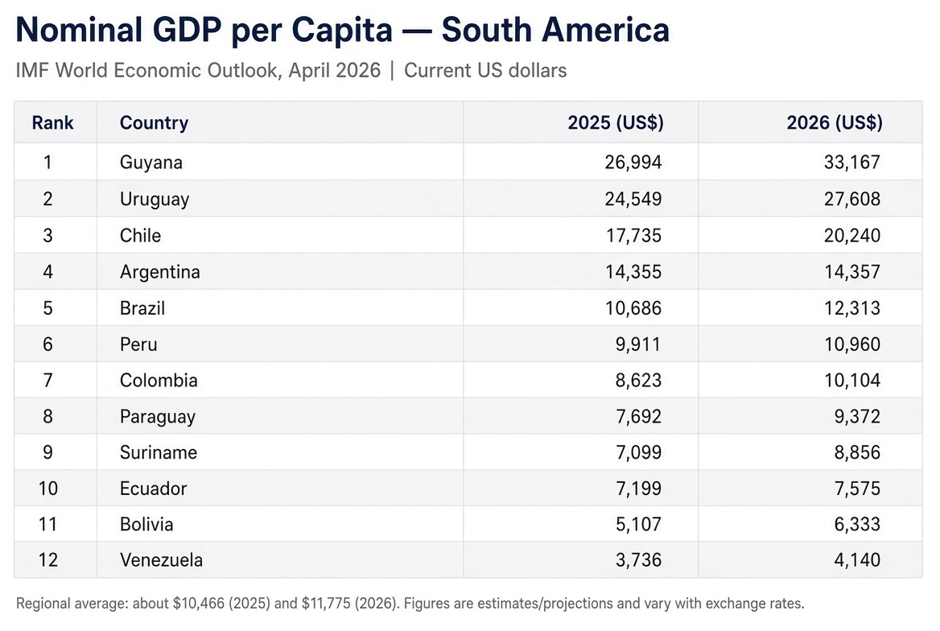
Around 1900 Argentina was said to be the richest country in the world. Alas, no more. Despite recent economic stabilisation under the Milei government, Argentina’s GDP per capita is about $14,900 (sources vary). That compares with the UK at about $61,056. It puts Argentina on a similar level to China and Mauritius, and quite a bit lower than two of its neighbours, as the table below shows.
Having said all this, Buenos Aires had the feel of early-1980s London, rough areas and old cars, rather than that of an underdeveloped nation. So, it was a surprise, to see the large shanty towns around the outer parts of the city.
“I had expected a smaller crowd after being told the previous evening that the two main groups of ultras had been arrested earlier in the week for fighting and put in jail”
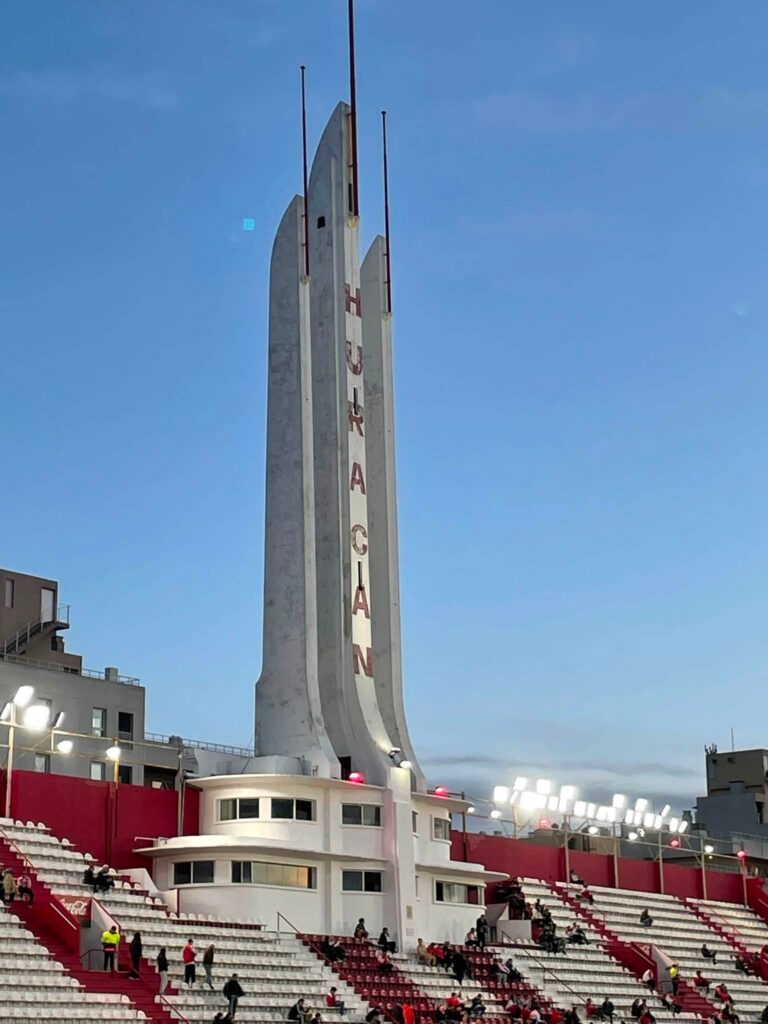
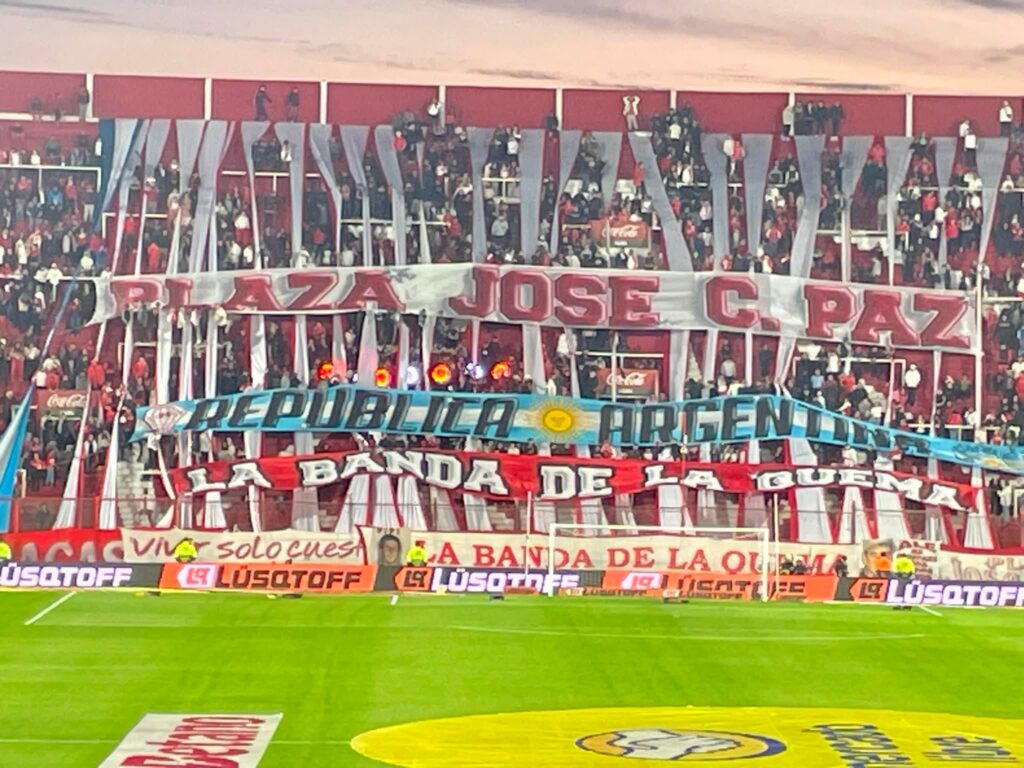
What it lacks in growth it makes up for in excellent entertainment, food and, most appealingly, wine. A chance to see Huracán v Estudiantes de Río Cuarto took me through the pre-match street entertainment to the magnificent Art Deco: Estadio Tomás Adolfo Ducó, capacity 48,000. The crowd for the 1–1 draw was well below that (our guide said ~22,000; I felt more like ~15,000). I had expected a smaller crowd after being told the previous evening that the two main groups of ultras had been arrested earlier in the week for fighting and put in jail. In Argentina away fans are generally not allowed into games, and we all had our ID checked. Given that rival gangs of ultras can fight pre-match to the point of imprisonment, that may be a reasonable measure. The club’s pre-match display and the tifo put on by the ultras who did attend were both visual delights. The evening passed without incident but with enough entertainment to make the visit well worth it.
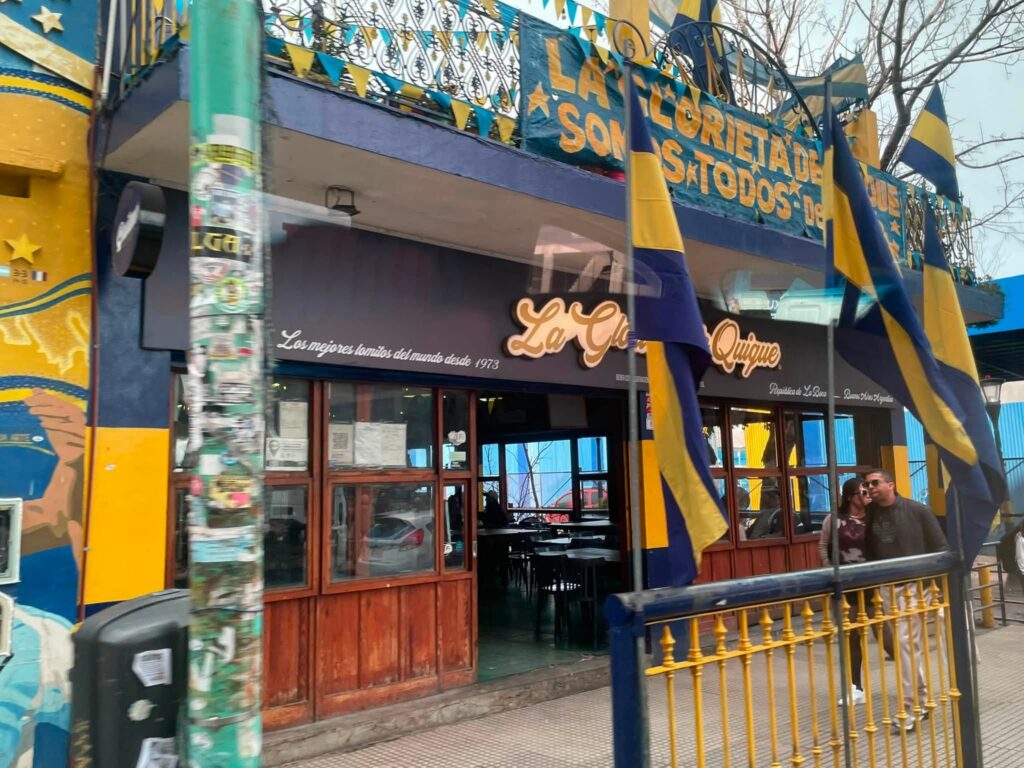
I didn’t get to any other matches, but I visited the Boca Juniors area and toured River Plate’s Estadio Monumental. La Boca, the neighbourhood around Boca Juniors’ Estadio Alberto José Armando (the Chocolate Box), is full of street entertainment, colourful houses and art. For some distance approaching the ground you see increasing use of blue and yellow (the club colours) to show a businesses or an areas’ support. You could feel the atmosphere building even on a non-match day, on a tour with people who seemed little interested in football.
River Plate’s stadium, by contrast, felt less enclosed. I watched the area turn into a sea of River fans boarding buses to see their team play away at Banfield. This was part of a limited pilot with around 7,000 tickets sold. It was the first time River supporters had been allowed as visitors for a league game in the Buenos Aires suburbs in more than seven years. You could feel that as the buses of supporters and accompanying police gathered for the journey across town.
Beef in all forms was on the menu wherever I went. A wine-tasting I joined gave us the chance to prepare, cook and eat our own empanadas. We tourists from the UK were all surprised by the quantity of beef we were given, both at that meal and generally. Even when you splash out in the UK, the price of beef means you rarely get much of it. Not in Argentina. In Argentina, be ready to lift your beef with your legs, not your back. The cooking was a useful learning experience — good food, and a line of defence against the large glasses of wine that kept coming. I’m partial to red wine but was constantly surprised by the high quality of the whites I was given to taste.
Some months ago I had a strange conversation with someone from another South American country. They were clear that the Europeans had come and colonised their country, and they wanted to blame the British quite heavily for their part in it (to be fair, we had much more influence in South America than I had realised). The conversation stayed friendly; we disagreed but remained civil and chatty, something all too rare these days. The real risk to that friendliness came when I pointed out that “those Europeans” were his ancestors who had gone to South America, while we Europeans had ancestors who had largely stayed in Europe, as evidenced by the fact that we were born in Europe.
“I’m unsure how my ancestors in Blighty were more responsible for the early slums of BA or the conquest of Patagonia than the ancestors of actual Argentinians”
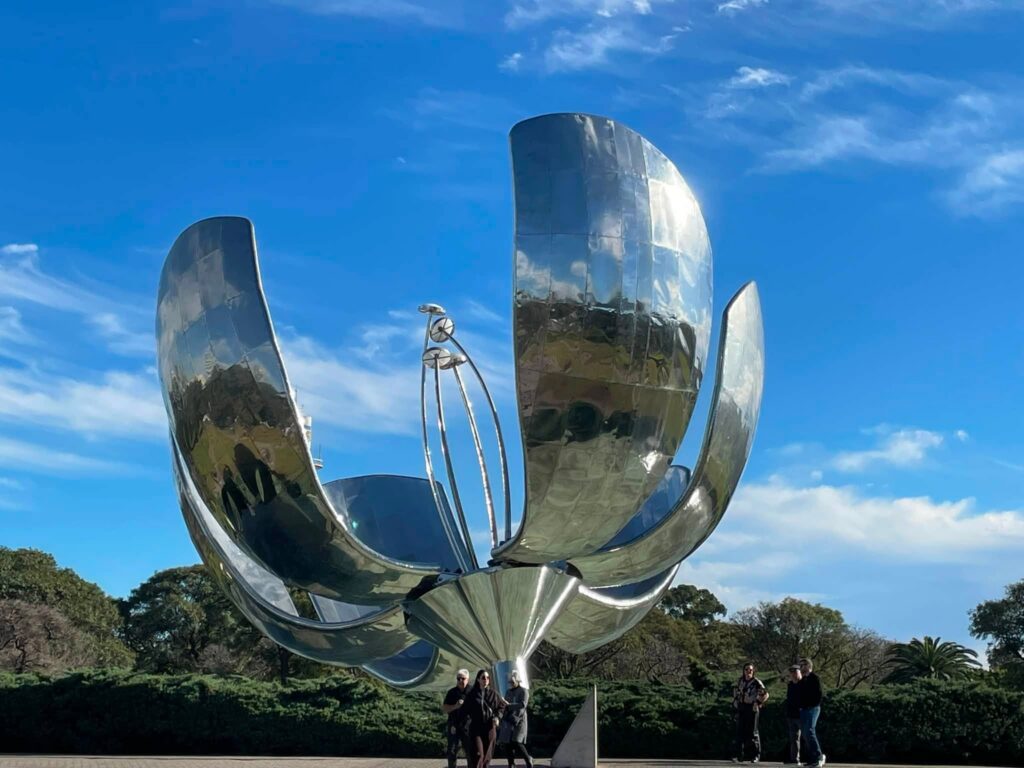
I hadn’t thought much of that conversation until a tour on my first full day in BA. It started at a giant metal flower (lost on me), took in the Boca area, and included the guide’s explanations and views of the city’s and country’s history. Views I later saw echoed at other heritage sites: that Argentinians were somehow persecuted by “us” Europeans. I don’t believe the sins of the father should be laid on later generations. Even if they were, I’m unsure how my ancestors in Blighty were more responsible for the early slums of BA or the conquest of Patagonia than the ancestors of actual Argentinians.
This mirrored a broader impression I took away: that history was something done to them; that Argentinians were observers rather than participants; a general lack of a sense of agency. I asked a guide something I had always wondered: why Argentina is separate from the other Spanish speaking countries in South America. Why are they not just one? She described them as city-states that became countries, often like brothers fighting one another, and pointed out that parts of the Argentina–Chile border were only fixed in the 1990s. It felt to me that they lacked a unifying national story.
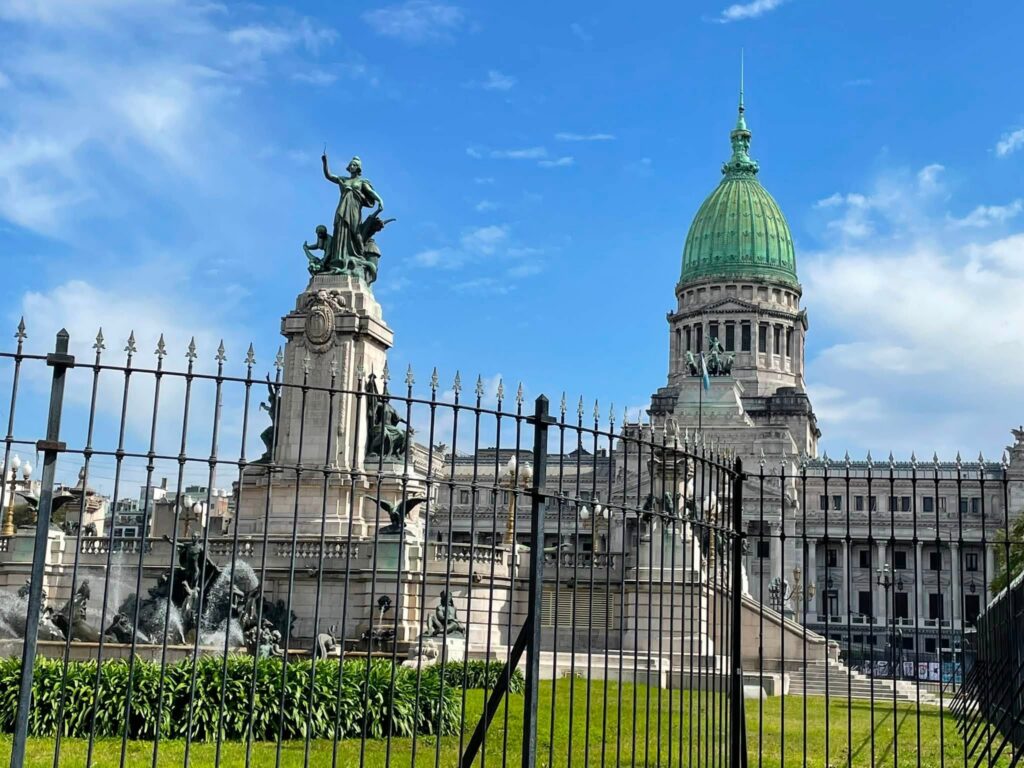
One of the highlights was a tour of the National Congress of Argentina. The Palace of the Argentine National Congress is a resplendent building inside and out. President Javier Milei’s libertarian policies have produced some stark improvements from a very poor starting point. Inflation is still around 32% but down from 211% when he took office. In 2025 they posted their first fiscal surplus since 2008, and the official poverty rate fell to 28.2% in the second half of 2025, the lowest since 2018. The incentive to save and invest must still be difficult when your money loses a quarter of its value each year and only a few years ago was losing two-thirds annually.
“Inflation is still around 32% but down from 211% when he took office. In 2025 they posted their first fiscal surplus since 2008”
In Congress, La Libertad Avanza, Milei’s party, is the largest bloc, especially with allies, in both the 257-seat Chamber of Deputies and the 72 seat Senate, but it must still work with minority parties to pass legislation. Deputies are elected by party list in multi-member constituencies covering each of Argentina’s provinces. Terms are four years, with staggered elections every two years. Senators are elected for six years, also with staggered elections every two years. It should hardly come as a surprise that the 1853 constitution was heavily influenced by that of the United States. All in all, the institution and the fabric of the building have done well to survive the coups d’état of 1930, 1943, 1955, 1962, 1966, 1976 and 1981.
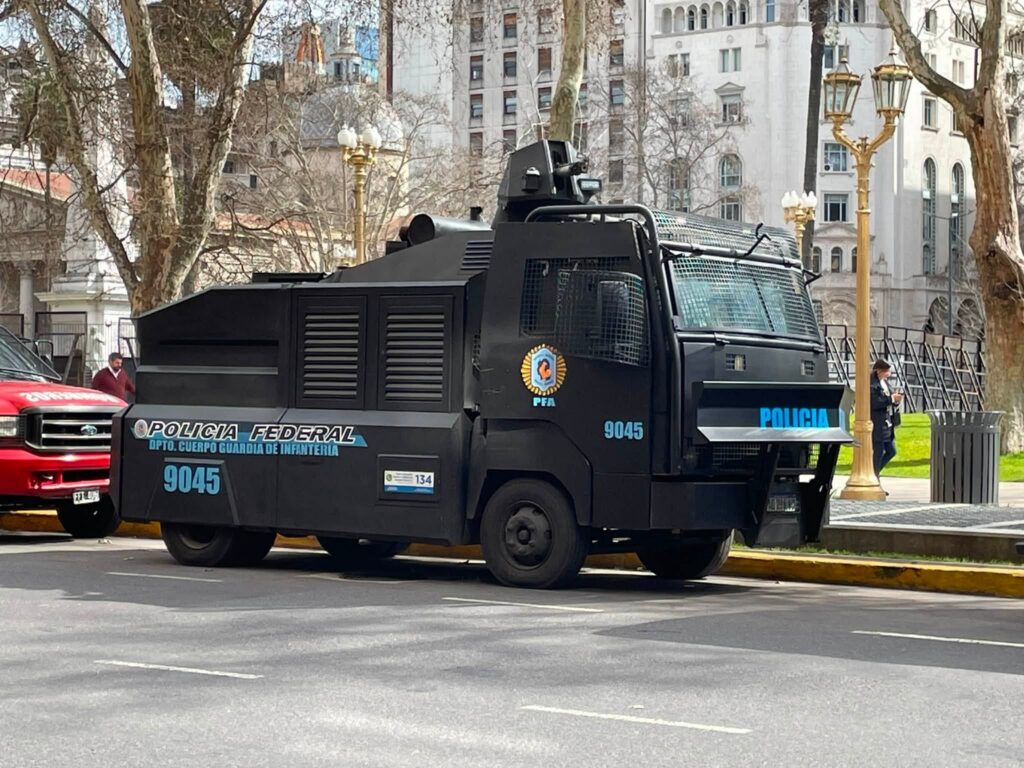
I saw no shortage of pride in Argentina, but some lack of purpose. National flags abounded in a city whose police had water cannon positioned by several major buildings. There was no shortage of references to Eva Perón; the other most revered national figures appeared to be Diego Maradona and Lionel Messi. I should mention the Falklands, something everyone I met was far too polite to raise. There were a few references across the city, but not many. Overall, the city has a lot of appeal, yet it felt as if it needed a purpose to look to the future.