

Students For Liberty write on how the end of price controls helped drive Germany’s post war recovery.
“Cigarettes served as currency. Shops were empty because the real economy had moved to the black market”
In 1948, a German economist abolished the price controls that the Nazis had created, and the Allies and most of Germany’s own experts wanted to keep. They told him it was madness.
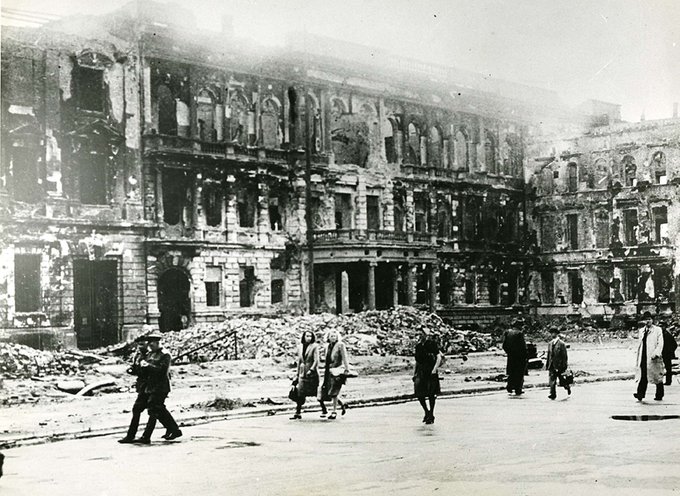
The setting: Germany, three years after the war. Twenty percent of housing destroyed. Official food rations ran between 1,040 and 1,550 calories a day. Cigarettes served as currency. Shops were empty because the real economy had moved to the black market.
Germans had lived under price controls for twelve years. Adolf Hitler imposed them in 1936 so his government could buy war materials cheap. Hermann Goering added rationing in 1939. Under the Nazis, breaking price controls could get you the death penalty.
“By 1947, the money supply was five times its 1936 level. Prices were still frozen. The obvious result was mass shortages”
In November 1945, the Allied Control Authority (the United States, Britain, France, and the Soviet Union) kept Hitler’s controls in place. By 1947, the money supply was five times its 1936 level. Prices were still frozen. The obvious result was mass shortages.
His name was Ludwig Erhard, economics director of the Anglo-American Bizone. He had refused to join the Nazi Association of University Teachers. During the war he wrote a memorandum outlining a postwar market economy, one that made his hope for a Nazi defeat clear.
Every serious voice said controls must stay. The Social Democratic Party wanted central direction. Labor unions agreed. The British authorities agreed. Most German manufacturers agreed. Even some Americans agreed. The memory of the 1923 hyperinflation made decontrol look reckless.
“Once the Deutsche Mark had real value and prices could move, the stockpiles came out of storage”
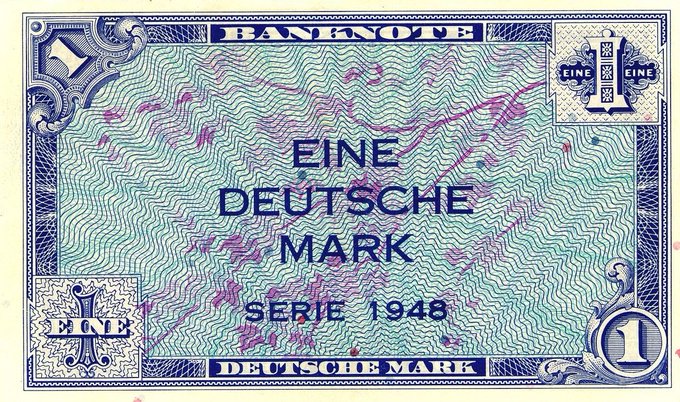
On Sunday, June 20, 1948, the currency reform introduced the Deutsche Mark. The same day, the Bizonal Economic Council passed a price decontrol law over Social Democratic opposition. Erhard spent the summer eliminating controls, allocations, and rations by directive.
By Monday, June 21, shop windows filled with goods that had “not existed” the week before. They had existed all along. Producers and traders had hoarded them because the old currency was worthless and controlled prices meant selling at a loss. Once the Deutsche Mark had real value and prices could move, the stockpiles came out of storage. The black market did not need to be dismantled. It moved into the shops.
That July, U.S. General Lucius Clay called him in. Clay: “Herr Erhard, my advisers tell me what you have done is a terrible mistake. What do you say to that?” Erhard: “Herr General, pay no attention to them! My advisers tell me the same thing.”
In June, industrial production sat at 51 percent of its 1936 level. By December, it had climbed to 78 percent. Absenteeism fell from 9.5 hours per week in May to 4.2 hours by October. Yale economist Henry Wallich later wrote that “the spirit of the country changed overnight.”
Germans call this the Wirtschaftswunder, the economic miracle. It had a mechanism. Twelve years of price controls had held down a working economy. Erhard removed the controls, and the economy came back. What made him rare was refusing to defer to every credentialed voice in the room.
“In June, industrial production sat at 51 percent of its 1936 level. By December, it had climbed to 78 percent”

Reproduced with kind permission of Students for Liberty. You can find the original X thread at https://x.com/sfliberty/status/2077165253062783066, find them on X at https://x.com/sfliberty you can also find them online at https://studentsforliberty.org/.