
“Christian Democracy has long been a strong presence on the continent, but it never truly gained ground in the UK… Our mission is to change that by applying traditional Christian principles within a modern democratic framework”
We first spoke with you when you were the SDP Coordinator in Dorset in January last year. Can you tell us a bit about your political journey since then?
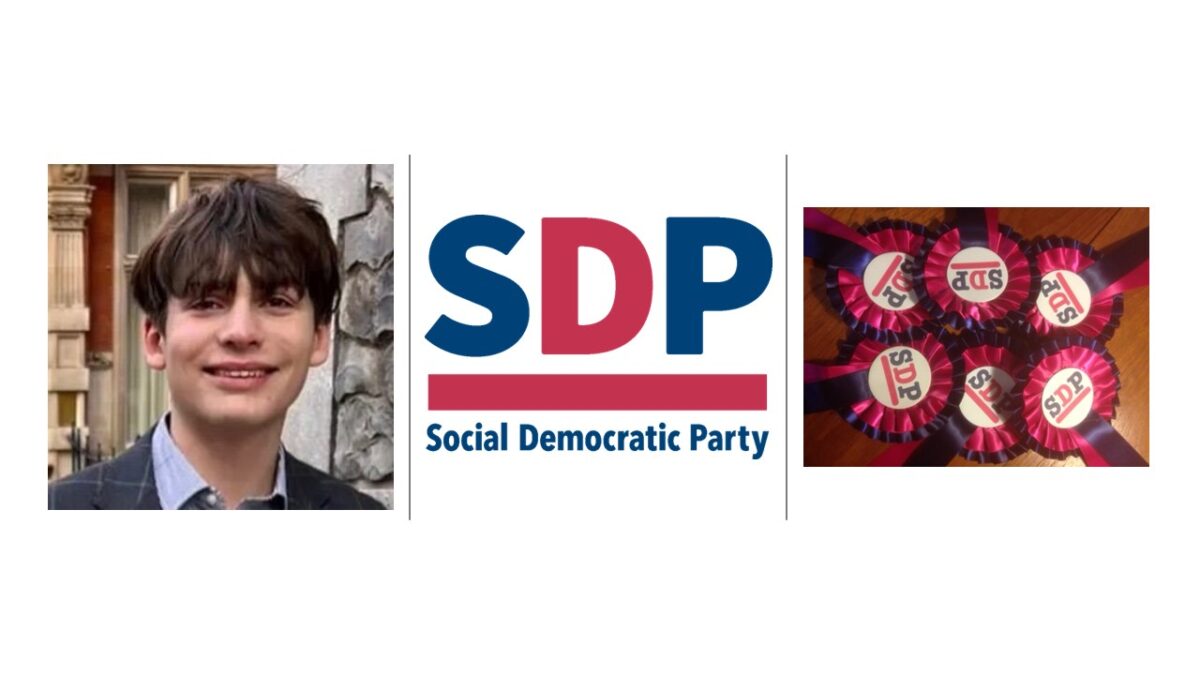
When you last interviewed me, I was serving as Dorset County Coordinator for the Social Democratic Party. During the general election, I managed six campaigns—two of which delivered some of the party’s best results nationally. However, after the election I began to doubt both the SDP’s direction and its prospects for real electoral success. This led me to leave the party and rejoin Reform UK in October of last year.
Since then, I have managed a local election campaign for Reform in Wiltshire, where our candidate secured second place with over a quarter of the vote, beating the Liberal Democrats. At present, most of my political work is focused on my think tank, Christian Democracy UK, which I founded last month. Alongside that, I remain active as a member of my local branch of the New Culture Forum.
“True freedom and flourishing are found in strong families, vibrant local communities, and a society rooted in mutual responsibility”
You’re the Chair of Christian Democracy UK. Can you tell us about the organisation and what its aims are?
The group exists to promote the values of traditional Christianity across all areas of policy, rooted in the philosophy of Christian Democracy. Emerging in 19th-century Europe, Christian Democracy has long been a strong presence on the continent, but it never truly gained ground in the UK, where politics has been largely secular in outlook. Our mission is to change that by applying traditional Christian principles within a modern democratic framework.
Our core tenets include:
- Sanctity of Life: We believe every human being is created in the image of God, giving each person inherent dignity and value. From this conviction flows our consistent life ethic—opposing abortion, euthanasia, and capital punishment alike.
- Communitarianism: We affirm that people are deeply connected and must work together for the common good—not out of vague compassion, but as members of one human family. True freedom and flourishing are found in strong families, vibrant local communities, and a society rooted in mutual responsibility, with special care for the most vulnerable and marginalised.
- Secure Borders: Loving our neighbour also means protecting our communities, families, and the common good. Mass immigration places enormous strain on housing, services, and social cohesion. While compassion remains essential, it must be balanced with justice, order, and responsibility towards our own citizens and the health of our nation.
- Social Market Economy: Guided by the principle of distributism, we believe the world’s productive assets should be widely owned rather than concentrated in the hands of the few. We reject both state socialism and unrestrained free-market capitalism, embracing a ‘third way’ that upholds private property, ensures fair taxation (with the wealthiest contributing more), and guarantees social protections for those unable to participate in the labour market.
- Stewardship: Humanity has been entrusted with the care of God’s creation. We reject selfish exploitation of the natural world, instead promoting a balanced approach that recognises human beings as stewards, not owners. Environmental policy should be wise and proportionate—protecting creation without imposing extreme measures, such as rigid Net Zero targets, that risk severe economic and social disruption.
Unlike many Christian groups that focus solely on moral and social issues, we apply Christian principles comprehensively—across economics, housing, energy, foreign policy, and more. On some issues we may lean towards centre-left solutions, while maintaining a firm social conservatism on others.
Our vision is to represent the sensible centre—a movement uniting Christians across the political spectrum, challenging the excessive individualism and materialism of today, and rejecting the extremes of both left and right.
How do you see Christian Democracy UK fitting in with the political parties we have today?
We are a cross-party pressure group – with active members in seven political parties, including the three largest parties by membership (Reform UK, Labour and the Conservatives). Our role is not to replace existing parties but to introduce a distinctly Christian democratic perspective into their debates and policies.
We seek to shape the national conversation by reminding politicians of the moral and spiritual dimensions of political life, whether on economics, family, community, or national culture. By working across party lines, we can advocate for the communitarian principles of Christian social teaching in a way that transcends partisan divides. Our mission is to ensure that Christian values are not side lined but actively shape Britain’s political future – which is particularly important in a nation where religion has experienced a sharp decline in recent years.
What areas do you think a Christian perspective can inform policy across a range of parties?
A Christian perspective can inform policy across every area of public life, not just the moral sphere. Questions of economics, welfare, housing, education, foreign affairs, and even environmental stewardship are ultimately questions of human dignity, the common good, and our responsibilities before God.
While groups on both the left and right often reduce politics to snappy slogans and populism, we insist that politics is first about people—the flourishing of families, communities, and society rooted in truth. From distributist economics to strengthening the traditional family unit, from just foreign policy to care for creation, we believe Christian principles offer a unifying and humanising vision that can enrich and correct the political debates across the spectrum.
“We affirm the free practice of religion as a cornerstone of democracy and human dignity. However, we also reject the notion that this requires a faithless public square”
What stance does Christian Democracy UK take on working with other religious communities?
First and foremost, we are a Christian organisation, rooted in the teaching and tradition of the Church. Our mission is to apply Christian Democratic principles to public life, and so naturally our membership is overwhelmingly made up of practicing Christians. That said, we welcome support and contributions from those of other faiths—or even of no faith—who share our vision for the common good.
We affirm the free practice of religion as a cornerstone of democracy and human dignity. However, we also reject the notion that this requires a faithless public square. We believe Christianity, as Britain’s historic faith, has a rightful role in shaping public life and guiding policy, alongside a recognition of religious freedom for all.
“This resurgence is encouraging, because it shows that the next generation is not turning its back on faith altogether, but is instead rediscovering it as an anchor in turbulent times”
What do you think is the outlook for Christianity in the UK today, and what are any positive trends?
Of course, there are challenges when looking at the outlook for Christianity today. The 2021 census recorded the lowest proportion of people identifying as Christian in our history, while the numbers of the irreligious and other faiths continue to rise. Attendance in the Church of England has fallen to record lows, with many parishes struggling to keep their doors open.
Yet, alongside these concerns, there are real signs of hope. In the past few years we’ve seen a marked rise in youth attendance at church. Among young men, the figure has risen from just 8% in 2018 to 20% in 2025, with young women also increasing to 12% over the same period. This resurgence is encouraging, because it shows that the next generation is not turning its back on faith altogether, but is instead rediscovering it as an anchor in turbulent times.
Many young men in particular are looking for a rooted alternative to the instability and hostility of secular liberal culture, which often treats them with suspicion for who they are. For them, Christianity offers a way back to tradition, responsibility, and community – and a faith that can give real meaning to their lives.
How can people get in touch if they want to know more?
If you’d like to get involved, there are several ways to do so. You can reach me directly at max.stenner@icloud.com to express interest in joining our working group, or follow us on Twitter/X at @christdemsuk to stay up to date with our latest announcements and publications.
Our official launch will take place at the New Culture Forum’s Christianity and Politics Conference on 30 September 2025, held at Woodhouse Gardens Pavilion, Blandford Forum, at 7pm. The event will feature a keynote address from myself, alongside Adam Smith-Connor (noted for his arrest for silent prayer) and Tyler White, Leader of the National Distributist Party. Attendance is free and open to all—details can be found on the poster below. If you’d like to reserve a place, simply email me.