With a name surely we can all get behind, we speak with Áron Ecsenyi of LA75 (Cut Taxes by 75% Party) to share their vision for a freer, more prosperous Hungary. The party is a member of International Alliance of Libertarian Parties.
“We are not professional politicians; we are citizens tired of the “rent-seeking” state”
Can you introduce yourself to our readers, and tell us a bit about your party?
We are the “LE AZ ADÓK 75%-ÁVAL PÁRT” (Cut Taxes by 75% Party), a grassroots movement representing the growing demand for libertarianism in Hungary. We are not professional politicians; we are citizens tired of the “rent-seeking” state that consumes over half of our nation’s GDP. Our mission is to dismantle the oppressive bureaucracy, eliminate the state’s monopoly on services, and return the power and property to the individual.
What do you see as the major challenges facing Hungary and what policies is the party championing?
The major challenge is a deeply entrenched “dependency culture.” The current system is a leviathan where 84% of state spending goes toward maintaining a rent-seeking network (including corporate subsidies, state-run monopolies, and massive debt interest) while only 16% covers law and order and national defence, legal, administrative, disaster management, first aid, and inpatient care costs.
We champion a radical “chainsaw” approach, inspired by the successful model of Javier Milei in Argentina. Our core policies include:
The 75% Tax Cut: Drastically reducing the tax burden to stimulate capital accumulation and private investment.
Privatization of State Monopolies: Abolishing the state’s control over education, healthcare, and media to restore competition and quality.
Ending Fiscal Dominance: Stopping the state-funded propaganda machine and dismantling the web of subsidies that keep citizens dependent on the political class.
Bonus: veto the EU budget
“Abolishing the state’s control over education, healthcare, and media to restore competition and quality”
If you could introduce policies to change just 3 things in Hungary, what would they be?
The “Láncfűrész” (Chainsaw) Reform: Immediately cut 75% of state spending by eliminating all non-essential state subsidies, investment projects, and government-controlled media, thereby balancing the budget and ending inflation caused by monetary expansion.
Educational Freedom: Abolish the state education monopoly. Shift to a system of full school choice and private funding, allowing parents to reclaim the massive amounts of money currently extracted from them via taxes for a broken, creativity-killing system.
Deregulation of the Labor Market: Eliminate the massive social security and payroll taxes that make work unaffordable for both employees and employers, transforming Hungary into a competitive, high-growth, pro-market hub similar to the success of Singapore.
“Eliminate the massive social security and payroll taxes that make work unaffordable for both employees and employers”
Is there anything else you want to say to our readers?
The “Socialism” or “Fascism” is a false dichotomy. They are the same. The lack of this recognition causes passivity among intellectuals: “Why should I abandon socialism if it brings me closer to fascism?”
Across the world, we are seeing the same pattern: massive states, eroding freedoms, and stagnating real wages. We want to send a message to our international allies in London and beyond: the battle for liberty is global. Real change doesn’t come from electing “better” politicians to manage the same broken machine; it comes from destroying the machine itself. We hope our struggle inspires those in the UK fighting for the same principles of classical liberalism.
“The “Socialism” or “Fascism” is a false dichotomy. They are the same”
How can people find out more about what the party is up to?
People can support our fight for a free Hungary and EU and learn more about our ongoing initiatives, including our independent public opinion research efforts, through the following channels:
We are also currently collecting donations so that our organization can explode into public life.
Thursday 7th May was local election day up and down the country and for us in Croydon this meant the election of an Executive Mayor, and 70 councillors. It is worth noting under the system used in Croydon most of the powers of the local authority are held by the Executive Mayor and the winner / winning party of that role effectively ‘runs the council’. Councillors still fulfil important functions but unless a party has a large majority, most decisions are made by the mayor. In the case of Croydon due to the financial problems, the Commissionaires appointed by government make many of what few decisions can be made. I should declare the author of this article was a candidate in the council elections.
Mayoral Vote
Existing Conservative Mayor Jason Perry won re-election in a tight race against Rowenna Davis of Labour. The electoral system has changed since 2022, to first past the post from a second preference system. This makes comparisons difficult; however, it does appear that a large percentage of the votes that went to independents in 2022, moved to Greens and Reform in 2026.
Mayor Votes
2026
2022 (1st Choice Votes)
Change in 26
Conservatives
35,871
33413
2,458
Labour
34,758
31352
3,406
Green Party
19,404
6193
13,211
Reform UK
14,467
n/a
14,467
Liberal Democrats
7,815
9967
-2,152
Taking the Initiative Party of Britain
2,597
5768
-3,171
Jose JOSEPH – Independent
1,568
n/a
1,568
Trade Unionist and Socialist Coalition
461
n/a
461
MCKENZIE, Winston Truman – Independent
n/a
1324
-1,324
PALMER, Gavin Francis Luffa – Independent
n/a
1114
-1,114
PELLING, Andrew John – Independent
n/a
6807
-6,807
% turnout
41
35
Mayor % of Valid Votes
2026
2022 (1st Choice Votes)
Change in 26
Conservatives
30.67%
34.83%
-4.15%
Labour
29.72%
32.68%
-2.96%
Green Party
16.59%
6.46%
10.14%
Reform UK
12.37%
n/a
12.37%
Liberal Democrats
6.68%
10.39%
-3.71%
Taking the Initiative Party of Britain
2.22%
6.01%
-3.79%
Jose JOSEPH – Independent
1.34%
n/a
1.34%
Trade Unionist and Socialist Coalition
0.39%
n/a
0.39%
MCKENZIE, Winston Truman – Independent
n/a
1.38%
-1.38%
PALMER, Gavin Francis Luffa – Independent
n/a
1.16%
-1.16%
PELLING, Andrew John – Independent
n/a
7.10%
-7.10%
Votes for Mayor outside of the 5 main parties collapsed from 15.65% in 2022, to 3.96% in 2026. Roughly half of this change can be attributed to Andrew Pelling (Former Councillor, GLA member and MP) running as an independent in 2022, but much of the rest is perhaps reflected in an increase in votes for the Greens and Reform.
One other point of note is how parties did in the mayoral election compared to the councillor elections. Again, comparisons are impacted not all parties running a full slate. However, it does suggest some consolidation of voting around the two poll leaders for the mayoral vote.
2026 Mayoral v Councillor
Mayor
Councillors
Difference
Conservatives
30.67%
26.55%
-4.12%
Labour
29.72%
26.30%
-3.43%
Green Party
16.59%
23.00%
6.41%
Reform UK
12.37%
13.92%
1.55%
Liberal Democrats
6.68%
9.00%
2.32%
Councillors Votes
The councillor votes threw up a greater mix of winners. We now have a council chamber made up of 30 Labour councillors, 28 Conservative, 8 Green, 2 LibDem, and 2 Reform.
Whilst much is made of the fact in multi-party (effectively 5 way) elections a small percentage of the vote can secure a victory all except 1 winning party achieved over 30% of the vote in their ward, and this was in a split ward. I have based this on total votes for the party in a ward.
Ward
Party with most votes
% of valid votes
Gap over 2nd
Sanderstead
Conservatives
55.35%
42.26%
Kenley
Conservatives
47.11%
31.09%
Purley and Woodcote
Conservatives
46.54%
28.20%
Coulsdon Town
Conservatives
38.75%
21.71%
Broad Green
Labour
44.09%
20.33%
Park Hill and Whitgift
Conservatives
40.74%
19.26%
West Thornton
Labour
38.92%
18.50%
Purley Oaks and Riddlesdown
Conservatives
38.63%
17.35%
Selsdon and Addington Village
Conservatives
37.84%
16.97%
Fairfield
Green Party
43.90%
15.55%
Selsdon Vale and Forestdale
Conservatives
37.58%
14.64%
Selhurst
Labour
43.07%
14.17%
Shirley South
Conservatives
34.00%
12.68%
Waddon
Labour
35.06%
10.63%
Bensham Manor
Labour
36.99%
10.40%
Addiscombe West
Labour
36.86%
10.23%
Thornton Heath
Labour
38.24%
9.30%
Shirley North
Conservatives
32.43%
9.15%
New Addington North
Labour
36.26%
9.04%
South Croydon
Conservatives
31.17%
7.52%
Norbury Park
Labour
35.40%
7.31%
Norbury and Pollards Hill
Labour
37.61%
7.02%
Woodside
Labour
36.76%
5.93%
Old Coulsdon
Conservatives
37.13%
5.80%
New Addington South
Reform UK
32.97%
3.95%
Crystal Palace and Upper Norwood
Green Party
31.89%
2.56%
South Norwood
Green Party
36.29%
2.49%
Addiscombe East
Labour
28.85%
1.14%
Of course, winning the most votes doesn’t mean you will get all the councillors. 5 wards had split votes in this election. In some cases that split indicated a significant personal vote for well-known local councillors, and in the case of Addiscombe East saw the same Labour / Conservative split and councillors returned as in 2022. Whatever you think of the politics of any individual, achieving a personal vote in local elections few pay attention to, and that receive little local media coverage is a significant achievement.
South Norwood (2 Green, 1 Labour)
Woodside (2 Labour, 1 Green)
Old Coulsdon (1 Conservative, 1 LibDem) – what looks like significant personal votes for Margaret Bird and Gill Hickson, both very well known locally.
Crystal Palace and Upper Norwood (1 LibDem, 2 Greens) – with what looks like a very large personal vote for Cllr Claire Bonham who was first elected in 2022.
Addiscombe East (1 Conservative, 1 Labour) – with both Jeet Bains and Maddie Henson, both well-known locals, returned again.
The future
Shortly after the elections finish everyone starts thinking about the next elections for the GLA, and Parliament, but also 4 years from now for Council. One thing party’s will look at is where they finished second, and if they can build in those areas. For Croydon this is how things stand.
Green Party – 11 wards: Conservative held Purley and Woodcote, Purley Oaks and Riddlesdown, and Labour held Addiscombe West, Bensham Manor, Broad Green, Norbury and Pollards Hill, Norbury Park, Selhurst, Thornton Heath, West Thornton, Woodside.
Reform UK – 8 wards: Conservative held Coulsdon Town, Kenley, Sanderstead, Selsdon and Addington Village, Selsdon Vale and Forestdale, Shirley North, Shirley South and Labour held New Addington North.
Labour – 4 wards: Conservative held Park Hill and Whitgift, South Croydon, Green held Fairfield and split South Norwood.
Conservatives – 3 wards: Split Addiscombe East, Reform held New Addington South and Labour held Waddon.
Liberal Democrats – 2 wards: Split Crystal Palace and Upper Norwood and Old Coulsdon.
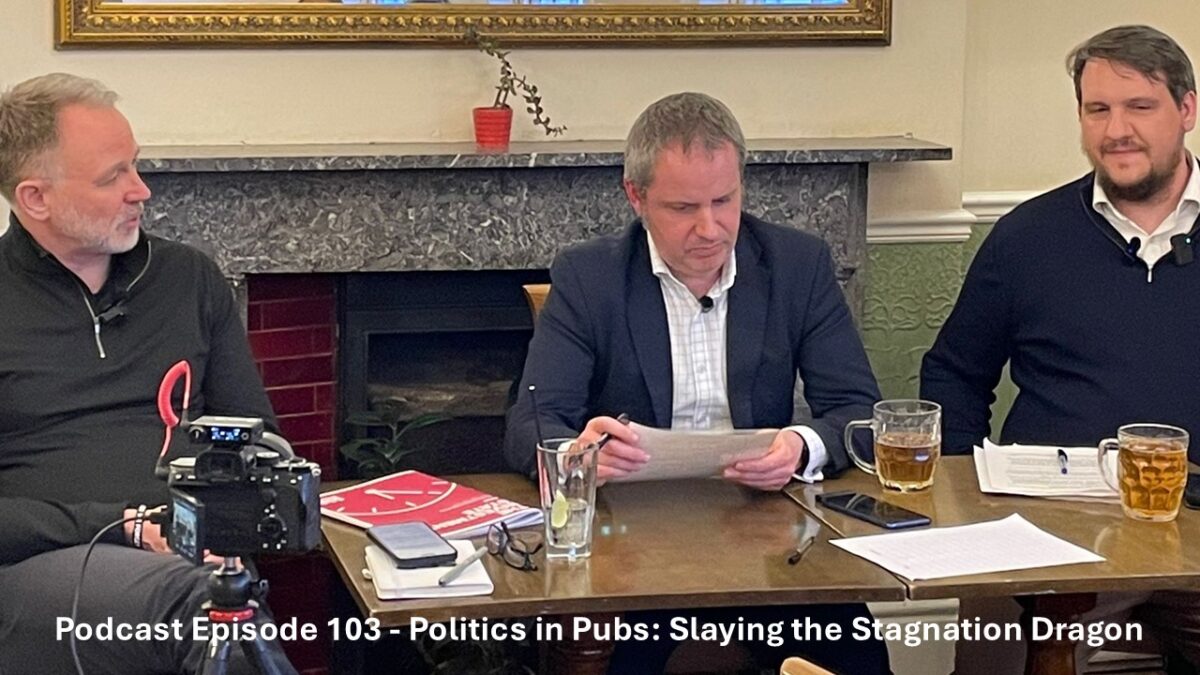
At the inaugural Politics in Pubs Central London event we were joined by Benjamin Elks of the Taxpayers’ Alliance and Alastair Mellon of the SDP for a discussion on how we achieve genuine, sustainable economic growth.
Visit Politics in Pubs at https://politicsinpubs.org.uk/ for more on their events in London and beyond. We also have a brief write up of this event below.
Dragon Slayed – Politics in Pubs in London
On the 30th April Politics in Pubs made its central London debut at The Warwick in Pimlico. We were joined by Alistair Mellon of the SDP, a civil engineer, property developer, and former SDP candidate, and Benjamin Elks the Grassroots Development Manager for the Taxpayers’ Alliance.
The event featured a panel discussion with our two guests on the theme ” Slay the Stagnation Dragon: Ignite Real Economic Growth!”, followed by audience Q&A.
The panel discussion started with a diagnosis of the problems we face. Alistair discussed how productivity is everything and we have major drags on the economy like sky-high energy prices and chronically low public/private investment in R&D and infrastructure. Ben talked about high taxes and spending being the core problem. Average household lifetime tax burden is now greater than £1.2 million. Taxing work/investment reduces both. He also said Welfare spending projected at £407 billion by 2030-31 is unsustainable.
The thorny topic of housing led to some disagreement. Alistair argues the private sector alone won’t deliver enough homes (historical averages ~195k/year). He favours competent state-led new towns using compulsory purchase near transport nodes. Ben stressed the need for planning reform over more state intervention, pointing to failures like Homes England which with more budget and staff, had achieved fewer homes built.
The panel discussed AI and the Future of Work. Both were relatively optimistic and mentioned new jobs will emerge through creative destruction. Focus will be needed on retraining, soft/people skills, and sectors like construction and defence.
The discussion was pragmatic, and positively policy heavy. Both were also critical of the political establishment (both main parties). Alistair is more focused on targeted state action and industrial strategy, while Ben focuses on tax cuts and spending restraint. There was however common ground on productivity, energy, defence, and the need for competence/accountability.
The Q&A was a lively discussion across the room picking up on many of these themes.
Thanks to both our guest, if you are keen to know more and watch out for future dates in London.
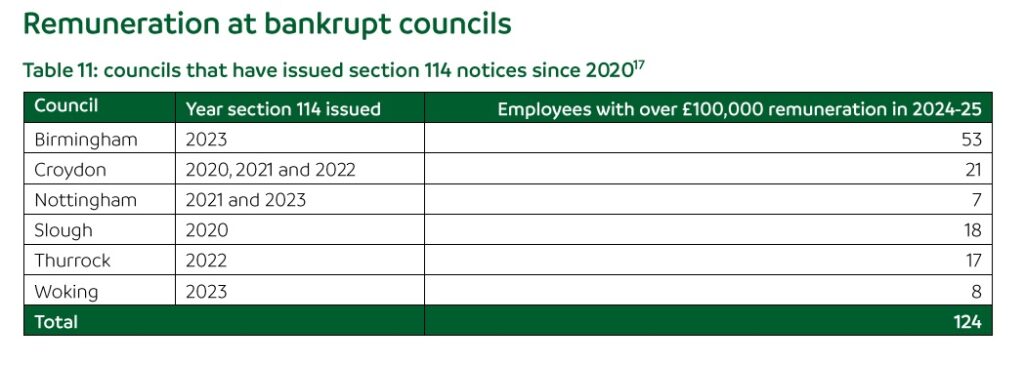
The TaxPayers’ Alliance has recently published their 20th Town Hall Rich List. This list compiles data on all local authority employee’s receiving over £100,000 in total remuneration.
“The prime minister had a salary entitlement of £172,153 in 2024. There were 320 council employees who received a higher salary than this in 2024-25”
Some of the Key findings include:
There were at least 4,733 local authority employees receiving £100,000 or more in total remuneration in 2024-25.
1,255 local authority employees had total remuneration of at least £150,000 in 2024-25.
The prime minister had a salary entitlement of £172,153 in 2024. There were 320 council employees who received a higher salary than this in 2024-25, a third more than in 2023-24.
The highest remunerated individual in 2024-25 was an individual from Staffordshire council who received £457,500. The name and job title of this individual were not provided.
Over 20 years £100,000 no longer has the same worth as it once did, and the median annual gross earnings for full-time employees in the UK is now over £39,000 per year. However, it is also worth noting that earning over £100,000 puts you in the top 4% of UK earners.
“Continuing a theme of not disclosing data, details of 14 of the 21 roles have not been disclosed. Croydon Council has still not fully disclosed data on spending over £500 from 2025”
Remuneration in Croydon
After 3 years of failing to publish data on earnings over £100,000, Croydon Council has now made the data available, although I can’t find this available on their website. Continuing a theme of not disclosing data, details of 14 of the 21 roles have not been disclosed. Croydon Council has still not fully disclosed data on spending over £500 from 2025 and has published no data since January this year. You might think going bankrupt 3 times, having the commissionaires in, and increasing council tax by a third over 4 years might be a reason to be more transparent with residents, but it’s clear Croydon Council doesn’t.
The 21 roles paying over £100,000 are as follows:
Name
Job title
Salary
Pension
Total
Katherine Kerswell
Chief executive
£219,890
£3,948
£223,838
Susmita Sen
Corporate director of housing
£169,604
£39,348
£208,952
Annette McPartland
Corporate director adult social care and health
£164,151
£38,083
£202,234
Elaine Jackson
Interim assistant chief executive
£153,002
£36,514
£189,516
Jane West
Corporate director of resources and s151 officer
£174,813
£174,813
Debbie Jones
Interim executive director of children’s, young people and education
£164,151
£164,151
Undisclosed
Undisclosed
£162,500
£162,500
Nicholas Hibberd
Corporate director of sustainable communities, regeneration and economic recovery
£125,320
£29,074
£154,394
Undisclosed
Undisclosed
£142,500
£142,500
Undisclosed
Undisclosed
£132,500
£132,500
Undisclosed
Undisclosed
£132,500
£132,500
Undisclosed
Undisclosed
£132,500
£132,500
Undisclosed
Undisclosed
£132,500
£132,500
Undisclosed
Undisclosed
£117,500
£117,500
Undisclosed
Undisclosed
£117,500
£117,500
Undisclosed
Undisclosed
£117,500
£117,500
Undisclosed
Undisclosed
£117,500
£117,500
Undisclosed
Undisclosed
£117,500
£117,500
Undisclosed
Undisclosed
£117,500
£117,500
Undisclosed
Undisclosed
£117,500
£117,500
Undisclosed
Undisclosed
£107,500
£107,500
This compares to recent years as below:
Year
Number over 100K
Number earning more than PM
Total remuneration of those over £100K
2018
20
3
£2,502,504
2019
19
2
£2,514,415
2020
23
3
£3,123,268
2021
19
2
£2,754,821
2022
29
2
£4,286,372
2023
No data
No data
No data
2024
No data
No data
No data
2025
26
2
£3,462,399
Extrapolated data from partial publishing by Croydon Council
2026
21
5
£2,935,931
No doubt this is a reduction over most years we have data for and total remuneration is down. We haven’t however seen any of the radical changes one might expect from a council 3 time bankrupt, and we still see a distain for transparency from a council adding increasing burdens on the people it exists to serve.
“You might think… increasing council tax by a third over 4 years might be a reason to be more transparent with residents, but it’s clear Croydon Council doesn’t”
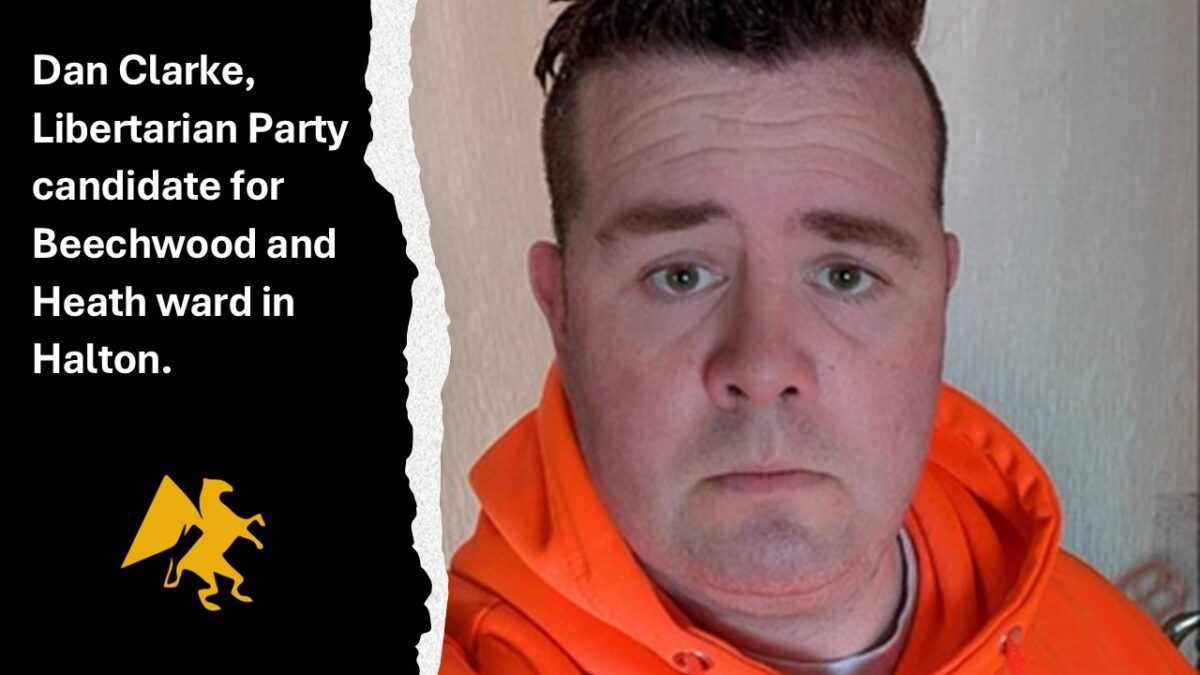
With local elections across the country in May, we speak with Dan Clarke, Libertarian Party candidate for Beechwood and Heath ward in Halton.
“I am running in the local elections because someone needs to get to grips to the council finances”
Can you introduce yourself to our readers, and tell us what made you decide to run?
I’m Dan Clarke, I have lived in Runcorn for 25 years. I am the Librarian party Coordinator for the North. I am running in the local elections because someone needs to get to grips to the council finances, and put power back into people’s hands.
“Labour and Liberal Democrat councillors have failed to listed to constituents, I plan to listen and implement the will of the people I hope to represent”
What are the main concerns in your ward and if elected what wider issues do you hope to champion?
There are several issues on Beechwood and Heath ward. The two main issues are: – 540+ houses to be built on toxic land and within close proximity to a Ineos power plant and close to UKs largest waste incinerator. Not one constituent wants it to happen. Also a boat lake on Heath park has dried up, Halton Borough Council has failed to maintain it.
I hope to get the Boat lake up and running again and work with those necessary over the property development. Labour and Liberal Democrat councillors have failed to listed to constituents, I plan to listen and implement the will of the people I hope to represent.
How can people find out more or get involved in the campaign?
“540+ houses to be built on toxic land and within close proximity to a Ineos power plant and close to UKs largest waste incinerator. Not one constituent wants it to happen”
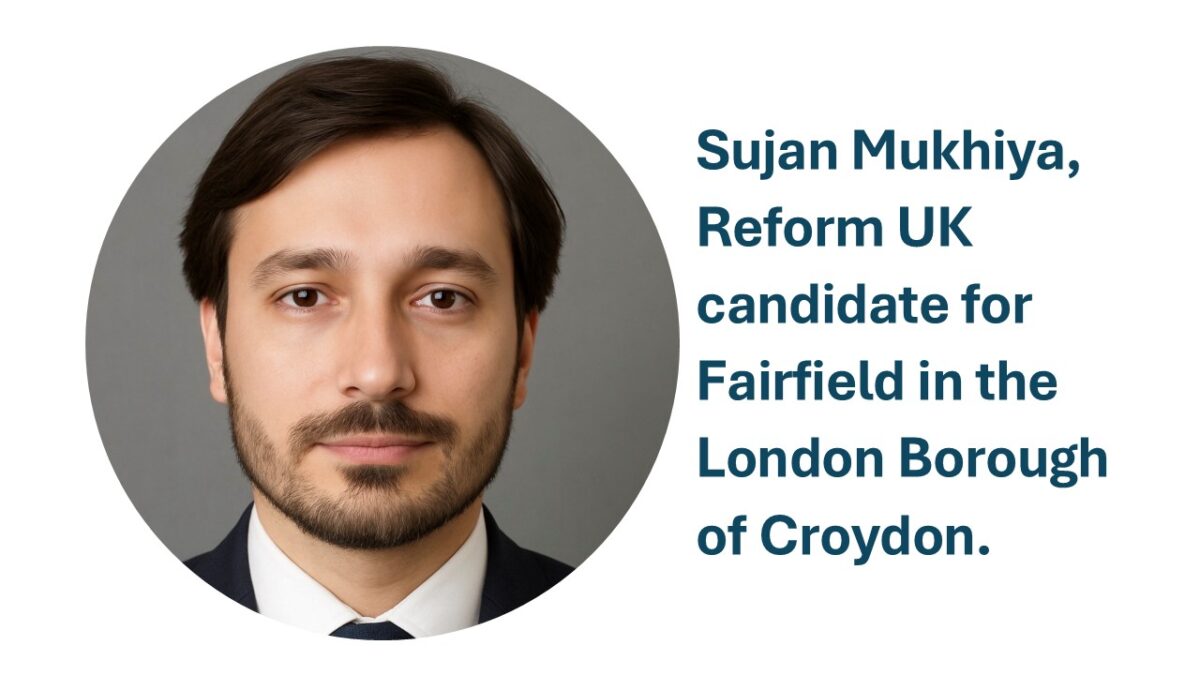
With local elections here in Croydon in May, we speak with Sujan Mukhiya, Reform UK candidate for Fairfield.
“I believe Croydon’s future depends on practical leadership, financial responsibility, and restoring trust”
Can you introduce yourself to our readers, and tell us what made you decide to run?
I am standing for Reform UK because I believe Croydon’s future depends on practical leadership, financial responsibility, and restoring trust in local government.
Having lived in the borough for many years, I’ve seen first-hand the challenges residents face — from high council tax to declining public services — and I want to be part of the solution. My goal is to ensure that every pound spent by the council delivers real value to our community.
Professionally, I work in technology and data-driven problem-solving, where clarity, accountability, and results matter. These are values I want to bring into local decision-making. I am committed to cutting waste, improving service delivery, and championing a more transparent, resident-focused council. Croydon deserves strong, competent representation, and I want to use my experience and determination to deliver meaningful improvements for Fairfield and our wider community.
“I am committed to cutting waste, improving service delivery, and championing a more transparent, resident-focused council”
How can people find out more or get involved in the campaign?
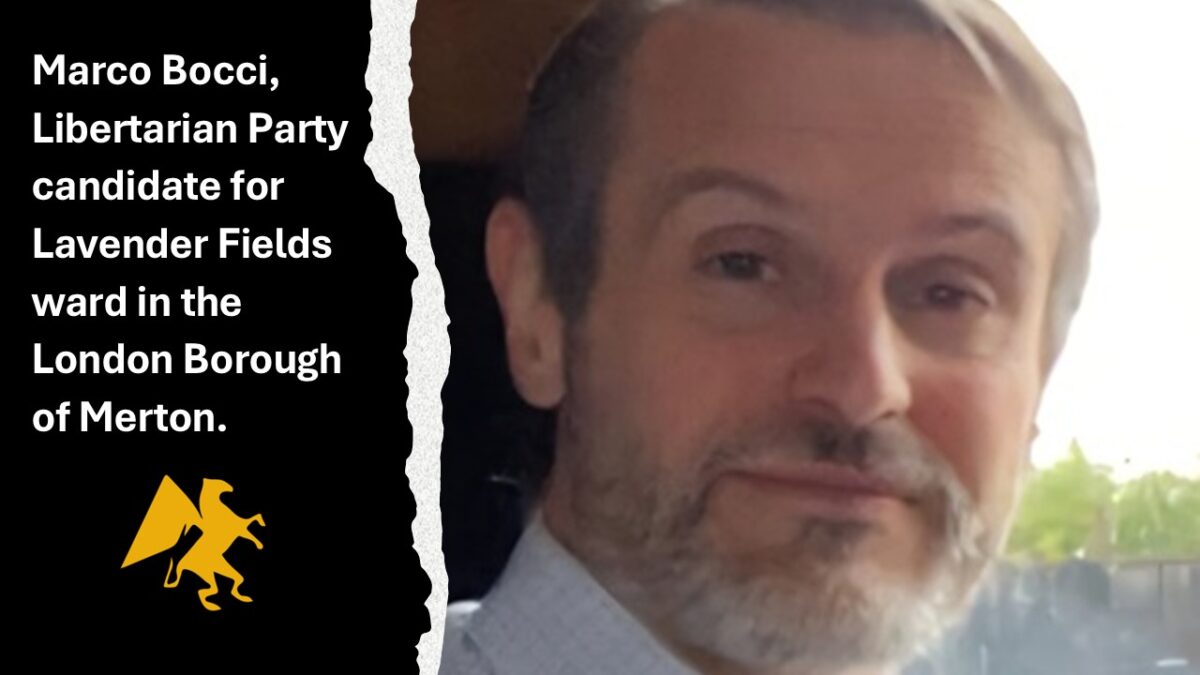
With local elections across London in May, we speak with Marco Bocci, Libertarian Party candidate for Lavender Fields ward in the London Borough of Merton.
“I decided to stand because I believe I can make a difference, bring back values that seem to be lost in the political world”
Can you introduce yourself to our readers, and tell us what made you decide to run?
My name is Marco Bocci and I decided to get involved in politics after being let down over and over by politicians who always promise a lot and deliver very little. The easiest thing to do for us citizens is to just forget about it and get on with our lives but, that’s just not me. I decided to stand because I believe I can make a difference, bring back values that seem to be lost in the political world today. Honesty, taking responsibility when things go wrong and delivering what promised during election times.
“providing the correct incentives for people to dispose items correctly, especially bulky ones. The council is currently going about this problem the wrong way”
What are the main concerns in your ward and if elected what wider issues do you hope to champion?
I am a candidate for councillor of the Lavender Fields ward in London Borough of Merton. One of the main issues affecting the area are the high streets that are dying due to over regulation and over taxation, my plan is to scrap business rates entirely to transform Merton in a local business and start-up hub. Other issues that I believe needs addressing are anti-social behaviour and fly tipping, the first to be tackled by reducing dark spots and the latter by providing the correct incentives for people to dispose items correctly, especially bulky ones. The council is currently going about this problem the wrong way, pop up tips are helping but not doing enough to resolve the issue.
How can people find out more or get involved in the campaign?
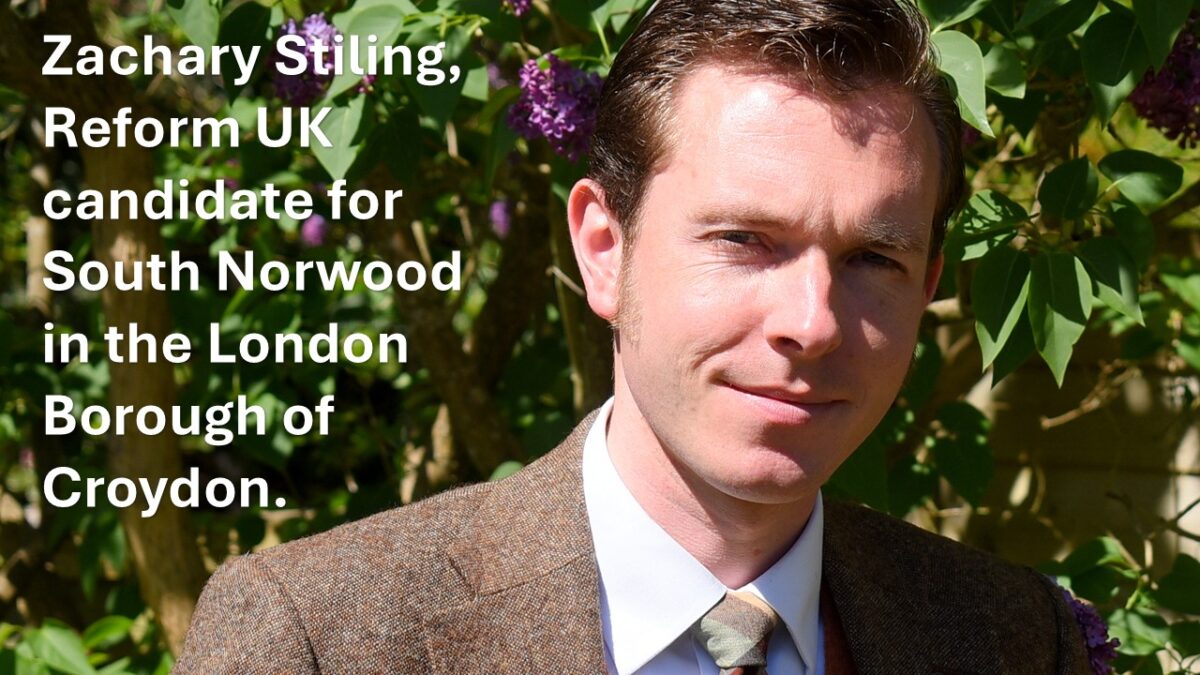
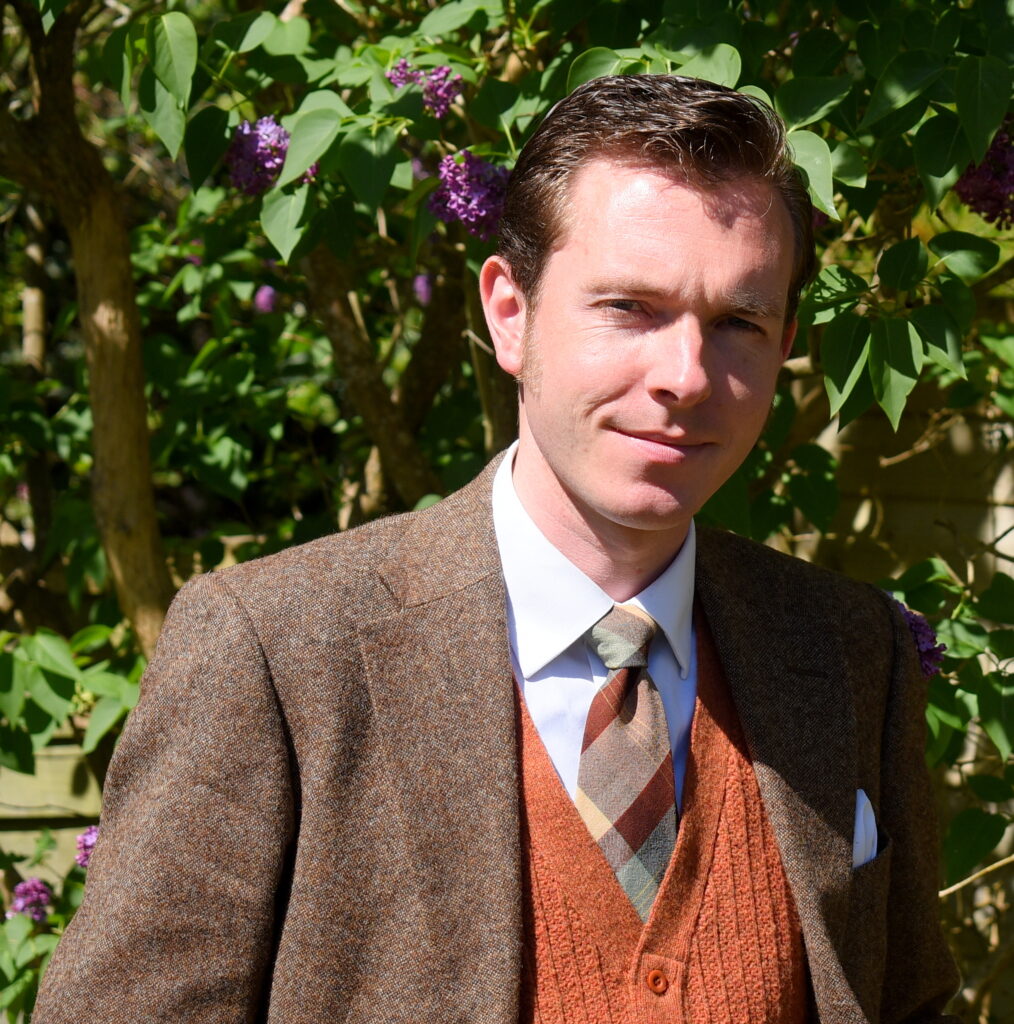
With local elections across here in Croydon in May, we speak with Zachary Stiling, Reform UK candidate for South Norwood.
“I became actively involved in politics thanks to lockdown. I was appalled by the government’s sweeping attack on civil liberties and what amounted to the psychological abuse of dissenters”
Can you introduce yourself to our readers, and tell us what made you decide to run?
I have lived in Croydon all my life – 28 years – which I think makes me too young to remember a time when it was a beautiful and flourishing town; nevertheless, I hold it in affectionate regard as my home. I became actively involved in politics thanks to lockdown. I was appalled by the government’s sweeping attack on civil liberties and what amounted to the psychological abuse of dissenters, and my conscience made me contest the 2021 Kenley by-election on an anti-lockdown platform. I didn’t win, of course, but it was important to me that somebody stood to offer a choice to the voters who felt badly let down by the four main parties.
Outside of politics, I have been self-employed as a writer since leaving school. I balanced my writing career with shelf-stacking in a supermarket for five years before I was finally able to become self-employed full-time. I am personally involved with the preservation of vintage cars and bicycles, and belong to a number of groups involved with the preservation of historic buildings. Purely as a dilettante, I have an interest in antiques, fine art, literature and music – everything from the Baroque to the blues. My favourite book is Le Grand Meaulnes by Alain-Fournier.
I have decided to run for election as a councillor with Reform because I believe Croydon has been badly let down by year upon year of mismanagement by the Conservatives and Labour. For most of my life, Croydon has been almost a synonym for urban decay, but it is now at the point where, if you go into the town centre, you are very likely to witness some kind of antisocial behaviour. I have seen people lying unconscious on the floor of Popeyes where they have obviously lost a fight; I am sick of being bothered by persistent or aggressive beggars on night buses and outside East Croydon station.
Furthermore, I am determined to reverse the uglification of Croydon which, as yet, shows no signs of abating. It seems as if every new building to have been erected in recent years is bigger and uglier than the one before it. Last year, Shirley lost one of its few Georgian houses (the Swiss Lodge on Shirley Church Road), and I shudder to think what will replace it. Meanwhile, fifteen years after the riots which resulted in the destruction of the House of Reeves, there is nothing but waste ground where the fine Edwardian building once stood. Whenever I am standing on the platform at East Croydon station, I think to myself, “Here, there is no beautiful thing,” and I hope readers will agree that that is a profoundly depressing thought. What does it say for a town that it has the power to depress simply upon sight?
Order, beauty, tranquillity and cleanliness – Croydon Council seems to have forgotten what these words mean, never mind why they matter. But I am a civilised man, and Croydon needs a civilised touch.
“we need to make our public amenities truly public once more, and scrap the idiotic and unnecessary pre-booking policies so that they can be enjoyed by everyone”
You’re the prospective candidate for South Norwood ward, what are the major concerns in the area?
Strangely enough, the first concern many people express is to do with crime, but the council can do little to address that since the only body with real crime prevention and law enforcement powers is the Metropolitan Police. However, it is to be hoped that by improving the quality of the area, and the quality of life of its inhabitants, the crime rate may be induced to fall.
The second greatest concern pertains to the loss of local assets and amenities. This is particularly pertinent given that Croydon Council recently closed four of its libraries in 2024, and did away with an entire floor of the main library at the Town Hall. Fortunately, South Norwood library remains open and, as a bibliophile, I am committed to seeing that it remains so. Unfortunately, where damage has already been done is in the effective privatisation of Croydon’s leisure facilities by outsourcing their management to Greenwich Leisure Ltd. (operating under the brand name Better), which describes itself as “a charitable social enterprise.” If you are older than ten, you will have happy memories of being able to turn up at the local swimming pool, pay a nominal fee for a wristband, and enjoy a good hour of swimming lengths or splashing about. Now, with GLL in charge, don’t you be getting any high and mighty ideas about going swimming when you like – you must first go online to book a slot to swim when, and only when, GLL says you can (and you’ll pay well for the privilege). If, like me, you are self-employed and have to go to work on demand, or have other commitments which require spontaneity, that’s your problem and you can forget about swimming. I only found this out by turning up at one ‘Better’ leisure centre and being promptly sent home. I cannot remember how much the charge was for an hour’s swimming, and I am still none the wiser because I have been on the ‘Better’ website and find it absolutely bewildering.
If tennis is more your thing, worse luck, because council-owned courts which could once be used freely and spontaneously again require online booking and now cost more than £8.00 to access (it was £8.10 as of 2023). A lot of individuals and families in South Norwood and across the borough are struggling to make ends meet, and even those who would think of themselves as comfortably middle-class are feeling the effects of cost-of-living increases, and have neither the time nor the money to use what ought to be accessible, and in some cases free, services. Once it has been constructed, a tennis court can be left alone without expense for years. The withdrawal of basic amenities has been disgraceful, we need to make our public amenities truly public once more, and scrap the idiotic and unnecessary pre-booking policies so that they can be enjoyed by everyone. It is not surprising people become consumed by depression, when they are deprived of opportunities to enjoy or better themselves.
“On the subject of roads, Reform Croydon is committed to rollout the removal of 20 MPH speed limits and return to a 30 MPH default speed limit”
More widely what do you see as the big issues for Croydon and if elected what would you hope to champion?
In addition to my public amenities campaign as outlined above, I have several plans in mind for Croydon which I hope will remedy at least some of its many other problems. I will run through them now in no particular order.
Croydon Council works with no fewer than nine churches and charities which provide the homeless with free food and clothing, sleeping bags and temporary shelter, plus referrals to the Job Centre and mental health services. In addition, it works with the Fitze Millennium Centre in Upper Norwood which provides purpose-built accommodation consisting of studio flats and recreational facilities for up to eighty homeless young people while preparing them for the world of work and independent living. We need to move those begging from the streets to these facilities.
As far as fly-tipping is concerned, I want to see the council respond to all complaints of fly-tipping within one week.
To address the matter of civic beauty, my first pledge is the most straightforward. There will be no further building on Green Belt land, and I would desire even to create new areas of Green Belt to atone for some of those lost in recent years. To preserve Croydon’s fine old buildings and protect our heritage, I would like to see a blanket ban on the demolition of all buildings predating WW1 unless there was an absolutely compelling reason why they could not possibly be refurbished or repurposed. As discussed previously, permission for new buildings will only be granted if they exhibit genuine aesthetic merit and respect and sympathy for the surrounding area.
On the subject of roads, Reform Croydon is committed to rollout the removal of 20 MPH speed limits and return to a 30 MPH default speed limit. It is obvious that the council made no effort to consider where accidents occur or what the reasons for them are, and consequently motorists are forced to slither like a snail along roads where 30 or even 40mph would be a safe maximum.
In addition to being a motorist and car enthusiast, I am also a keen cyclist, a pedestrian and a voluntary public transport user, so I flatter myself that I have the advantage of understanding transport requirements from many perspectives.
A few years ago, I wrote a piece decrying the council’s decision to rip up some of its bus shelters and spend £6.8 million installing dystopian-sounding Smart shelters, with cameras feeding information somewhere viâ a permanent internet connection. Mercifully, these never materialised, because the council contracted them to a nine-month-old American tech company with no previous experience of building bus shelters. Rural parts of the Borough of Bromley have attractive wooden bus shelters which are far better suited to the rural and suburban æsthetic than the bland, textureless and generic style seen across the entirety of Croydon. Some large towns, such as Brighton, still retain attractive streamlined Art Déco shelters which would look wonderful in Croydon town centre and the northern parts of the borough. It doesn’t have to be hard to make a place look nice – it just requires somebody who cares.
How can people find out more or get involved in the campaign?
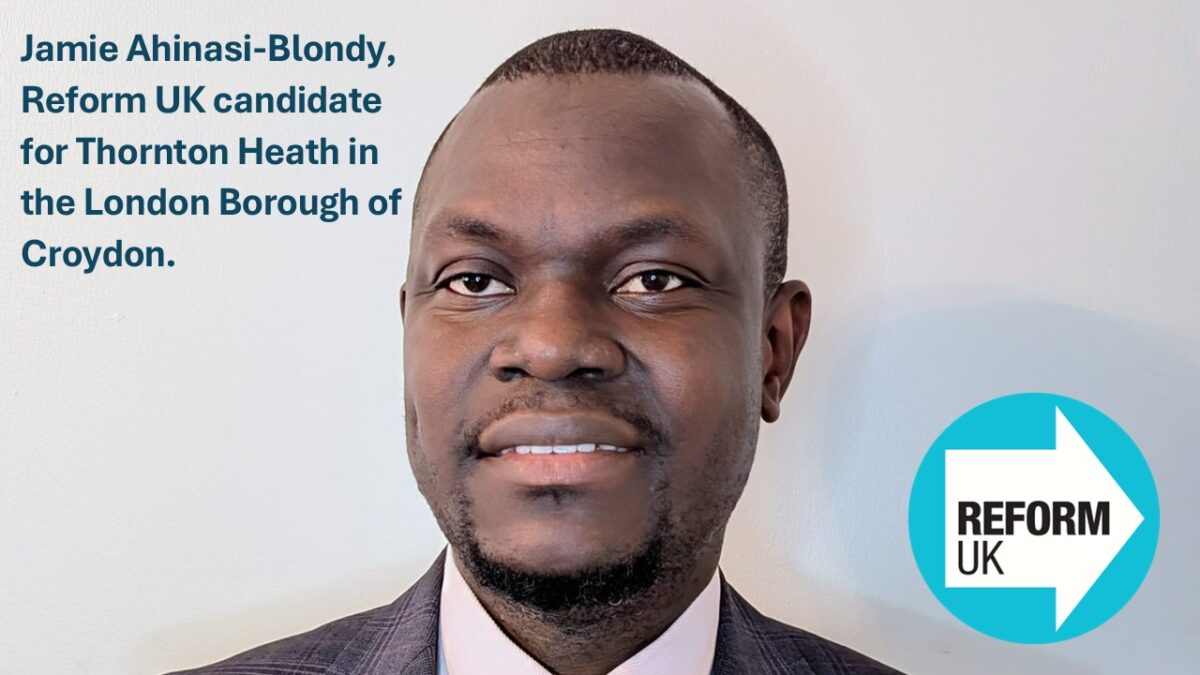
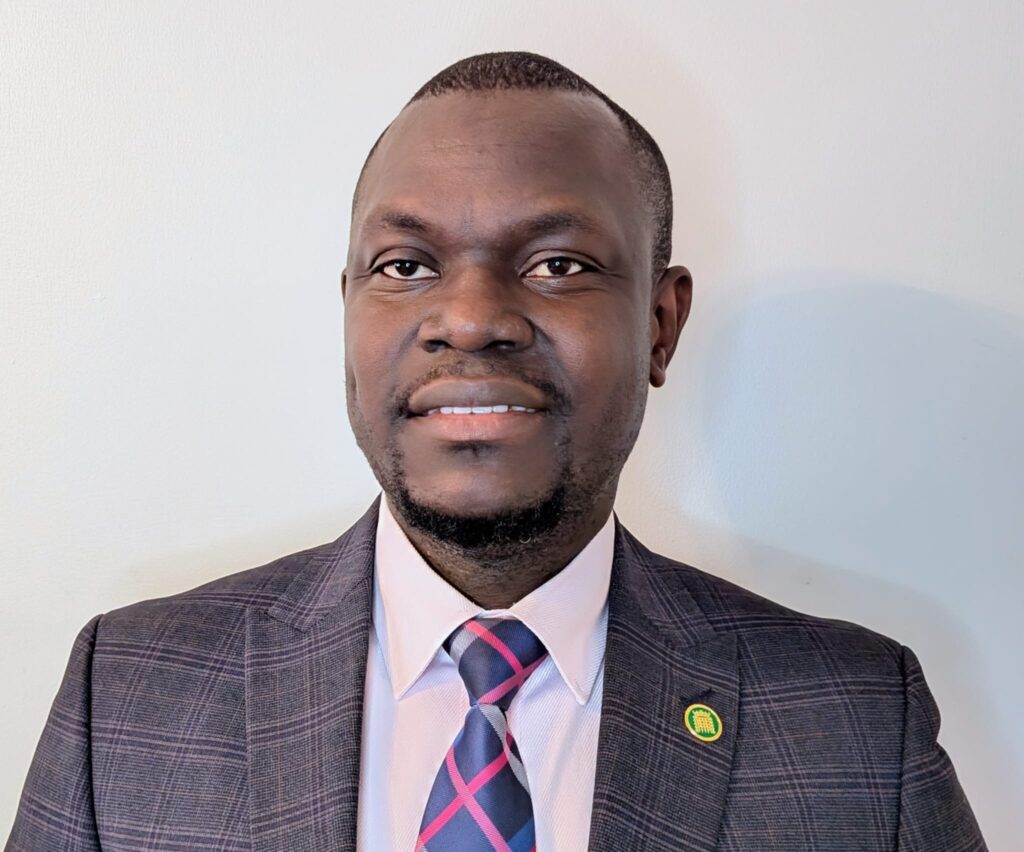
With local elections here in Croydon in May, we speak with Jamie Ahinasi-Blondy, Reform UK candidate for Thornton Heath.
“My mission is simple: to bring genuine common-sense and professional integrity back to our local governance”
Can you introduce yourself to our readers, and tell us what made you decide to run?
I am Jamie Ahinasi-Blondy, and I am honoured to stand as a Reform UK Council Candidate for Thornton Heath ward.
My mission is simple: to bring genuine common-sense and professional integrity back to our local governance. My commitment to this borough is profound, built on years of living and serving here, particularly in the communities stretching from Thornton Heath to Norwood Junction.
“My service through the church food bank during the pandemic showed me the resilience of our community but also highlighted the urgent need for policies that address everyday struggles”
What do you see as the big issues for Croydon and if elected what would you hope to champion?
As I look at the state of our Council, I am driven by this conviction:
“I stand confirmed as the Reform UK Council Candidate because I believe our community deserves strong, practical representation that puts local people first. Having lived in Croydon for nine years, I have seen both the strengths of our borough and the areas where residents feel let down. My service through the church food bank during the pandemic showed me the resilience of our community but also highlighted the urgent need for policies that address everyday struggles such as cost of living, housing, and local services. Reform UK’s focus on accountability, fairness, and common-sense solutions resonates with my own values. I want to ensure that Croydon residents have a voice that challenges waste, prioritises local needs, and works to restore trust in local government. My commitment is to stand up for ordinary people, to listen carefully, and to act decisively on the issues that matter most to our community.”
That commitment to decisive action is backed by professional competence. For years, I have worked as a Senior Risk Assurance Manager, holding high-level public sector programmes to account. I am a certified expert in governance and fiscal integrity. When I look at the Council’s finances, I don’t see a political problem; I see an assurance failure that my skills are placed to fix.
I will bring that rigour to the Council chamber. I will use my expertise as a Data Analyst to expose waste and drive process optimisation, ensuring we maximise service delivery while reducing the burden on our local ratepayers. My job will be to cut the bureaucracy and ensure that every pound spent on local services —from bin collections to tackling anti-social behaviour—is justified and effective.
I have proven my ability to mobilise the community through my work with the Food Bank and as a Local Advocacy Coordinator. Now, I am asking for your support to take that fight for accountability directly to the Council. We deserve a Council that listens, is financially responsible, and puts local needs first.
Let us reform Croydon together.
How can people find out more or get involved in the campaign?
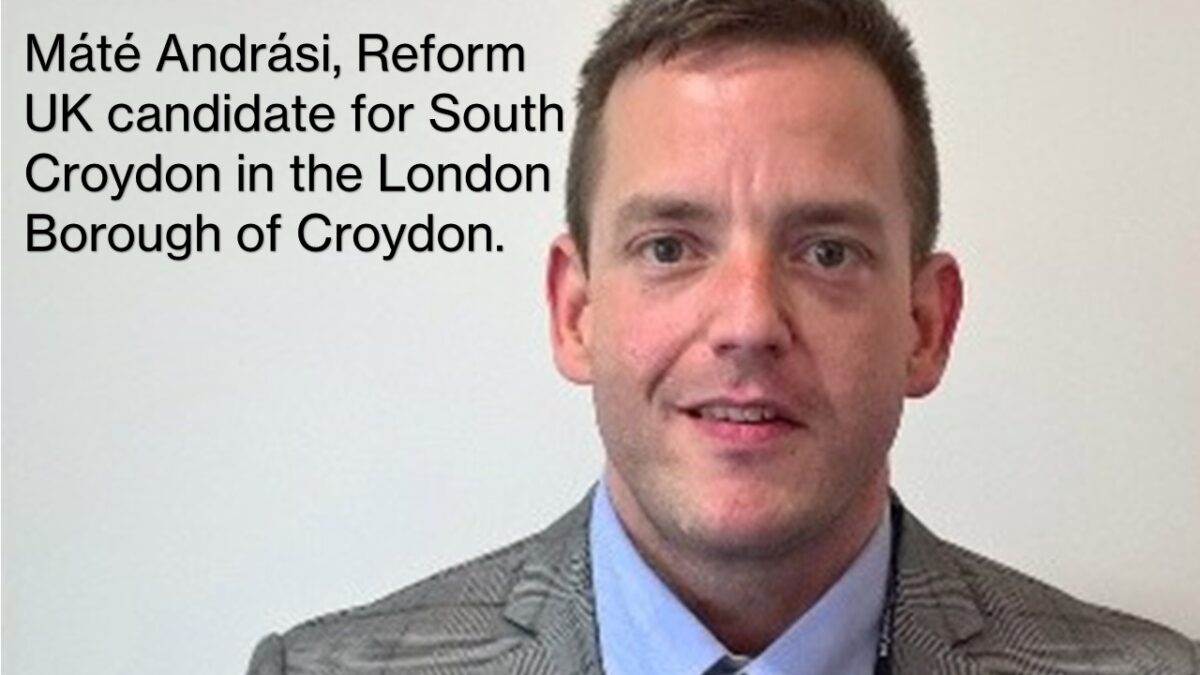
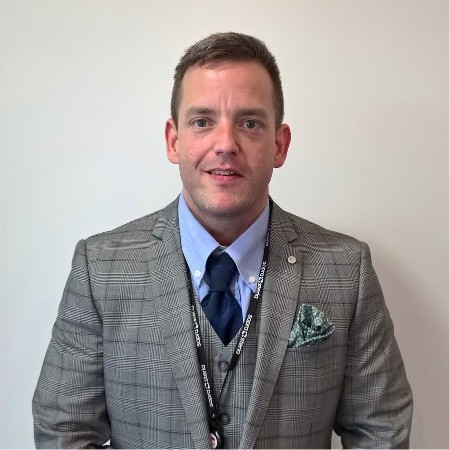
With local elections across here in Croydon in May, we speak with Máté Andrási, Reform UK candidate for South Croydon.
“I am a legal immigrant, a classical liberal, and a patriot by choice who believes that Britain’s strength lies in its values”
Can you introduce yourself to our readers, and tell us what made you decide to run?
I am a legal immigrant, a classical liberal, and a patriot by choice who believes that Britain’s strength lies in its values, not its identity politics. My career in the technology sector has been dedicated to one thing: efficiency. As an Agile Programme Manager and practitioner of Lean Six Sigma, I specialise in optimising complex systems and ruthlessly eliminating waste.
I apply that same analytical rigour to politics. In Reform, I see a movement demanding common sense. They are the only party brave enough to judge individuals by the content of their character rather than the quotas they fill. My own journey to this country was driven by a respect for British law and liberty—ideals that are currently threatened by weak borders, wasteful spending, and a policing system afraid to enforce order.
“A smaller, sharper council that lives within its means: audit every pound, publish every contract, and put Croydon taxpayers first again”
What do you see as the big issues for Croydon and if elected what would you hope to champion?
Croydon is £1.4 billion in the red and still paying £86 million a year just to service the debt left by decades of failure. Enough. We will freeze all non-essential consulting and agency spend – no more £1.5 million+ vanity contracts – and redirect every saved pound into debt reduction and frontline services.
A smaller, sharper council that lives within its means: audit every pound, publish every contract, and put Croydon taxpayers first again. Not by raising your taxes and issuing more penalties but by stopping waste.
How can people find out more or get involved in the campaign?